
Batu Caves, Kuala Lumpur: A Visitor Guide to Temple Cave

Batu Caves is a limestone hill in Gombak, Selangor, and its largest cave holds a Hindu temple dedicated to Lord Murugan. This guide covers entry costs, getting there from Kuala Lumpur, the rainbow staircase, and the history behind the site. Last updated November 2026.
The main Temple Cave is free to enter, though reaching it means climbing 272 steps. Some details, such as opening hours and one cave fee, are reported differently across sources, and we flag each conflict below.
Batu Caves at a Glance
Batu Caves sits about 13 km north of central Kuala Lumpur, in the Gombak district of Selangor. The hill is a limestone mogote about 325 m high with about 20 recognized caves, and Tourism Selangor describes three main caves for visitors. Most of the action happens at the foot of the hill and along the staircase.
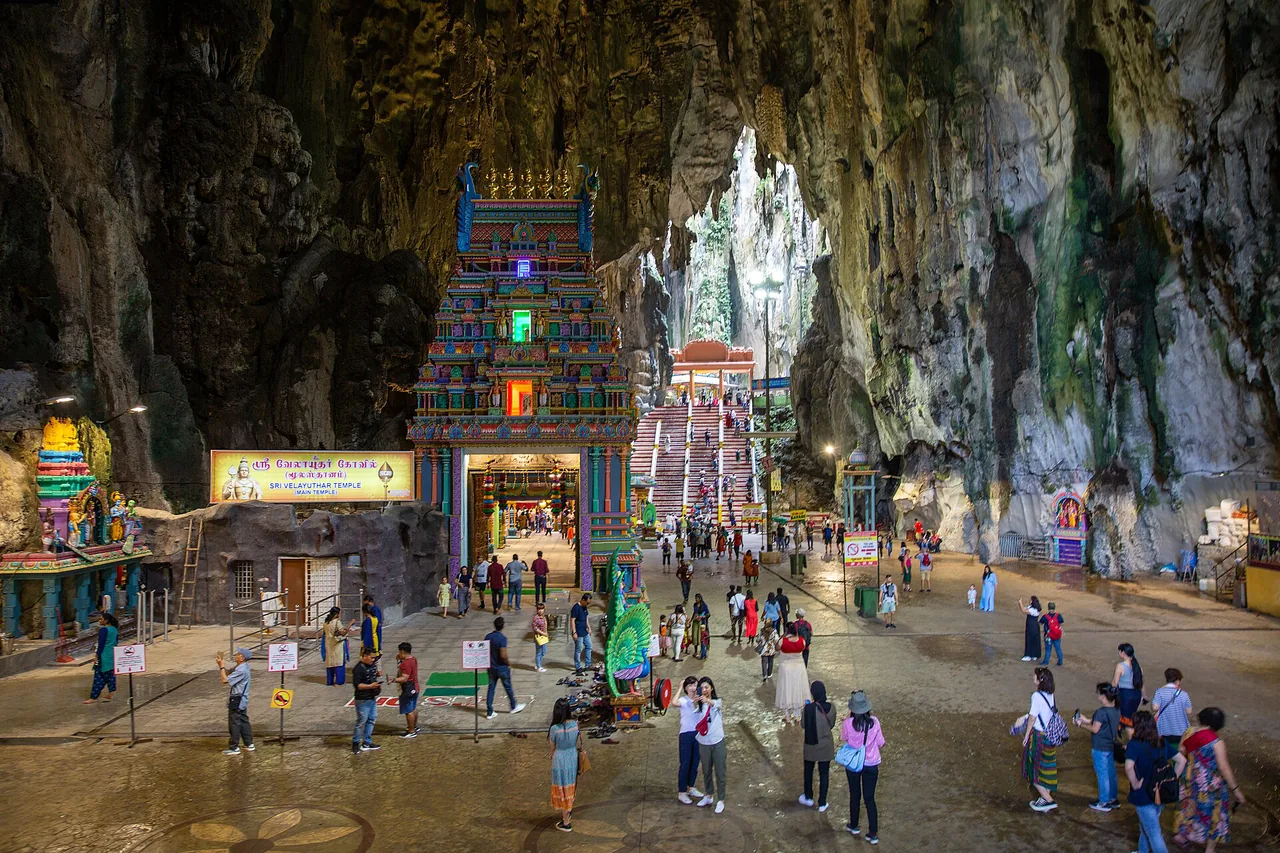
The largest cave, the Temple Cave, is about 100 m high and 80 m long, and holds the Sri Subramaniar Swamy temple. The Cave Villa sits at the base of the hill, and the Ramayana Cave lies to the left of the main complex. Batu Caves is also the focal point of Malaysia's annual Thaipusam festival.
The list below sums up the facts most travelers want before choosing how to get there. Each point is expanded in the sections that follow.
- Temple Cave
- The main cave holds the Sri Subramaniar Swamy temple and is free to enter.
- The staircase
- A long staircase of 272 steps leads up to the Temple Cave entrance.
- Parking
- Parking costs RM2 according to Tourism Malaysia, though spaces are limited on busy days.
- Nearest station
- KTM Komuter trains stop at Batu Caves station, roughly a 5-minute walk from the main entrance.
- Best arrival time
- Tourism Malaysia advises arriving before 8:00 AM on any day to avoid the crowds.
Batu Caves Tickets and Opening Hours
The temple's operator, Sri Maha Mariamman Temple Devasthanam, publishes no opening hours, and Tourism Malaysia lists none either, so there are no official hours to quote. Tourism Selangor's listing says Batu Caves is open 24 hours, every day of the week, but that figure conflicts with every other guide and may be a listing default. Malaysia Uncovered, an independent guide published in October 2026, says the Temple Cave is generally open from around 6 AM to 9 PM.
Because the sources disagree, plan to arrive early rather than counting on a late closing time. Tourism Malaysia advises arriving before 8:00 AM on any day to avoid the crowds, and an early start also helps with the heat on the staircase.
The Dark Cave, entered at step 204, is a separate part of the hill that is visited only on guided tours, according to Tourism Malaysia. Tour times and prices are not covered here; check them with the tour operator before planning around them.
Entry prices are easier to pin down, although one cave is disputed. The list below shows what each part of the complex costs.
- Temple Cave
- The main cave with the Sri Subramaniar Swamy temple is free for all visitors.
- Cave Villa
- Non-Malaysians pay RM15 to enter the Cave Villa at the base of the hill.
- Ramayana Cave
- Sources conflict, with a 2024 Sunway Hotels page giving RM5 and Malaysia Uncovered in 2026 giving about RM15.
- Parking
- The car park fee is RM2, according to Tourism Malaysia.

Getting to Batu Caves from Kuala Lumpur
The train is the simplest option for most travelers. Take the KTM Komuter Batu Caves–Pulau Sebang Line from KL Sentral to Batu Caves station, the line's terminus. From the station, it is about a 5-minute walk to the main entrance.
Buses are the backup. Bus U6 runs from Titiwangsa Bus Terminal, and Tourism Selangor's listing also names Bus No. 11 from Bangkok Bank near Central Market. Check which stop suits your hotel before heading out.
Grab, taxis and driving work too. Tourism Malaysia gives the parking fee as RM2, but Tourism Selangor notes that spaces are limited and advises visitors to take public transport or arrive early, especially on public holidays. For other sights in the city, see our guide to Kuala Lumpur attractions.
Climbing the 272 Steps to Temple Cave
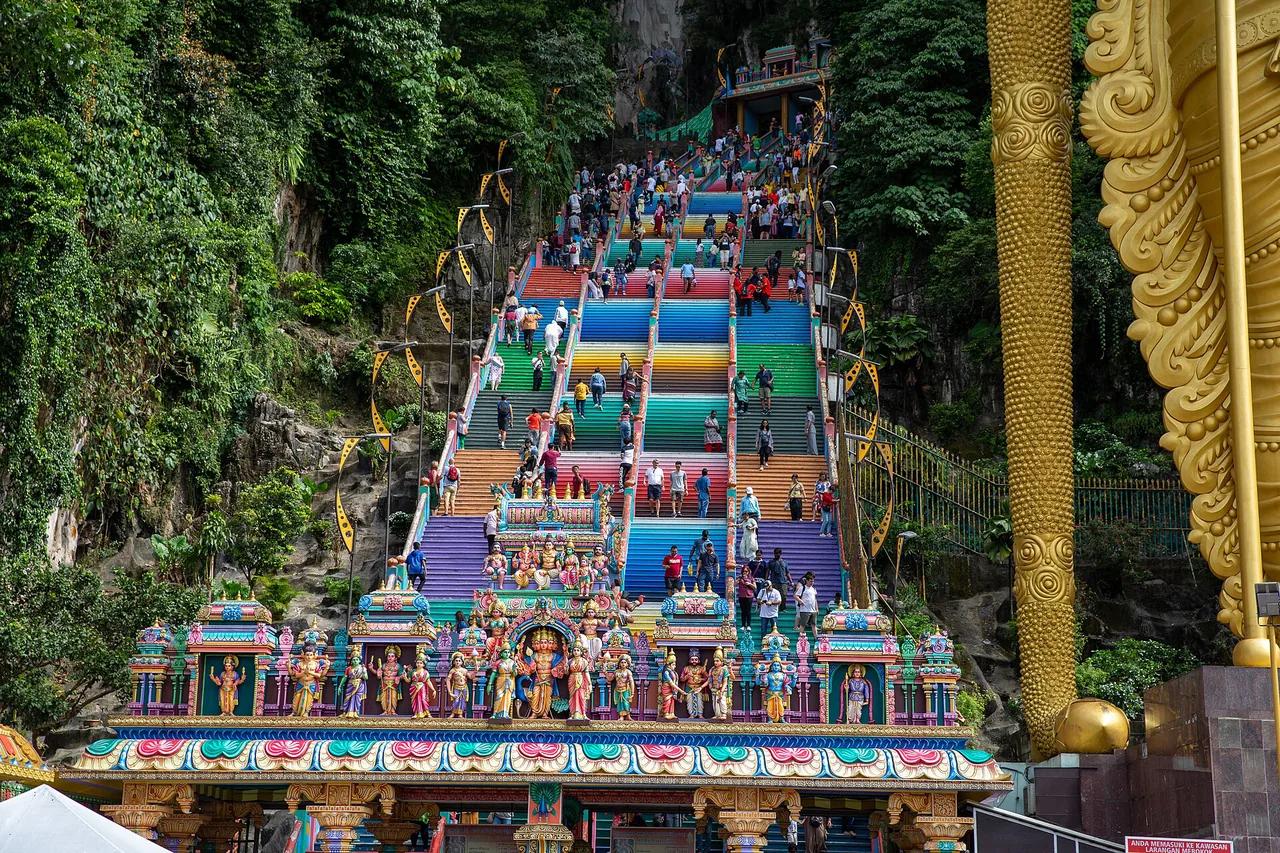
The staircase is the heart of the visit, and its 272 steps were repainted in rainbow colors in August 2018. Concrete steps replaced the original wooden ones in 1940, and the climb ends at the Temple Cave entrance. Plenty of visitors stop for photos on the way up, so take it at your own pace and carry water.
Along the route, the Dark Cave entrance appears at step 204. The Ramayana Cave sits to the left of the main complex, with a 15 m Hanuman statue at its entrance and, according to Tourism Selangor, painted scenes inside. Troops of monkeys line the steps and the area up to the temple entrance, and they often depend on people for food. Do not feed, touch or approach them, even if they seem friendly.
Dress is the other practical question, and there is no current official statement on it. A 2013 report in The Star described the temple's dress-code notice as a request rather than a rule and said the temple would not stop anyone from entering. Still, covering shoulders and knees is the respectful choice at an active Hindu temple. The same report said smoking is strictly banned, along with spitting, running up the steps and bringing pets.
Beyond the temple, the hill's north-east side has about 160 rock-climbing routes, and Tourism Selangor lists rock climbing among the things to do here.

History, Murugan Statue and Thaipusam
The limestone itself formed more than 400 million years ago. Tamil trader K. Thamboosamy promoted the caves as a Hindu place of worship, reportedly inspired by the cave entrance resembling Murugan's vel, or spear. According to Wikipedia, the temple was completed in 1891 and wooden steps were installed in 1920; Tourism Malaysia gives 1920 as the temple's build date, but that year matches the wooden steps rather than the temple.
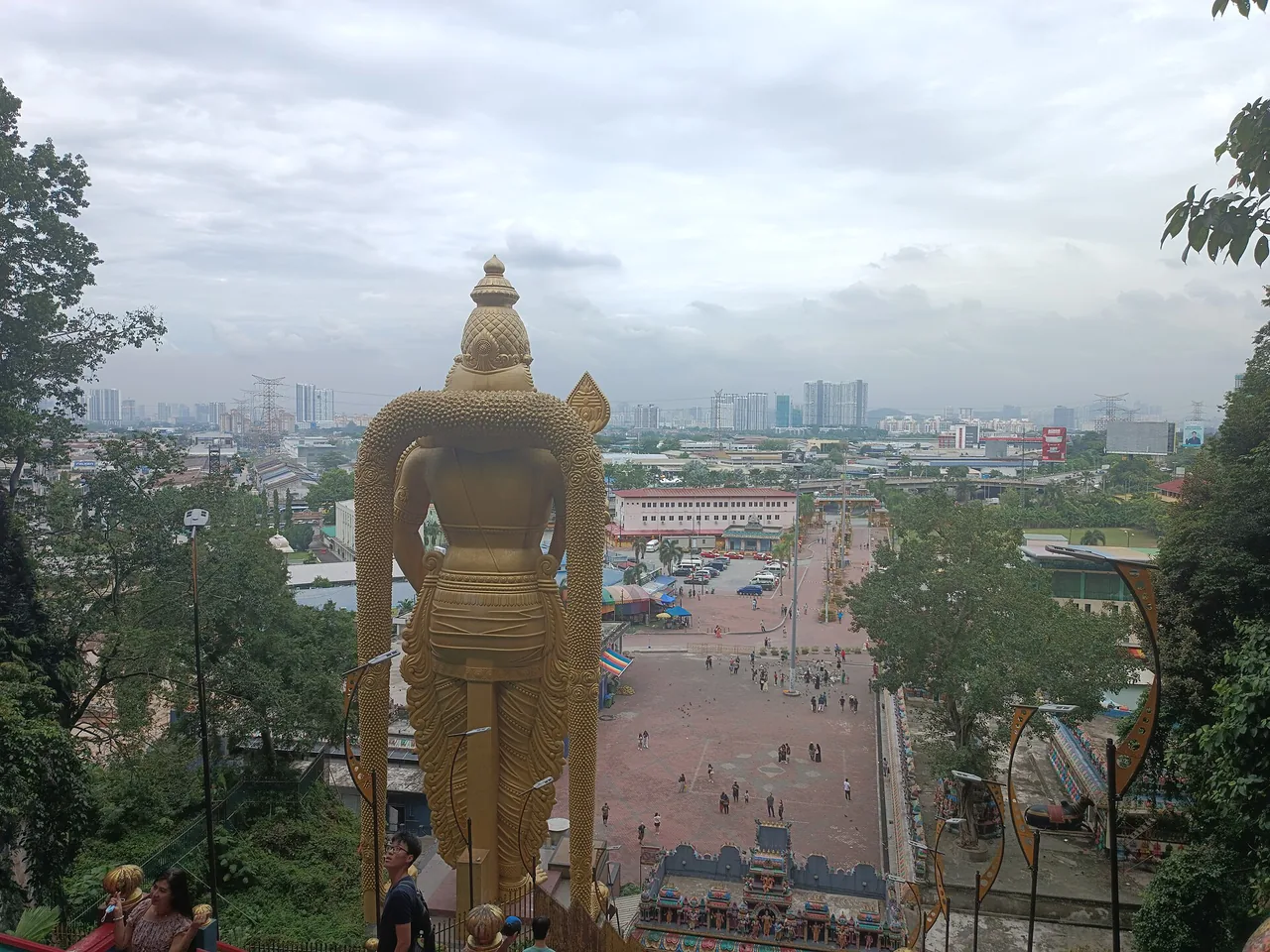
At the foot of the stairs stands the gold-painted statue of Murugan, unveiled in January 2006. Wikipedia gives its height as 42.7 m (about 43 m), while Tourism Malaysia says over 140 feet, which is roughly the same height.
Thaipusam has been celebrated at Batu Caves since 1892 and is usually held in January or February. Tourism Malaysia calls it the ideal time to visit, with thousands of Hindus gathering to pray. It also brings huge crowds of devotees, so anyone who prefers a calmer visit should come on another date and arrive before 8 AM.
Pairing Batu Caves With Other KL Sights
Batu Caves works well alongside other temples and landmarks in the city. For a contrast in architecture, Thean Hou Temple offers a Chinese temple setting within Kuala Lumpur itself. Seeing both gives a sense of the city's religious variety.
If you want the skyline view, visit the Petronas Twin Towers on another day. For colonial history, Merdeka Square is a natural next stop. Each suits a different mood, so spreading them out keeps the pace comfortable.
Frequently Asked Questions
Is Batu Caves free to enter?
Yes. The main Temple Cave at the top of the 272 steps is free. The Cave Villa at the foot of the hill charges non-Malaysians RM15, and the Ramayana Cave charges a small separate fee (sources quote RM5 to about RM15). Parking costs RM2.
What are the Batu Caves opening hours?
There are no official hours: the temple's operator publishes none. Malaysia Uncovered (October 2026) says the Temple Cave is generally open from around 6 am to 9 pm. Tourism Selangor's listing says 24 hours, but that conflicts with other guides.
How many steps are there at Batu Caves?
There are 272 steps up to the Temple Cave. The concrete steps were built in 1940 and repainted in rainbow colors in August 2018.
What should I wear to Batu Caves?
Cover your shoulders and knees, since this is an active Hindu temple. There is no current official dress-code statement; a 2013 report in The Star described the temple's dress-code notice as a request and said the temple would not stop anyone from entering. The same report said smoking is strictly banned.
How do I get to Batu Caves from Kuala Lumpur?
Take the KTM Komuter train on the Batu Caves–Pulau Sebang Line from KL Sentral to Batu Caves station; the temple is about a 5-minute walk from the station. Bus U6 runs from Titiwangsa Bus Terminal, and Grab and taxis also go there. Parking costs RM2, but spaces are limited.
How tall is the Murugan statue at Batu Caves?
The golden statue of Lord Murugan at the foot of the steps is 42.7 m (about 140 ft) tall and was unveiled in January 2006.
When is the best time to visit Batu Caves?
Arrive before 8 am on any day for a quieter visit with fewer crowds and cooler weather. Thaipusam, held each year in January or February, brings huge crowds of devotees and is the time to see the festival.
Are the monkeys at Batu Caves a problem?
Troops of monkeys line the steps and the area up to the temple entrance, and they often depend on people for food. Don't feed, touch or approach them, even if they seem friendly.
Batu Caves rewards visitors who arrive early, climb the 272 steps at an easy pace, and treat the temple with respect. The Temple Cave is free, parking is RM2, and the KTM Komuter station is a short walk away. For more ideas beyond the caves, explore our Kuala Lumpur travel guide and plan the rest of your stay.
Planning more of Kuala Lumpur? See our guides to things to do in Kuala Lumpur, a Kuala Lumpur itinerary and Thaipusam at Batu Caves.