
Thean Hou Temple (天后宫) in Kuala Lumpur: Visitor Guide

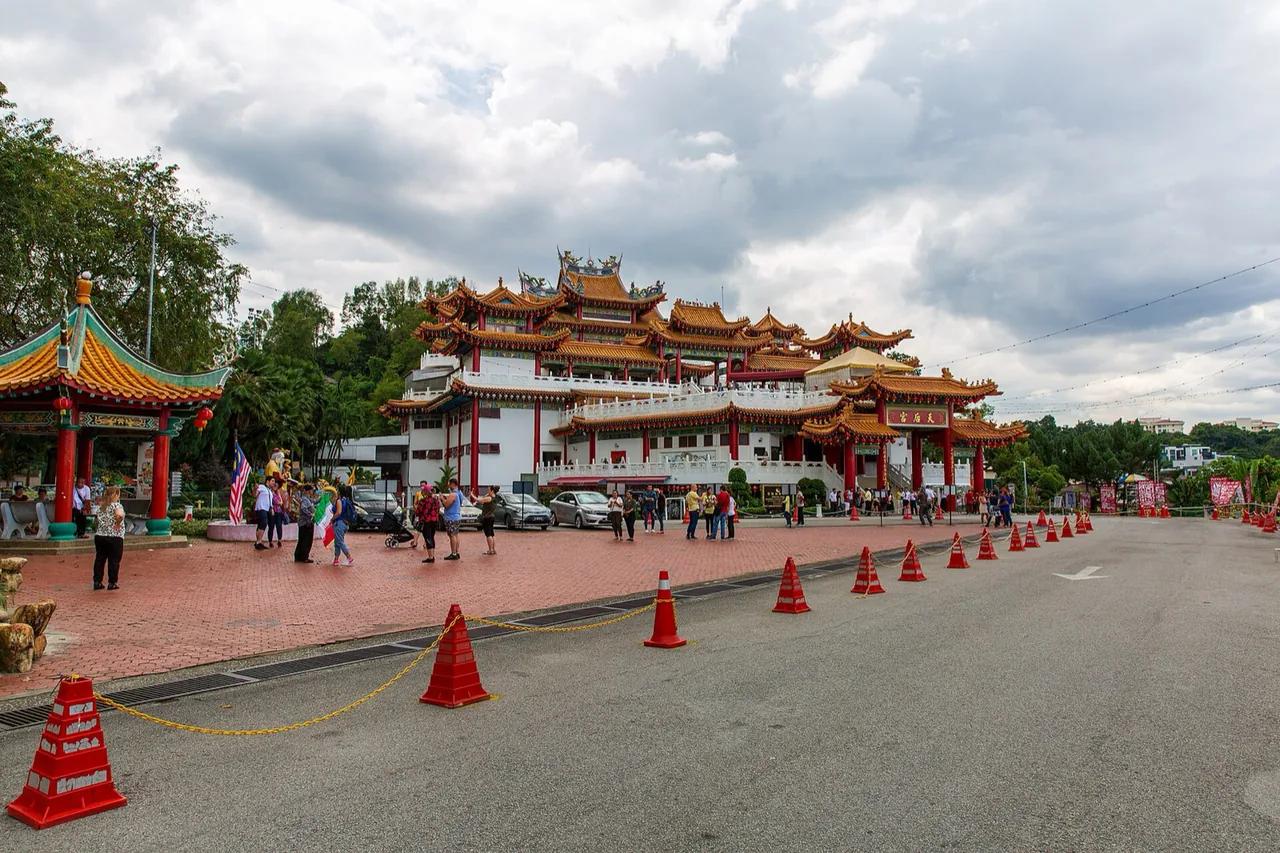
Thean Hou Temple (天后宫) is a six-tiered Chinese temple to the sea goddess Mazu, standing atop Robson Heights and overlooking Jalan Syed Putra in Kuala Lumpur. This guide covers opening hours, entry, transport and what stands on the grounds. Last updated November 2026.
The Selangor & Federal Territory Hainan Association owns and runs the temple, so its official site is our source for opening hours. Other listings give different hours, and we flag those differences where they matter. For the wider city, our Kuala Lumpur attractions guide lists more places worth a stop.
Tickets, Opening Hours and Address
The shrine is open 8:00 AM to 8:00 PM every day, including public holidays, according to the Hainan Association's official site. Those are the hours the association publishes for 2026. Some older listings give other hours; we follow the official site.
There is no ticket to buy. Visit Selangor lists the temple as free of charge, and the association's site publishes no entrance fee, though it does not state that entry is free in so many words. A quick look at the association's site before you go is a sensible habit.
Do not confuse the shrine with the association office, which keeps its own hours: 9:00 AM to 5:00 PM, Monday to Saturday. Those office hours say nothing about prayer hall access.
- Shrine hours
- The shrine welcomes visitors from 8:00 AM to 8:00 PM, Monday to Sunday, according to the official site.
- The same hours apply on public holidays.
- Entry fee
- Visit Selangor lists the temple as free of charge, and no admission fee is published by the temple.
- Address
- The temple stands at 65, Persiaran Endah, off Jalan Syed Putra, Kuala Lumpur, postcode 50460.
- Association office
- The office is open 9:00 AM to 5:00 PM, Monday to Saturday, which is separate from the shrine schedule.
Getting to Thean Hou Temple by Bus or Taxi
No rail station sits beside the temple, so every rail route ends with a bus or taxi. Visit Selangor names Mid Valley, Bangsar and KL Sentral as the nearest stations.
Visit Selangor says the easiest way to arrive is by car or bus. Buses that stop near the MCOBA building on Jalan Syed Putra bring you close to the temple. Riders on the KL Hop-On Hop-Off bus can get off at KL Sentral or Little India and then take a bus or taxi.
Drivers reach the temple from Persiaran Endah, which links to Jalan Robson to the north. Wikipedia describes the road up as very steep, so drive with care. No official source names a station within walking distance, so plan the last stretch by bus, taxi or car rather than on foot.

History and the Sea Goddess Mazu
Kuala Lumpur's Hainanese community built the temple between 1981 and 1987 at a cost of about RM7 million. It was officially opened on September 3, 1989. Some sources mention 1985, but Wikipedia gives that as the year Tian Hou was installed, not the opening year.
The temple sits on 1.67 acres (6,758 m²) of Robson Heights. It is solely owned and managed by the Selangor & Federal Territory Hainan Association, which was founded in 1889.
The main deity is Mazu, also called Tian Hou, the Chinese sea goddess. The top-floor shrine also honors Guan Yin, the Goddess of Mercy, and Shui Wei Sheng Niang, the Goddess of the Waterfront. The temple blends Buddhism, Taoism and Confucianism.
The Hainan Association describes the temple as the biggest of about 150 Mazu temples in Malaysia. Visit Selangor and Wikipedia call it one of the largest Chinese temples in Southeast Asia. Treat both as the sources' own claims rather than measured rankings.
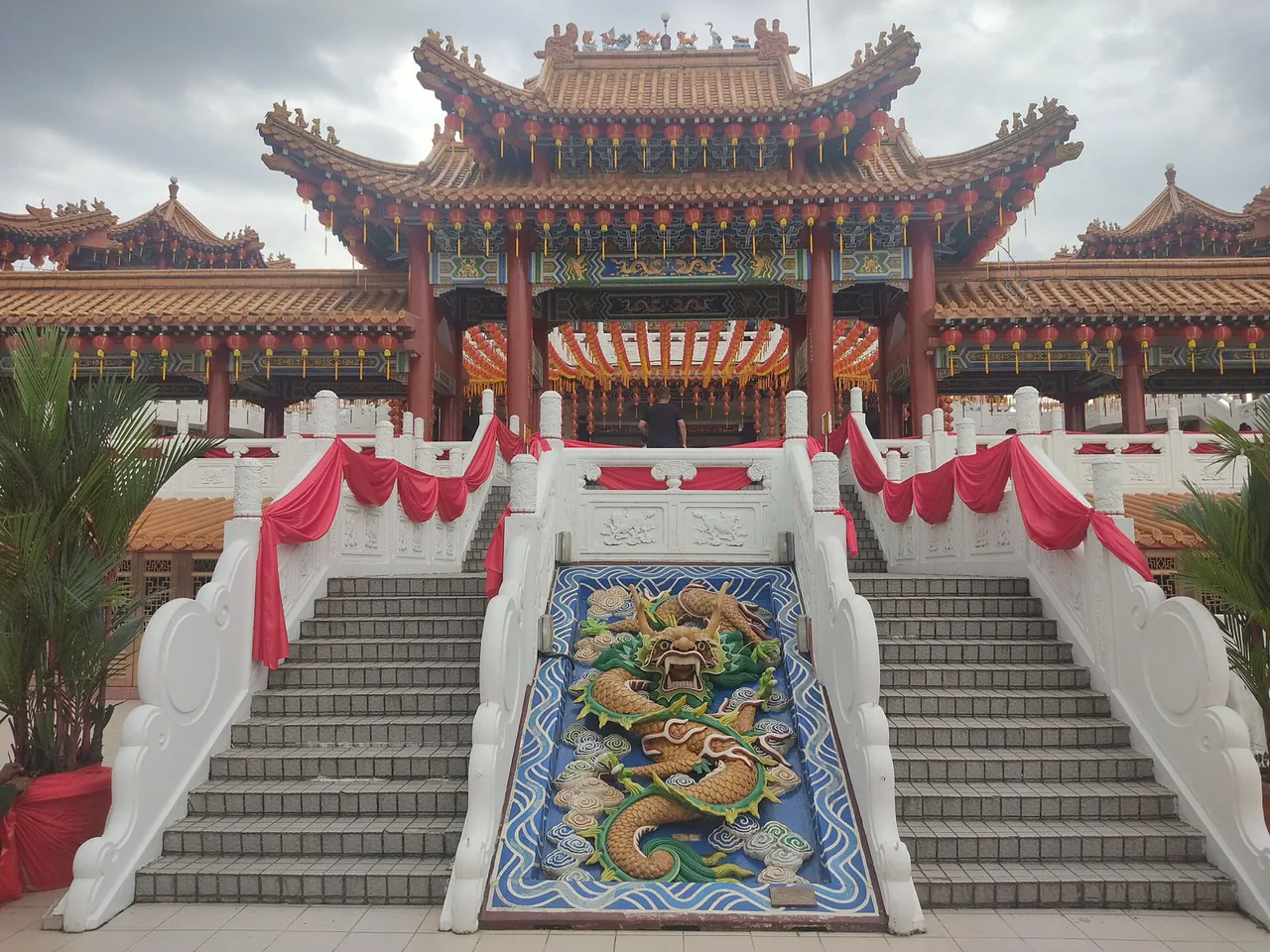
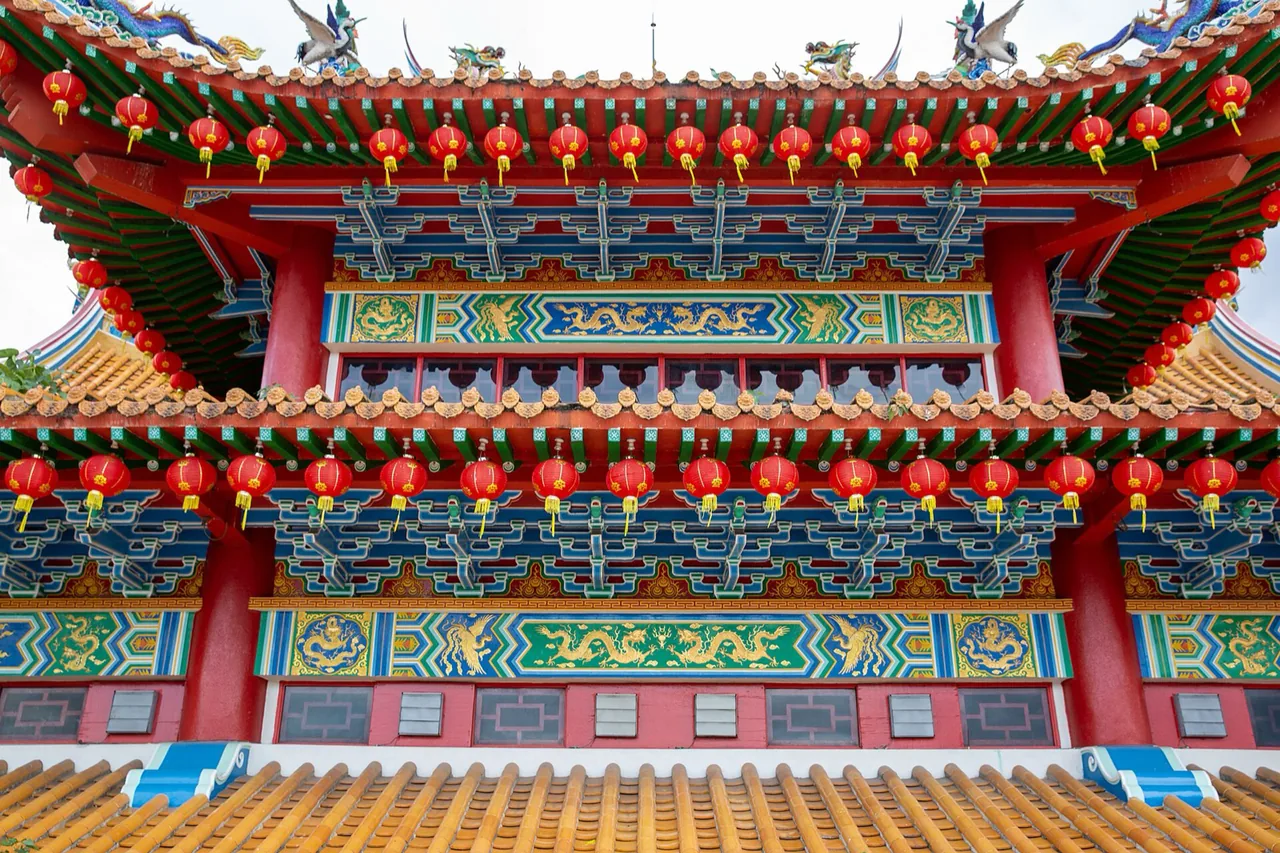
The association counts 6,134 rafters, 227 painted beams and 470 dougong bracket sets in the building, so the roofline rewards a slow look from the forecourt.
What to See on the Temple Grounds
Each level of the six-tiered building serves a different purpose. Souvenir stalls and a canteen fill the first level, a multi-purpose hall sits on the second, and offices occupy the third. The prayer hall is on the three-tiered fourth level, where the altars stand.
The design follows classical Chinese architecture, combining southern-style swallow-tail and dragon-phoenix ridge cresting with a northern-style straight-ridged entrance archway. Look up at the rooflines before you climb, because the details are easy to miss once you reach the shrine.
- Prayer hall on the fourth level
- Altars here honor Mazu, Guan Yin and Shui Wei Sheng Niang in a three-tiered hall.
- Visitors will find the shrine on the top floor of the main building.
- Serenity Garden and wishing pond
- The garden surrounds the main building and includes a wishing pond for a quiet pause.
- Chinese zodiac animal statues
- Statues of the 12 zodiac animals carry English captions, which helps if you are new to the zodiac.
- Medicinal herb garden and giant chessboard
- A Chinese medicinal herb garden and a giant Chinese chessboard share the grounds around the temple. The association gives the chessboard as 12.8 m by 10 m.
- Twenty-four Filial Exemplars sculptures
- Stone sculptures depict the Twenty-four Filial Exemplars.
- Yue Lao statue
- The grounds also have a statue of Yue Lao, the matchmaking deity.
- Street art
- The association's own list of attractions includes street art on the grounds.

Festivals, Busy Days and Weddings
Visit Selangor says the temple is packed during major Chinese celebrations such as Chinese New Year. It also holds Mazu birthday celebrations, Wesak Day and Mid-Autumn Festival events.
If crowds worry you, an ordinary day is the safer pick than a festival date. The shrine keeps its 8:00 AM to 8:00 PM hours on public holidays, so a holiday visit stays possible if you accept the crowd. Festival dates change each year, so check the official Hainan Association site for the current calendar.
The temple is also a marriage registration venue. Registrations run Monday to Sunday from 8:30 AM to 5:00 PM, but not on public holidays. That window is shorter than the shrine's hours, so couples should plan around it.
Pairing the Temple With Other KL Stops
Thean Hou Temple fits into a day of mixed sights. A few of our other Kuala Lumpur guides help you build that day.
For a modern contrast to a hillside shrine, read our Petronas Twin Towers guide.
History lovers can continue with our Merdeka Square guide.
For another of the city's religious sites, see our Batu Caves guide.
Frequently Asked Questions
What are Thean Hou Temple's opening hours?
The shrine is open Monday to Sunday from 8 a.m. to 8 p.m., and the same hours apply on public holidays, according to the Selangor & Federal Territory Hainan Association, which runs the temple. The association's office keeps separate hours: 9 a.m. to 5 p.m., Monday to Saturday.
How much does it cost to visit Thean Hou Temple?
Nothing. Visit Selangor lists the temple as free of charge, and the temple's own site publishes no entrance fee.
Who is worshipped at Thean Hou Temple?
The main deity is Mazu (Tian Hou), the Chinese sea goddess. The top-floor shrine also honors Guan Yin, the Goddess of Mercy, and Shui Wei Sheng Niang, the Goddess of the Waterfront. The grounds also have a statue of Yue Lao, the matchmaking deity.
When was Thean Hou Temple built?
Construction began in 1981 and was completed in 1987, at a cost of about RM7 million. The temple was officially opened on September 3, 1989.
How do I get to Thean Hou Temple from central Kuala Lumpur?
Visit Selangor says the easiest way is by car or bus. The nearest rail stations are Mid Valley, Bangsar and KL Sentral, but none is beside the temple, so you finish the trip by bus or taxi. Buses that stop near the MCOBA building on Jalan Syed Putra also bring you close.
What is there to see besides the prayer hall?
The grounds include the Serenity Garden with a wishing pond, statues of the 12 Chinese zodiac animals with English captions, a Chinese medicinal herb garden, a giant Chinese chessboard, stone sculptures of the Twenty-four Filial Exemplars, and street-art murals.
Can you get married at Thean Hou Temple?
Yes. The temple is a marriage registration venue, and registrations run Monday to Sunday from 8:30 a.m. to 5 p.m., but not on public holidays.
When is Thean Hou Temple busiest?
Visit Selangor says the temple is packed during major Chinese celebrations such as Chinese New Year. It also holds Mazu's birthday celebrations, Wesak Day and the Mid-Autumn Festival.
Thean Hou Temple offers free entry (per Visit Selangor), a six-tiered building and gardens full of symbolic detail. Plan around the shrine's 8:00 AM to 8:00 PM hours, and remember that no rail station is beside the site.
Choose an ordinary day if you want space to look around, or a festival day if you want the atmosphere. Either way, confirm current details on the official Hainan Association site before you set out.
Planning more of Kuala Lumpur? See our guides to things to do in Kuala Lumpur, a Kuala Lumpur itinerary and Brickfields, KL's Little India.