
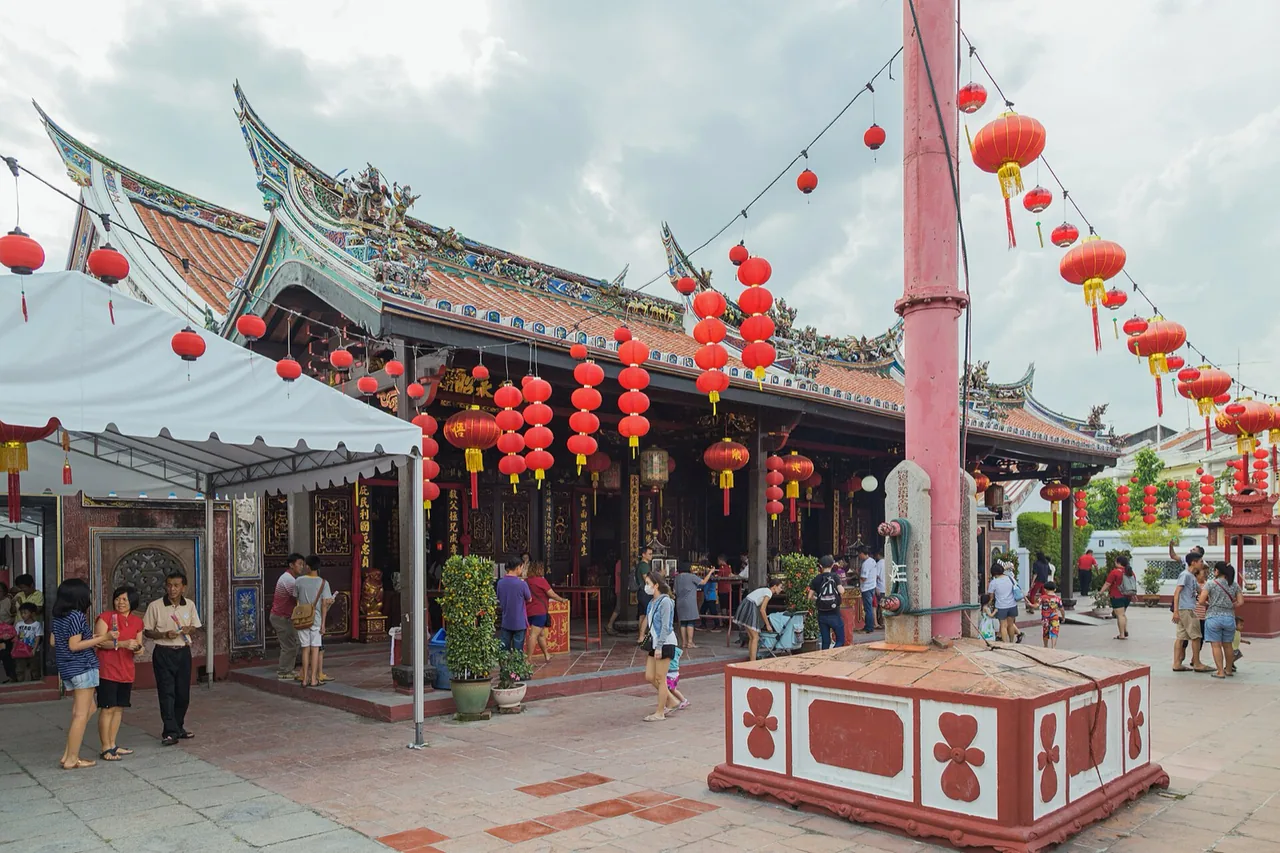
Cheng Hoon Teng Temple Malacca: A Visitor Guide

Cheng Hoon Teng Temple stands at No. 25, Jalan Tokong in Malacca's old town, and it is still a working place of worship. This guide covers its history, its architecture and the practical details that official sources confirm. Last updated November 2026.
The temple describes itself as Malaysia's oldest traditional Chinese temple. Its main hall honors Guan Yin, the goddess of mercy, and worshippers still use the halls today. We also flag what no official source states, such as opening hours, so you can plan around the gaps.
Cheng Hoon Teng Temple Malacca at a Glance
Cheng Hoon Teng, written 青雲亭 in Chinese, means Temple of Green Clouds. Locals also know it as Kebun Datok, or Gods' Garden, and as Kwan Yin Teng. The temple serves the San Chiao, the three teachings of Taoism, Confucianism and Buddhism.
The list below gathers the facts we could verify from the temple's own account and reference sources. Anything we could not confirm is marked as such rather than guessed.
- Address
- The temple stands at No. 25, Jalan Tokong, 75200 Malacca, in the old town.
- Jonker Street is about 0.25 km away on foot.
- Deities and halls
- The main prayer hall is dedicated to Guan Yin, the goddess of mercy.
- Smaller halls honor deities of wealth, longevity and propagation, and they hold ancestral tablets.
- Entry
- The temple's website lists no ticket, only donation boxes on the premises.
- Donations go toward maintenance and restoration of the complex.
- Opening hours
- The temple does not publish opening hours, and neither do the state or national tourism sources.
- Third-party guides give about 7 AM to 7 PM (one says 7 AM to 6 PM); these are unofficial, so confirm with the temple first.
- Founding
- The temple dates its founding to the 1600s; Wikipedia and the Melaka state government give 1645, and a municipal council listing gives 1673.
- Kapitan Tay Kie Ki, also called Tay Hong Yong, is credited as founder.
- Heritage recognition
- The main building's restoration earned a Merit award in UNESCO's 2002 Asia-Pacific Heritage Awards.
- The award recognized culture heritage conservation of the temple's main building.
History and the Kapitan Connection
By the temple's own account, Kapitan Tay Kie Ki founded it in the 1600s. He is also called Tay Hong Yong, and the two names refer to one person. A Kapitan was the appointed headman of the Chinese community under Portuguese and Dutch rule.
Exact dates differ between sources. The Melaka state government and Wikipedia give 1645, while the Hang Tuah Jaya Municipal Council's listing gives 1673. The state government's history page also names Kapitan Lee Wei King as the builder, so accounts of the founder differ too. This guide follows the temple's own account.
In its early years the temple was more than a place of prayer. It also served as the administrative center and court of justice for the Kapitans. Kapitan Chua Su Cheong rebuilt it in 1801.
After the British abolished the Kapitan system in 1824, the temple's leader, the Teng Choo, took over some of those duties. On 28 September 1949 the Cheng Hoon Teng Temple Incorporation Ordinance was passed, placing the temple under trustees, among them Tun Sir Tan Cheng Lock.
The Kapitans served under Portuguese and Dutch rule. To see that colonial side of the story, visit the Stadthuys in Dutch Square, about 430 meters from the temple.

What to See Inside the Temple Complex
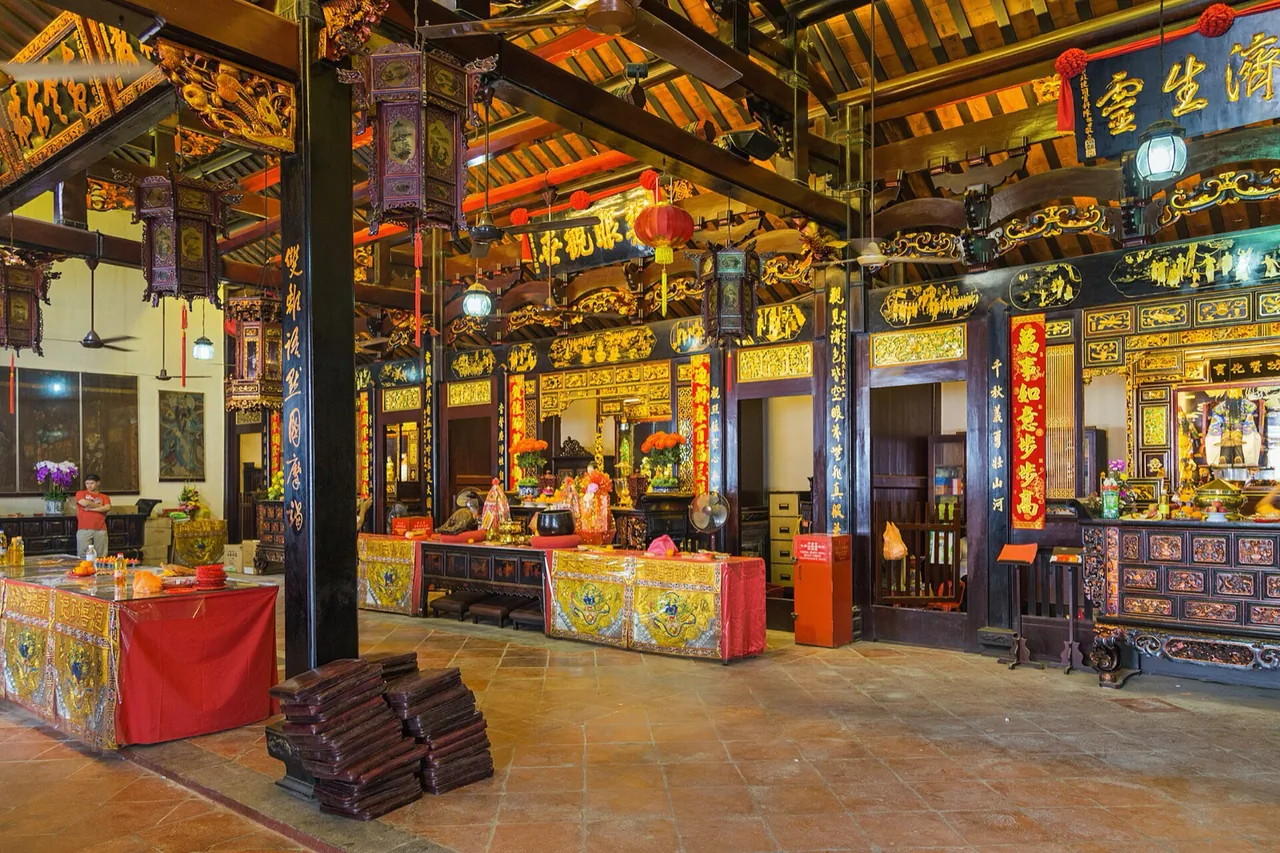
The complex covers about 4,600 square meters and holds several prayer halls laid out on feng shui principles. Craftsmen from Fujian and Guangdong built it, and their skill shows in the detail work.
Unlike most southern Chinese temples in Malaysia, this one has three bays instead of one. The roof slopes more steeply than usual, the columns are mostly not round, and lacquer work covers much of the interior.
In the courtyard, look for the pair of seven-meter flagpoles. Across the road stands an opera theater that belongs to the temple's wider setting.
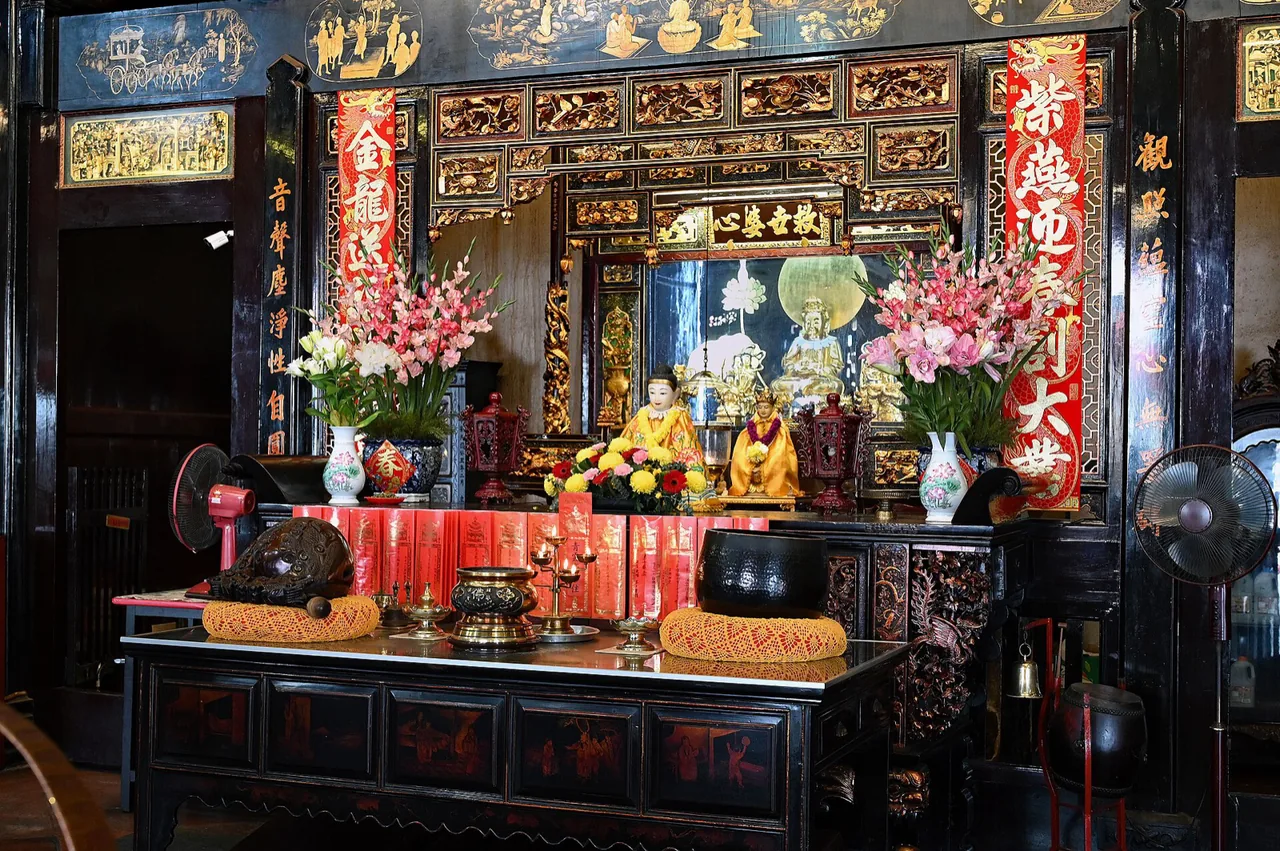
The main hall is dedicated to Guan Yin, the goddess of mercy. Smaller halls honor deities of wealth, longevity and propagation, and they also hold ancestral tablets. Because these halls are in daily use, treat them as active worship spaces rather than exhibits.
The temple's restoration ran in three phases: the main building, the auxiliary buildings and the opera theatre. The first phase, on the main building, ran from late 1999 to early 2001 at a cost of RM1.5 million. That work earned a Merit award in UNESCO's 2002 Asia-Pacific Heritage Awards for culture heritage conservation.
Tickets, Opening Hours and Etiquette
No official source publishes opening hours for Cheng Hoon Teng. The temple's website has no hours page, and the Melaka state, Hang Tuah Jaya council and Tourism Malaysia map guide pages give none either. Third-party guides give about 7 AM to 7 PM, and one gives 7 AM to 6 PM. Those figures are unofficial and may be out of date, so confirm with the temple through the contact details on its official website before you plan around a specific time.
On entry, the temple's website lists no ticket, only donation boxes on the premises, and donations go toward maintenance and restoration. Visitors may give to those boxes if they wish. The third-party guide GoMelaka describes admission as free; the temple itself makes no such statement.
Because hours are unconfirmed, build this stop so it can move within your day. Pair it with flexible neighbors such as Jonker Street instead of anchoring a tight schedule to it. If the temple turns out to be closed, the nearby stops still fill your walk.
Treat the visit as you would any active place of worship. Keep your voice low, and ask before photographing people who are praying. Give worshippers room near the altars and offerings.

Getting There and Nearby Sights
The temple sits at No. 25, Jalan Tokong, 75200 Malacca, in the old town, and the simplest way to reach it is on foot. From Jonker Street, also called Jalan Hang Jebat, it is about 0.25 km.
From Dutch Square, also called Red Square, by the Stadthuys, the distance is about 0.43 km. The Baba & Nyonya Heritage Museum is closer still, at about 0.21 km.
The Hang Tuah Jaya Municipal Council's listing places the temple near two other places of worship, Kampung Kling Mosque and Sri Poyyatha Vinayagar Moorthi Temple, so you can see several faiths' buildings on one short walk.
You can add A Famosa to the same old-town loop. Our St Paul's Church guide covers another stop that fits an old-town route.
Frequently Asked Questions
How old is Cheng Hoon Teng Temple?
The temple was founded in the 1600s; Wikipedia and the Melaka state government date it to 1645. The temple describes itself as Malaysia's oldest traditional Chinese temple. It was rebuilt in 1801.
Who founded Cheng Hoon Teng?
The temple credits the Chinese Kapitan Tay Kie Ki, also known as Tay Hong Yong. Kapitans were the appointed headmen of the Chinese community in Portuguese and Dutch Malacca. The Melaka state government's history page names Kapitan Lee Wei King instead.
Which religion is Cheng Hoon Teng?
It serves the San Chiao, the Three Doctrinal Systems of Taoism, Confucianism and Buddhism. The main prayer hall is dedicated to Guan Yin, the goddess of mercy. Smaller halls honour deities of wealth, longevity and propagation and hold ancestral tablets.
Is there an entrance fee for Cheng Hoon Teng Temple?
No ticket is listed by the temple, and visitor guides list entry as free. The temple has donation boxes on the premises, and donations go toward maintenance and restoration.
Where is Cheng Hoon Teng Temple?
It is at No. 25, Jalan Tokong, 75200 Malacca, in the old town about 0.25 km from Jonker Street and 0.43 km from Dutch Square.
What does Cheng Hoon Teng mean?
The name 青雲亭 means Temple of Green Clouds. Locals also call it Kebun Datok (Gods' Garden) and Kwan Yin Teng.
Did Cheng Hoon Teng win a UNESCO award?
Yes. The restoration of the main temple, carried out from late 1999 to early 2001 at a cost of RM1.5 million, received a Merit award in UNESCO's 2002 Asia-Pacific Heritage Awards for culture heritage conservation.
What makes the architecture of Cheng Hoon Teng unusual?
Craftsmen from Fujian and Guangdong built it on feng shui principles. Unlike most southern Chinese temples in Malaysia, it has three bays instead of one, a steeper roof slope, columns that are mostly not round and heavy use of lacquer. A pair of seven-metre flagpoles stands in the courtyard.
Cheng Hoon Teng rewards visitors who arrive curious, flexible and respectful of an active place of worship. Its three-bay design, lacquer work and layered Kapitan history set it apart from other stops in the old town. For more stops to build around it, browse our Malacca attractions guide.
Planning more of Malacca? See our guides to things to do in Malacca, the best time to visit Malacca and Chinese New Year in Malacca.