
Khoo Kongsi (Leong San Tong) in George Town: Visitor Guide

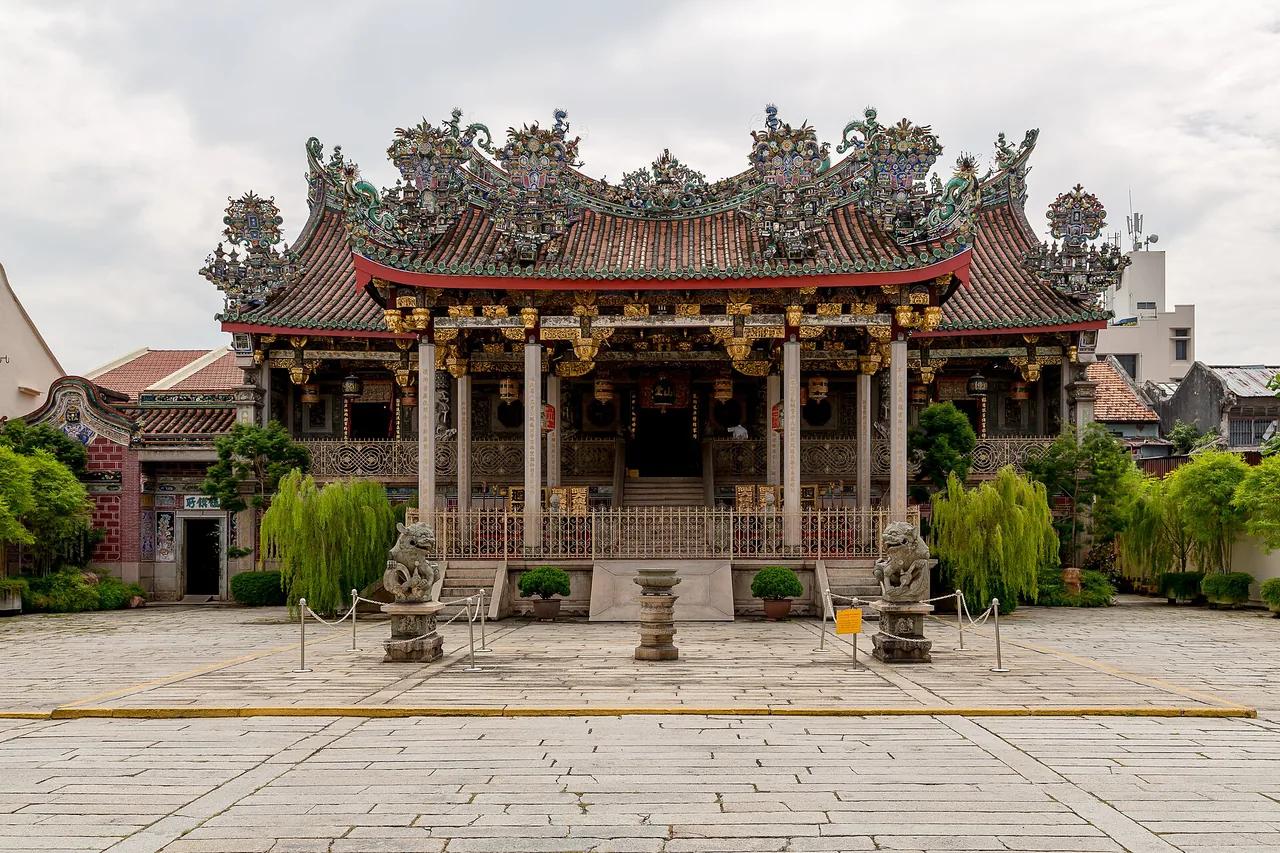
Khoo Kongsi, formally Leong San Tong Khoo Kongsi, is the Khoo clan's temple and clan house on Cannon Square in George Town. This Khoo Kongsi Penang visitor guide covers hours, ticket prices, history and layout so you can plan with confidence. Last updated November 2026.
The complex is described as the largest Hokkien clanhouse in Malaysia, and it sits inside the core zone of George Town's UNESCO World Heritage Site. Below you will find the hours and fees as listed on the clan house's website, how to find the entrance, and the history behind the buildings. If you are building a wider route, our guide to Penang attractions shows what else fits nearby.
Khoo Kongsi Tickets and Opening Hours
Khoo Kongsi is open daily from 9:00 AM to 5:00 PM, including Sundays and public holidays. The clan house and its museum close on Chinese New Year Eve and Chinese New Year Day, so check the lunar calendar if your trip falls around the new year.
Admission is charged. As listed on the clan house's website, foreign adults pay RM 17 and children under 12 pay RM 1, while children under 5 enter free. Adult MyKad and MM2H card holders pay RM 12, and student card holders pay RM 1. The website could not be reached directly when these figures were checked, so confirm the price at the gate before you pay.
Several of these rates depend on a card, so bring yours to the ticket counter. Students should carry a valid student card, and Malaysian MyKad or MM2H holders should have theirs ready.
- Opening Hours
- The clan house and museum are open every day from 9:00 AM to 5:00 PM.
- Sundays and public holidays are included in the daily schedule.
- Doors stay shut on Chinese New Year Eve and Chinese New Year Day.
- Admission Prices
- Foreign adults pay RM 17, and children under 12 pay RM 1 per person.
- Children under 5 are free, and student card holders pay RM 1.
- Adult MyKad and MM2H card holders pay RM 12 per person.
Getting There
The address is 18 Cannon Square, George Town, Penang 10200. Cannon Square sits in the heart of George Town's old quarter, inside the core zone of the city's UNESCO World Heritage Site, so it is easy to combine with other heritage stops on foot.
The clan house does not face a main road. The way in is through an alleyway off 9 Lebuh Cannon, also called Cannon Street, which opens into the granite-paved square in front of the temple. The entrance is easy to walk past, so watch the street numbers along Lebuh Cannon and ask at the gate if you are unsure which door leads to the ticket counter.
- Address: 18 Cannon Square, George Town, Penang 10200, Malaysia.
- Entrance: through an alleyway off 9 Lebuh Cannon (Cannon Street).
- Area: the core zone of George Town's UNESCO World Heritage Site.
History of Leong San Tong Khoo Kongsi
The Khoo clan bought the Cannon Square property in 1850. In 1851 it converted a bungalow on the land into its first clanhouse, named Leong San Tong. Those are the dates given by Wikipedia and the clan's own history pages; some accounts, including a 2020 Free Malaysia Today feature, date the founding of the clan association itself to 1835, earlier than the clanhouse.
That building burned down in 1901, allegedly struck by lightning. A scaled-down replacement was begun in 1902 and completed in 1906 at a cost of 100,000 Straits dollars. Master craftsmen from China made the carvings and ornamented timber beams.
The clan traces its roots to Sin Kang, today Sin Aun Village in Xiamen, Fujian province. Leong San Tong means Dragon Mountain Hall, and the temple is dedicated to the clan's patron deities. It also houses ancestral tablets, which is why the main hall still works as a shrine.
The square takes its name from a cannon fired from it during the Penang Riots of 1867. Twenty-four rowhouses line its four sides, built for clan members.
Chinese operas are still staged at the theatre on the square during the seventh lunar month, so the complex remains in use by the clan rather than being only a museum. In 2008 George Town was inscribed as a UNESCO World Heritage Site, and Khoo Kongsi lies within its core zone.

What to See Inside Khoo Kongsi
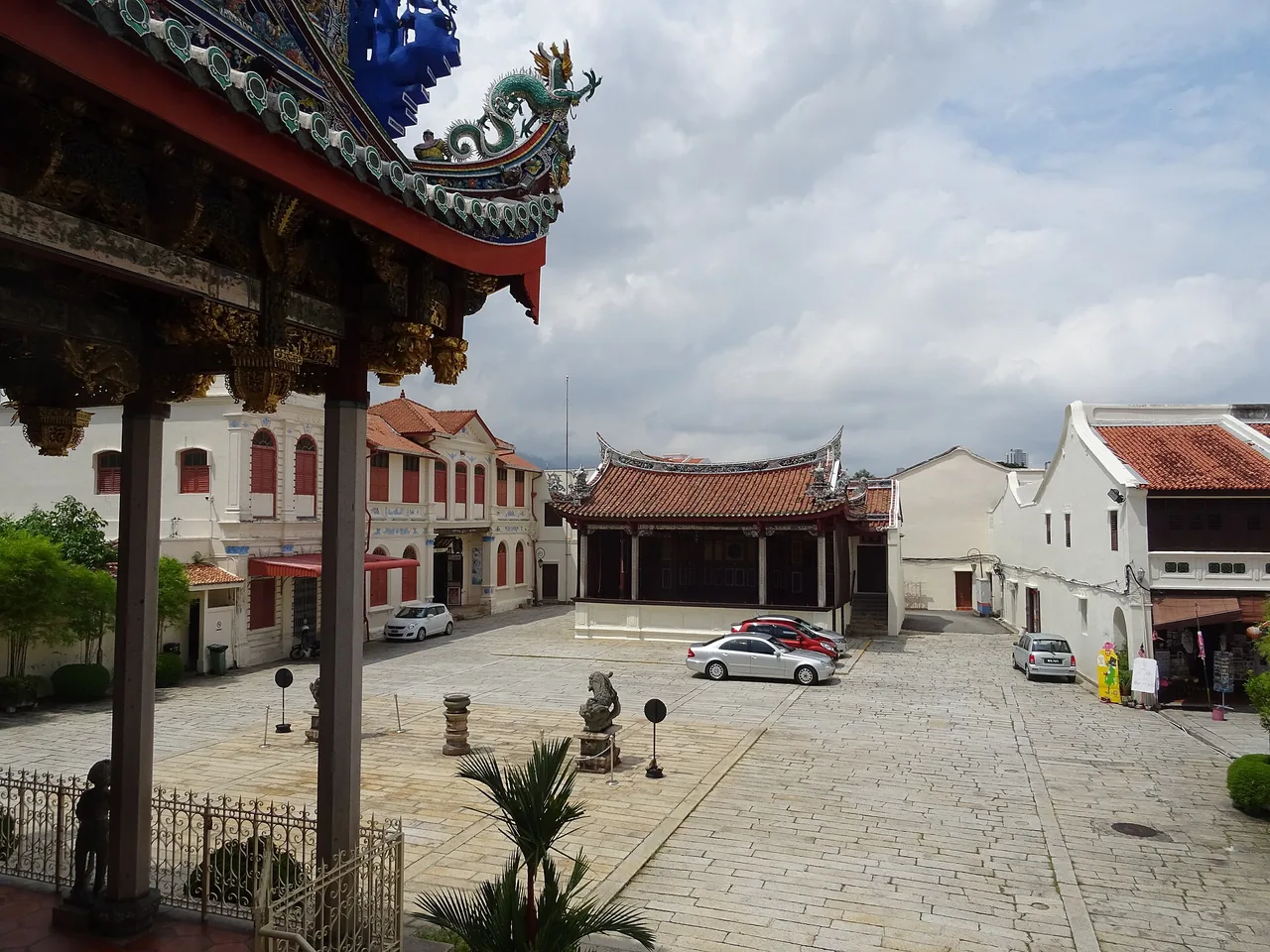
The complex is more than one building, so it helps to know what each part is before you step in. The temple stands on a granite-paved square, with the opera stage, administrative building and rowhouses around it.
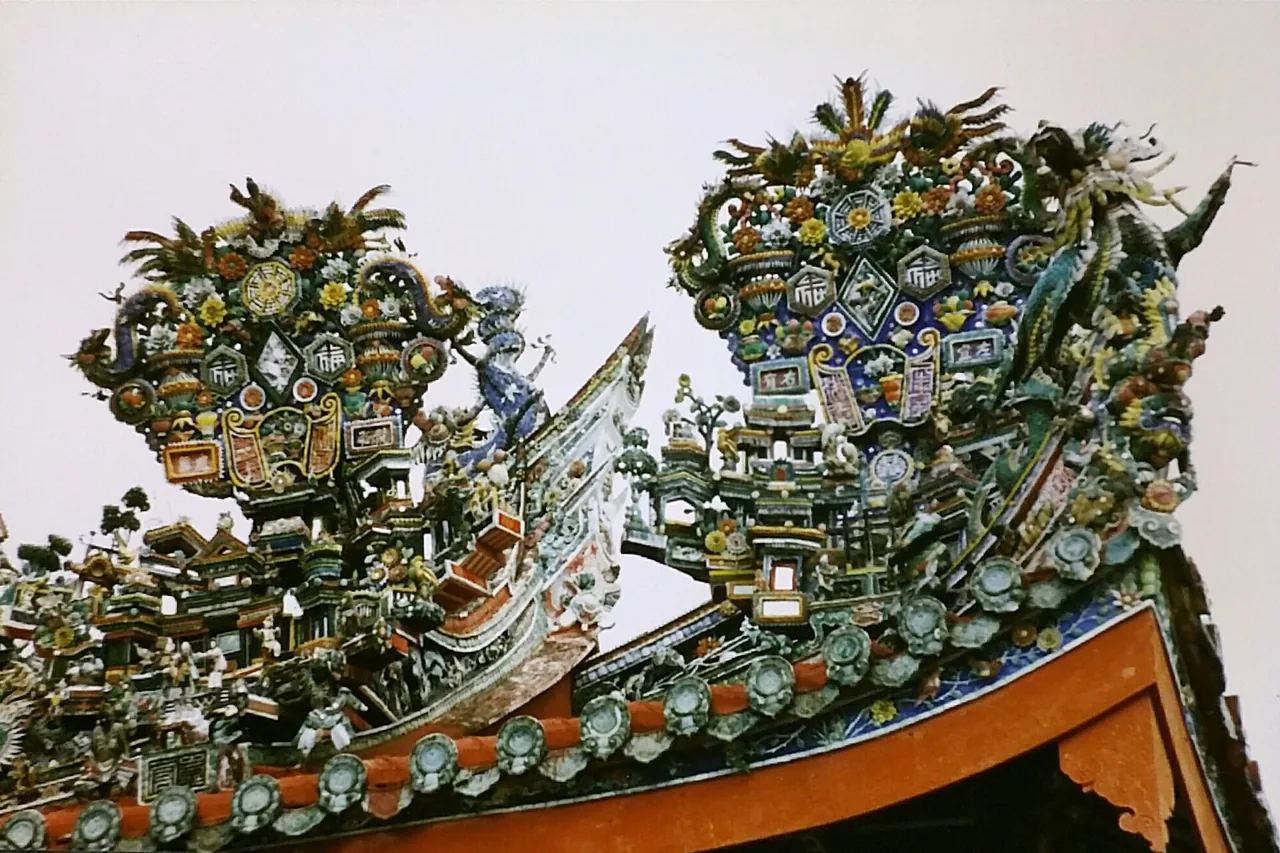
The centrepiece is the ornate main hall, completed in 1906. Its carvings and ornamented timber beams were made by master craftsmen from China.
Treat the hall with the respect you would give any working clan shrine. It is dedicated to the clan's patron deities and holds the clan's ancestral tablets, so it serves the Khoo family as well as visitors.
The museum covers the history of the Khoo clan; the clan's history pages place it in the basement. The rowhouses, opera stage and administrative building around the square give context that the temple alone cannot, showing a clan community organised around shared ancestry and worship.
- Main Temple Hall
- The ornate main hall was completed in 1906 after the earlier building burned down.
- It is dedicated to the clan's patron deities and holds ancestral tablets.
- Carvings and timber beams were made by master craftsmen from China.
- Opera Theatre
- A traditional opera stage faces the temple across the granite-paved square.
- Chinese operas are still staged here during the seventh lunar month.
- Twenty-Four Rowhouses
- Rowhouses line all four sides of the complex and were built for clan members.
- They enclose the granite-paved square in front of the temple.
- Clan Museum
- The museum covers the history of the Khoo clan and is open the same daily hours as the clan house.
- The clan's administrative building also stands on the square.

Planning Your Khoo Kongsi Visit
Older guides often quote lower entry fees than the ones now listed on the clan house's website. Treat any foreign-adult figure other than RM 17 as out of date, and confirm the price at the gate.
The clan's contact page also lists separate office hours for its administrative staff, and some directories repeat those as opening times. They are not visiting hours: the clan house and museum keep the daily 9:00 AM to 5:00 PM schedule.
If you want to see the opera stage in use, plan around the seventh lunar month, when Chinese operas are staged on the square. Exact performance dates were not available for this guide, so ask the clan house or check its website before you travel.
Khoo Kongsi is a working clan temple, so keep voices low in the main hall and follow any signs or instructions from staff about where you may go.
Khoo Kongsi pairs naturally with other heritage stops, since the old town packs several into a small area. For another view of Chinese-Straits heritage, tour the Cheong Fatt Tze Mansion, and see how a wealthy family lived at the Pinang Peranakan Mansion.
When you want a break from the old town, Penang Hill offers a very different view of the island. Check opening times for each stop in advance, because schedules can differ.
Frequently Asked Questions
What are Khoo Kongsi's opening hours?
The clan house and museum are open daily, including Sundays and public holidays, from 9:00am to 5:00pm. They close on Chinese New Year Eve and Chinese New Year Day.
How much is the Khoo Kongsi entrance fee?
The clan's own fee list gives RM 17 for foreign adults, RM 12 for adult MyKad and MM2H card holders, RM 1 for children under 12 and for student card holders, and free entry for children under 5.
Where is Khoo Kongsi?
It is at 18 Cannon Square in the heart of George Town's old quarter, inside the city's UNESCO World Heritage core zone. You enter through an alleyway off Lebuh Cannon (Cannon Street).
How old is Khoo Kongsi?
The Khoo clan set up its first clanhouse on the site in 1851. After that building burned down in 1901, the present temple was built from 1902 and completed in 1906.
What does Leong San Tong mean?
Leong San Tong means Dragon Mountain Hall. It is the name of the Khoo clan association whose ancestors came from Sin Kang in Fujian province, China.
What is there to see besides the main hall?
The temple stands on a granite-paved square with a traditional opera stage, the clan's administrative building and 24 rowhouses built for clan members, plus a museum on the clan's history.
Are Chinese operas still performed at Khoo Kongsi?
Yes. Chinese operas are still staged at the theatre on the square during the seventh lunar month.
Is Khoo Kongsi a UNESCO World Heritage Site?
It lies within the core zone of George Town's UNESCO World Heritage Site, which was inscribed in 2008.
Khoo Kongsi rewards visitors who arrive prepared, because it is a working clan shrine, a museum and a granite-paved square. Confirm the RM 17 foreign adult fee at the gate, and remember the clan house is closed on Chinese New Year Eve and Day.
Once you have seen Cannon Square, there is plenty more to explore across the island. Continue with our Penang attractions guide for more places to add to your plans.
Planning more of Penang? See our guides to things to do in Penang, the best time to visit Penang and George Town street art.