
Visiting Tuol Sleng Genocide Museum (S-21) in Phnom Penh

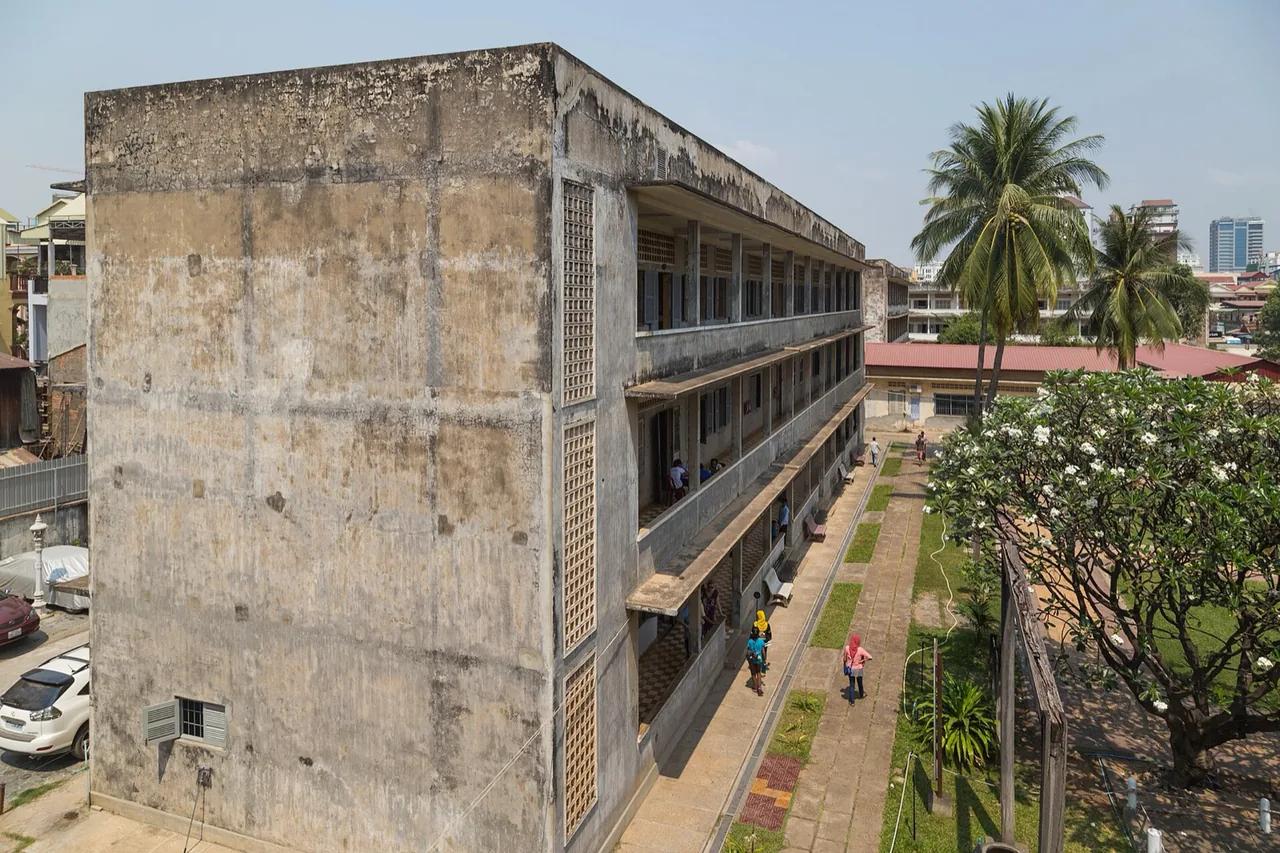
The Tuol Sleng Genocide Museum (S-21) is the memorial site of a Khmer Rouge interrogation and detention center in Phnom Penh. It occupies a former high school and presents its history through preserved buildings, photographs, and documents.
This visitor guide covers hours, ticket and audio guide prices, the entrance, the four main buildings, and the museum's rules. Figures come from the museum's official website, which we checked in November 2026. Last updated November 2026.
Tuol Sleng Genocide Museum: History and Context
The site was originally Tuol Svay Prey High School. After the Khmer Rouge took power, it became Security Prison 21, set up as an institution in August 1975. The prison moved into the former school buildings at the beginning of 1976.
Wikipedia estimates that about 20,000 people were imprisoned there between 1976 and 1979. Sources differ on the total: UNESCO's Memory of the World register gives roughly 15,000. Twelve survivors are known, while the Documentation Center of Cambodia estimates about 23 people survived until liberation in January 1979.
The prison became a museum around 1979 to 1980. Its archive was inscribed on UNESCO's Memory of the World Register in 2009. On 11 July 2025, Tuol Sleng was inscribed on the UNESCO World Heritage List. It is one of three Cambodian Memorial Sites, together with Choeung Ek and the former M-13 prison.
The prison's commander, Kang Kek Iew (Comrade Duch), was convicted by the Extraordinary Chambers in the Courts of Cambodia on 26 July 2010. He died in 2020 while serving a life sentence.
Tickets and Opening Hours
According to the museum's official website, Tuol Sleng is open every day, including public holidays, from 8:00 am to 5:00 pm. Some third-party listings show different hours, so rely on the official times.
Payment is cash only, in US dollars or Cambodian riel, according to the official site. Card payments are not accepted.
International adults aged 18 and over pay $5. The child ticket of $3 covers international visitors aged 10 to 17, and children under 10 enter free; both categories require proof of identity, so bring identification for any child.
- International Adults (18+)
- Admission for international adults aged 18 and over is $5 per person.
- Payment is cash only, in US dollars or Cambodian riel.
- International Children Aged 10 to 17
- Admission is $3 for international children from 10 through 17 years old.
- Proof of identity is required for this ticket category.
- Children Under 10
- Children under 10 enter free of charge with proof of identity.
- Foreign Visitors With a K-VISA
- Foreign visitors holding a K-VISA enter free of charge.
- The museum asks for K-VISA confirmation as proof of eligibility.
- Cambodian Visitors
- Cambodian nationals enter free of charge, according to the official ticket list.
- Audio Guide
- The audio guide costs $5 for non-Cambodian visitors and $1 for Cambodian citizens.
- Personal Tour Guide
- Personal guides work for a voluntary contribution, meaning a donation, rather than a fixed fee.
- Group bookings are available for parties of 10 or more.

Getting There: Location and Entrance
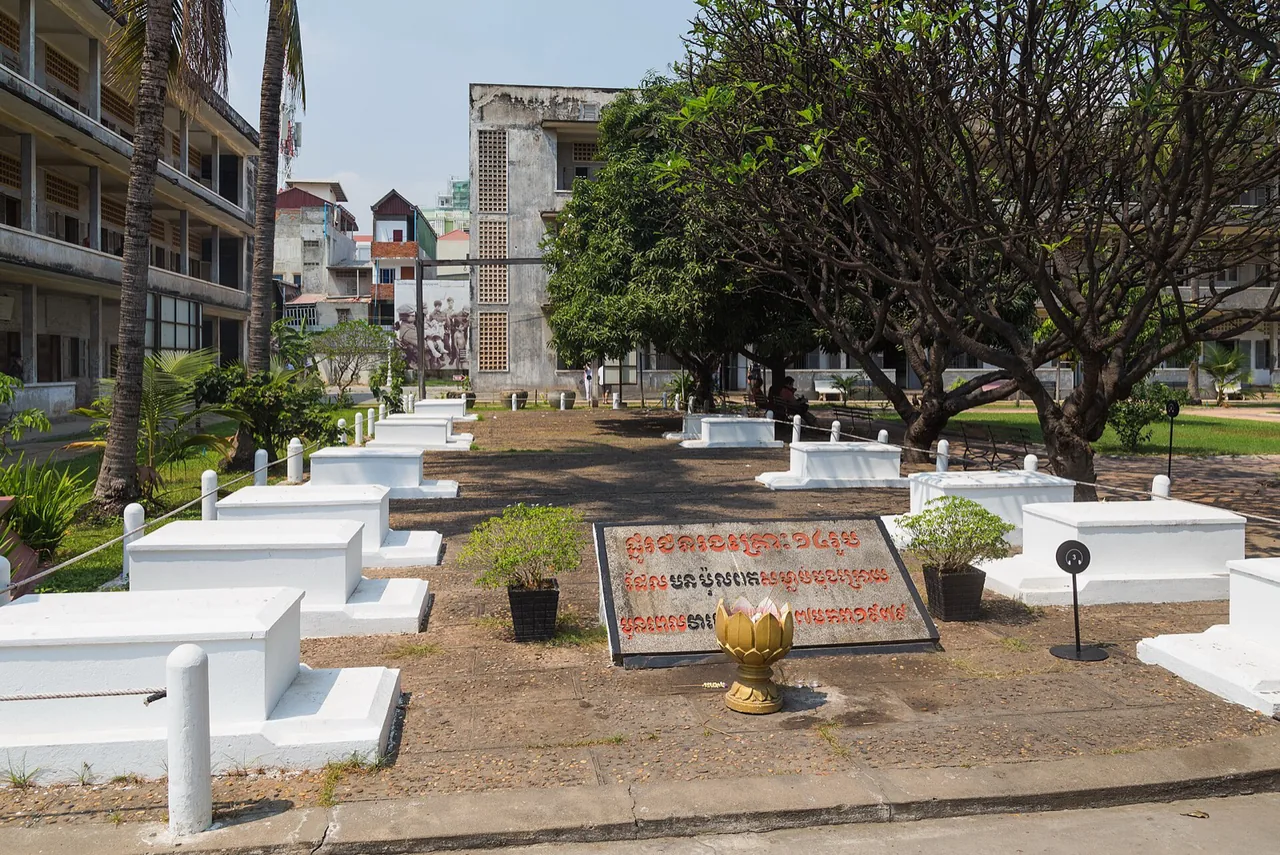
The museum stands on Street 113 in Boeung Keng Kang III, in the Boeung Keng Kang district of central Phnom Penh. The entrance is at the corner of Street 113 and Street 350, and the postal code is 12304.
Because the entrance sits on a corner, give your driver both street numbers rather than only the museum's name. For other sights in the city, see our Phnom Penh attractions guide.
Choeung Ek Genocidal Center, the former execution site linked to S-21, lies about 17 km (11 mi) south of Phnom Penh's city centre. It is a separate site with its own schedule, so plan that trip on its own terms.
What to Expect Inside the Four Buildings
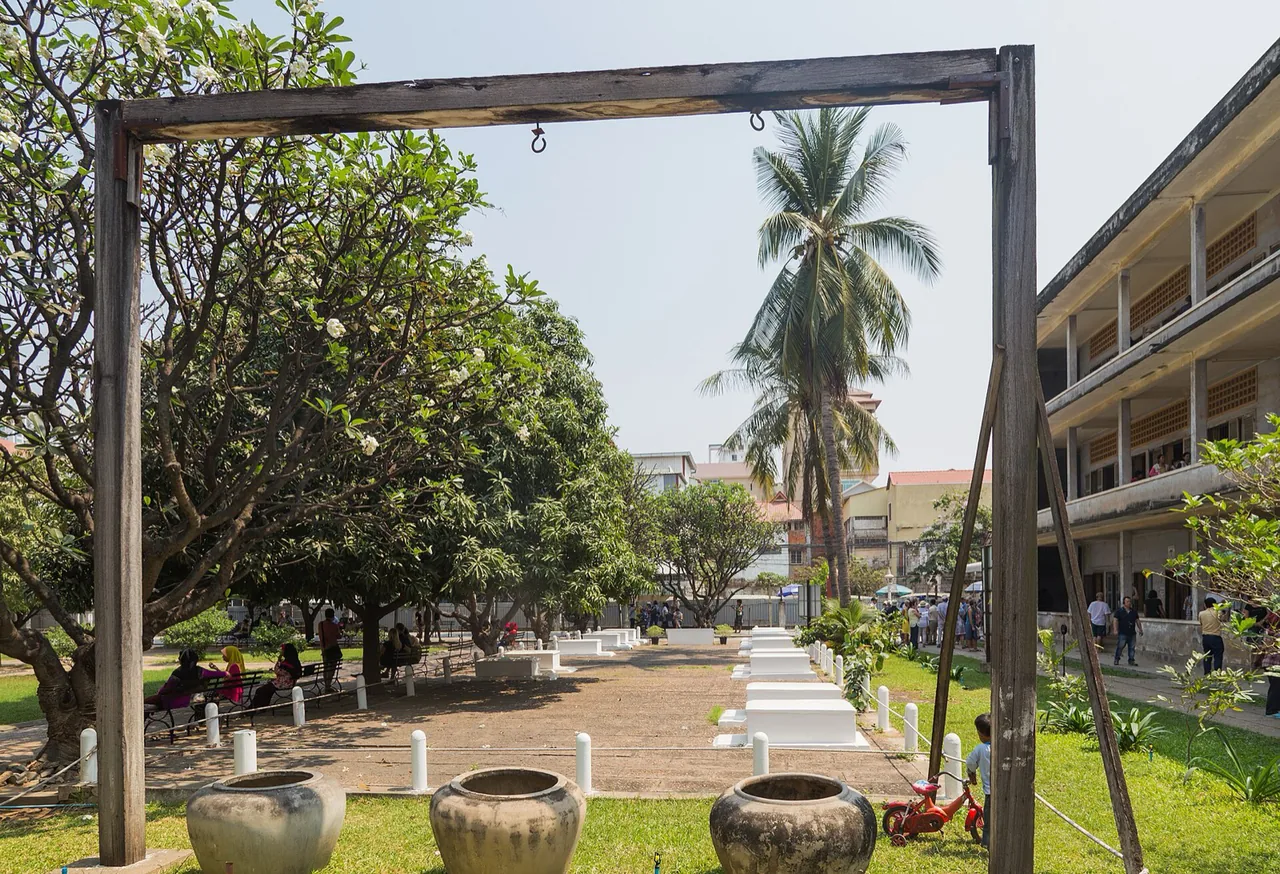
The compound has four main buildings, labeled A to D, arranged around the former school grounds. The exhibits are documentary and often distressing, so each visitor should decide what feels right for them and for any children.
The official site sets ticket categories by age but does not state a minimum age for visitors. Other rooms described on the museum's site include a reading room in Building B and the White Lotus Room in Building D.
The official museum page also describes a wooden building, Building E, used for documentary screenings.
- Building A
- Building A holds the large cells where the last victims' bodies were found.
- Building B
- Building B houses the photograph galleries. The museum's archive, which holds prisoner photographs and prison documents, was inscribed on UNESCO's Memory of the World Register in 2009.
- Building C
- Building C contains small subdivided cells.
- Building D
- Building D holds memorabilia, including instruments of torture, along with the White Lotus Room.

Visiting Respectfully: Rules and Photography
The museum admits guests only in appropriate clothing. Its rules note that Cambodian culture dictates that legs and arms be covered at commemorative and religious sites.
Photography is allowed for personal, non-commercial, or research use. Mobile phones may not be used inside the exhibition buildings, and drones need authorization from the Museum Director.
The official rules also prohibit food, alcohol, and smoking on the grounds. Keeping your voice low and your pace unhurried is a simple way to honor the victims and survivors.
Pairing S-21 With Choeung Ek and Other Sites
Most S-21 prisoners were later taken to Choeung Ek, where they were executed. Together with the former M-13 prison, the two sites form the Cambodian Memorial Sites on the UNESCO list.
Tuol Sleng keeps the 8:00 am to 5:00 pm schedule noted above, but Choeung Ek, about 17 km south of the city centre, sets its own hours. Check those on its official channels before planning to visit both.
Our guides to other Phnom Penh sites cover the Royal Palace, the National Museum of Cambodia and Wat Phnom. Check each site's current hours separately before you plan.
Frequently Asked Questions
What are the Tuol Sleng Genocide Museum opening hours?
The museum is open every day, including public holidays, from 8:00 am to 5:00 pm, according to its official website.
How much is the entrance fee for foreigners at Tuol Sleng (S-21)?
International adults (18+) pay $5. International children aged 10 to 17 pay $3 and children under 10 enter free, both with proof of identity. Foreign visitors with a K-VISA enter free, and Cambodian visitors enter free of charge.
Is there an audio guide at Tuol Sleng and how much does it cost?
Yes. The official site lists the audio guide at $5.00 for non-Cambodian visitors and $1.00 for Cambodian citizens. Personal guides are also available for a voluntary contribution.
Can I pay by card at Tuol Sleng Genocide Museum?
No. The museum's official site says it accepts cash only, in US dollars or Cambodian riel.
What should I wear to visit S-21?
The museum admits guests only in appropriate clothing; its rules note that Cambodian culture dictates that legs and arms be covered at commemorative and religious sites.
Can I take photos inside Tuol Sleng?
Photography is allowed for personal, non-commercial or research use, but mobile phones may not be used inside the exhibition buildings and drones need the Museum Director's authorization.
What is the connection between Tuol Sleng and the Killing Fields?
Most S-21 prisoners were later taken to Choeung Ek, about 17 km south of Phnom Penh's city centre, where they were executed. Both sites, along with the former M-13 prison, were inscribed together on the UNESCO World Heritage List in 2025 as the Cambodian Memorial Sites.
Where is the Tuol Sleng Genocide Museum?
It is on Street 113 in Boeung Keng Kang III, central Phnom Penh, with the entrance at the corner of Street 113 and Street 350.
Tuol Sleng Genocide Museum (S-21) preserves the history of a Khmer Rouge prison in the buildings where it operated. Check the official hours, bring cash for the $5 adult ticket, and add the $5 audio guide if you want one.
Our Phnom Penh attractions guide lists other places to build into your stay. Approach the museum with patience and respect, and allow room in your plans for what you see.
Planning more of Phnom Penh? See our guides to things to do in Phnom Penh, where to stay in Phnom Penh and free things to do in Phnom Penh.