
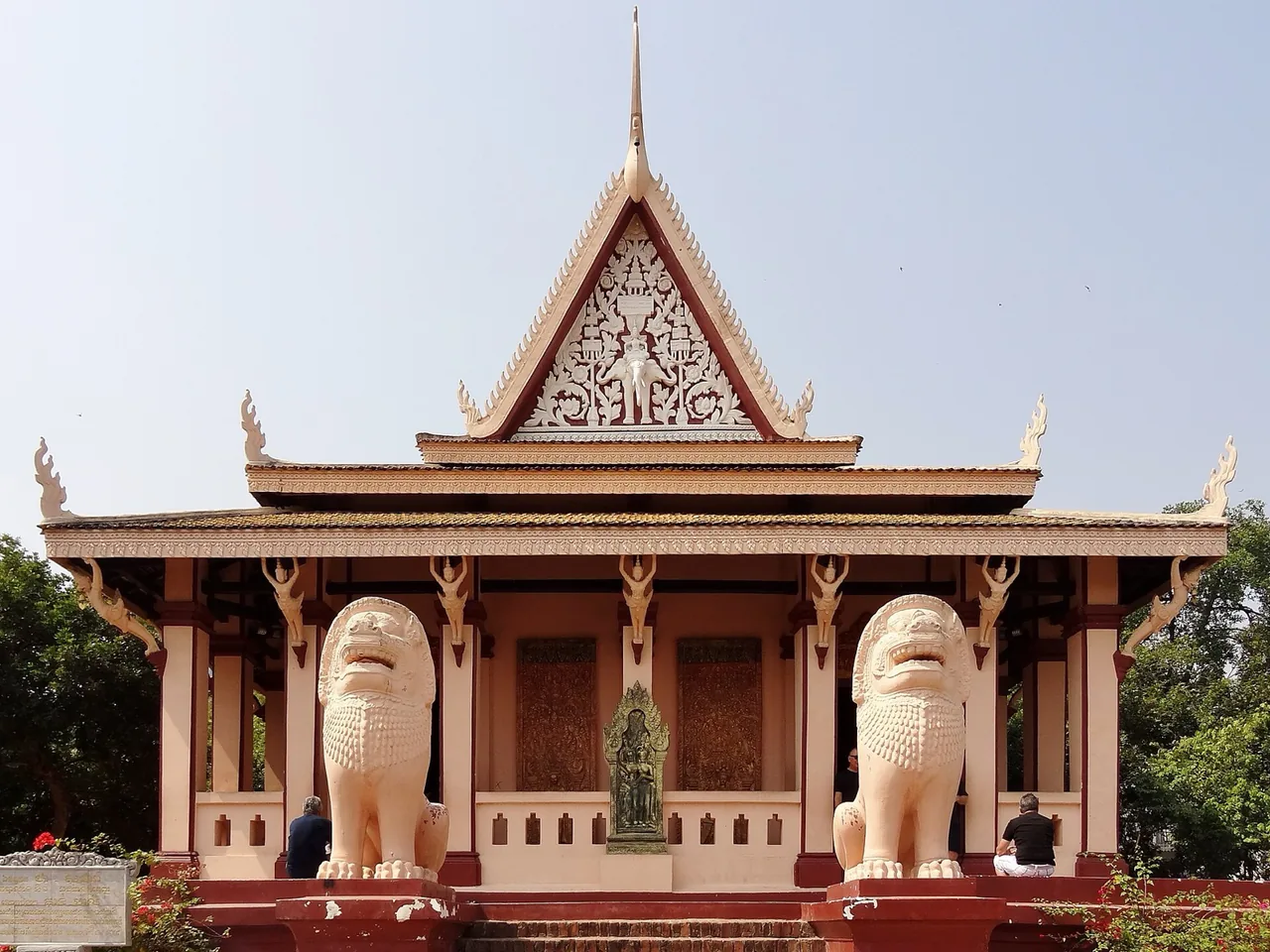
Wat Phnom (Wat Phnom Daun Penh): Phnom Penh Visitor Guide

Wat Phnom is the small hilltop temple in Daun Penh that gave Phnom Penh its name. Formally called Wat Phnom Daun Penh, it sits in the middle of the city and is easy to fold into a day of sightseeing. Last updated November 2026.
Below, we cover the legend of Lady Penh, what to see on the hill, and the hours and fee from Cambodia's Ministry of Tourism. For wider planning, our guide to attractions in Phnom Penh puts the temple next to the city's other major sights.
Wat Phnom Quick Facts at a Glance
Wat Phnom is a working Buddhist temple, so locals come here to pray as well as visitors who come to look around. The basics fit in a short list, and we have kept it to details the Ministry of Tourism and Phnom Penh Capital Hall support.
Hours and prices can change, so treat the figures below as the latest published guidance rather than a guarantee. The Ministry's fee is undated and given as an approximate figure, which is why we say "about" when we quote it.
- Location
- The temple stands at the intersection of Street 96 and Norodom Boulevard in the Daun Penh district.
- Opening hours
- Cambodia's Ministry of Tourism lists Wat Phnom as open every day from 7:00 AM to 6:00 PM.
- Entry fee
- The same Ministry page gives the fee for foreigners as about $1, while locals often enter freely to pray.
- Best time of day
- The Ministry of Tourism suggests early morning or late afternoon for softer light and cooler temperatures.
- Full temple name
- Wat Phnom Daun Penh translates roughly as the hill pagoda of Grandmother Penh, and locals shorten it to Wat Phnom.
The Legend of Lady Penh and the Hill
The story begins in 1372, according to the legend recorded by Phnom Penh Capital Hall. A wealthy older woman named Penh pulled a large koki tree from the flooded river and found something unexpected inside its hollow. She discovered four small bronze Buddha statues and a stone deity figure.
Penh had her neighbors raise a hill west of her house and built a thatched sanctuary on top for the Buddha statues. She placed the stone figure, which she called Neak Ta Preah Chau, on a seat at the eastern foot of the hill.
Monks were invited to live at the western foot of the hill, and their temple became known as Wat Phnom Daun Penh. That name explains the city itself, since phnom means hill and Penh is the woman who founded the temple.
The city later became the capital in 1434, when King Ponhea Yat moved his court to the meeting point of four rivers. A large stupa on top of the hill holds his ashes, which links the legend to the royal history of Phnom Penh.

What to See at Wat Phnom
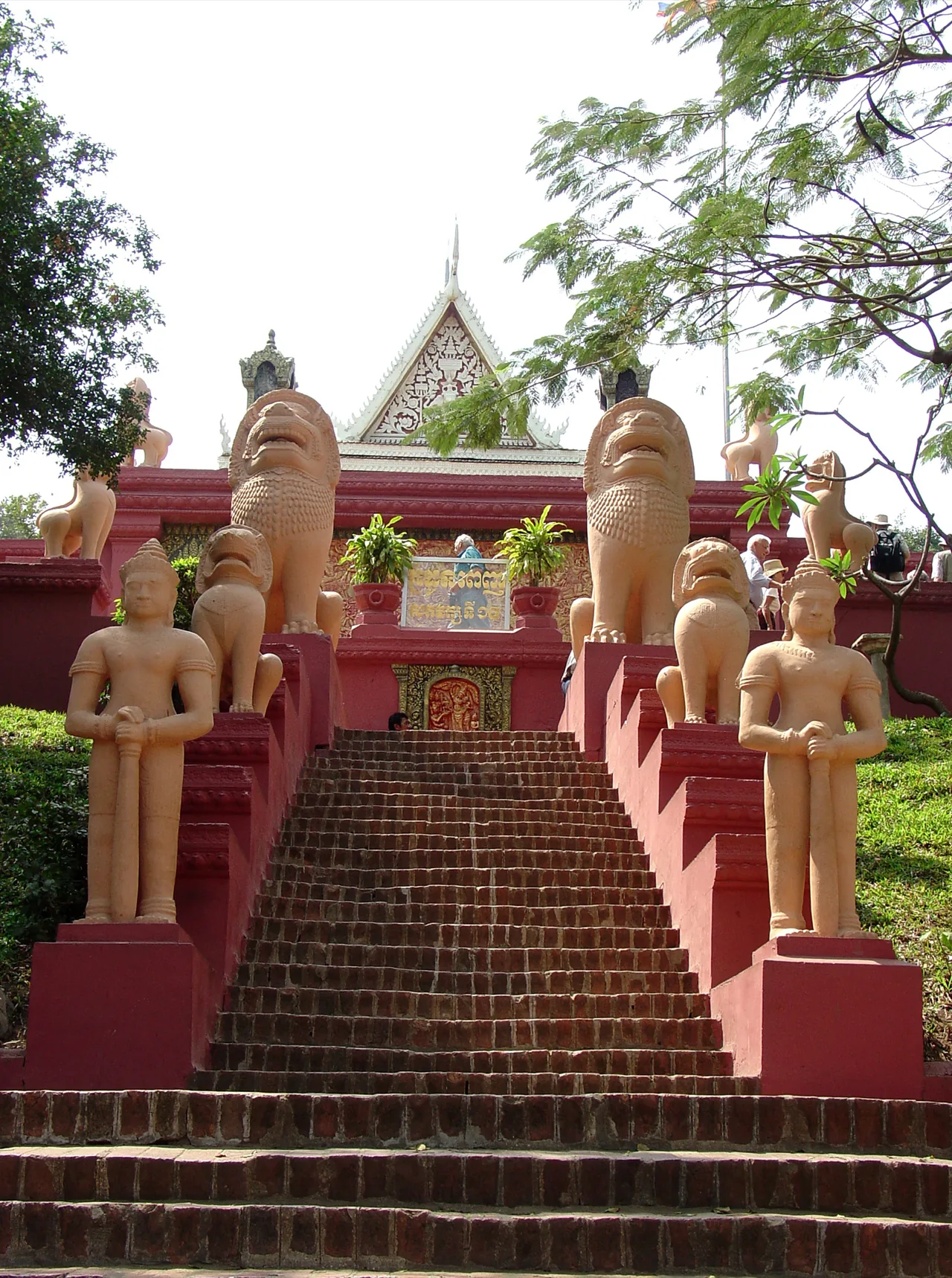
The hilltop sanctuary is the main stop, and it was rebuilt several times in the 19th century and again in 1926. Inside, a large bronze seated Buddha rests on the central altar.
Look up and around at the walls, which are covered with murals of the Jataka stories and the Reamker, the Khmer Ramayana. Those painted scenes reward a slow look, especially if you read a short summary of each story beforehand.
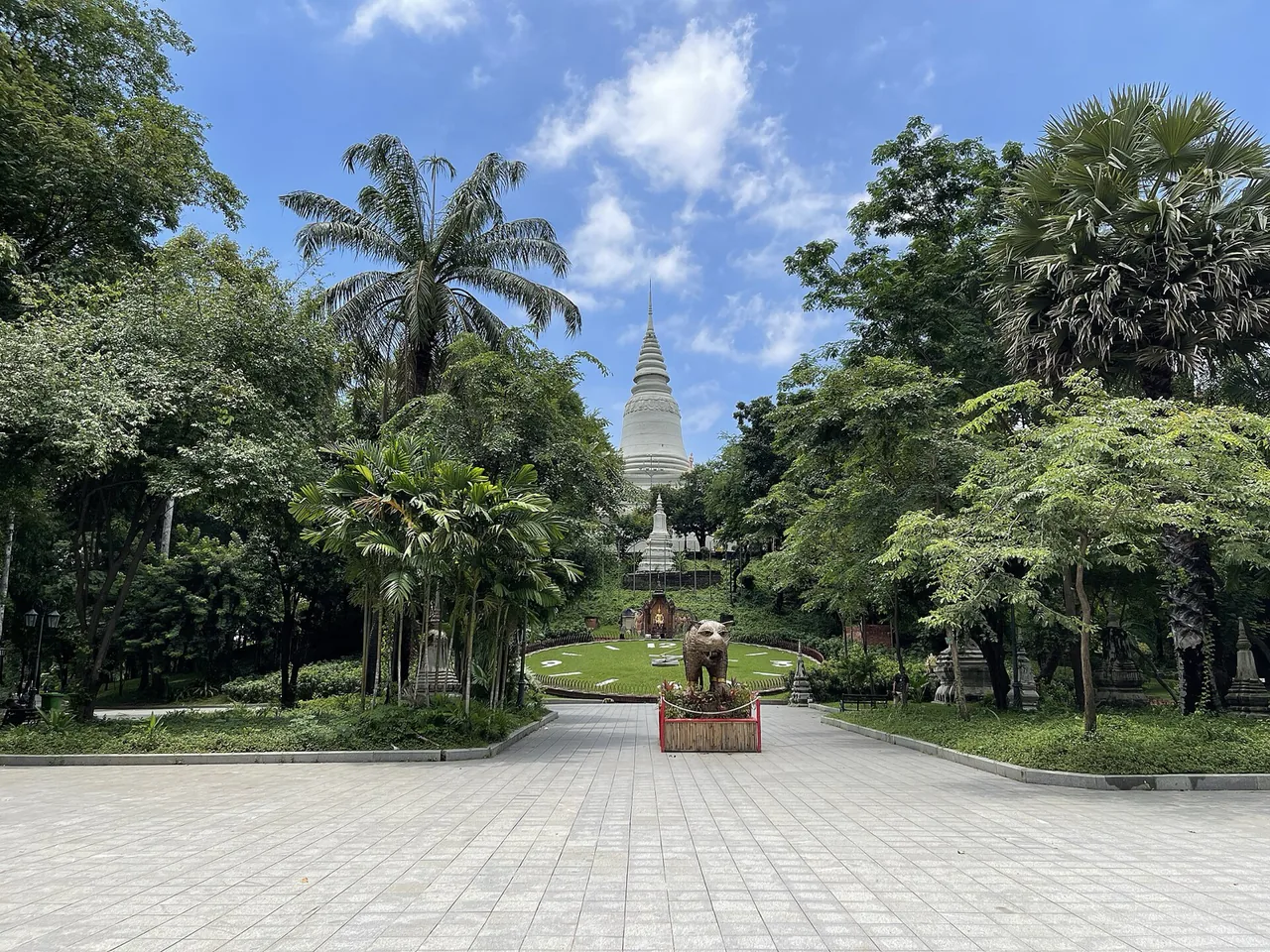
The large stupa on the hill is the resting place of King Ponhea Yat, so it is worth a pause even from a distance. A small shrine to Lady Penh stands at the southwest corner of the temple and stupa.
Worshippers come to the shrine to pray for luck in exams, business and love. If people are praying, stand back and let them finish before you take photos.
- Bronze seated Buddha
- The large bronze figure sits on the central altar of the sanctuary that was rebuilt in 1926.
- Jataka and Reamker murals
- Wall paintings show the Buddha's past-life stories alongside scenes from the Khmer version of the Ramayana.
- Stupa of King Ponhea Yat
- The large stupa on top of the hill holds the ashes of the king who moved his court here in 1434.
- Shrine to Lady Penh
- Visitors pray at this small shrine at the southwest corner for luck in exams, business and love.
Tickets and Opening Hours
Cambodia's Ministry of Tourism lists the temple as open every day from 7:00 AM to 6:00 PM, so the window is wide. Its advice for light and temperature points to early morning or late afternoon.
The same Ministry page gives the entry fee for foreigners as about $1, while locals often enter freely to pray. The page is undated, so check the current price when you arrive.
Monkeys live in the trees around the temple, and the Ministry of Tourism advises visitors to watch their belongings. Keep food, sunglasses and loose items zipped away while you walk the grounds.
Treat the site as a place of worship first and a photo stop second. People come here to pray, so keep your voice low near the sanctuary and the Lady Penh shrine.

Getting There and Pairing Nearby Sights
Wat Phnom stands at the intersection of Street 96 and Norodom Boulevard, a spot the Ministry of Tourism calls central and easily accessible. Give your driver or ride-hailing app the temple name and that intersection to avoid confusion with other pagodas.
After the hill, you can continue to the Royal Palace in Phnom Penh for the city's royal side. The temple's link to King Ponhea Yat, whose ashes rest in the hilltop stupa, makes that pairing a natural story.
For art and history, see our guide to the National Museum of Cambodia. Travelers who want the modern history of the city can read about the Tuol Sleng Genocide Museum before deciding how to shape the day.
Frequently Asked Questions
How much does it cost to enter Wat Phnom?
Cambodia's Ministry of Tourism gives the entry fee for foreigners as about $1 USD, while locals often enter freely to pray.
What are Wat Phnom's opening hours?
The Ministry of Tourism lists Wat Phnom as open from 7:00 AM to 6:00 PM every day.
Why is Phnom Penh named after Wat Phnom?
Phnom means hill, and Penh is the woman who, according to the legend recorded by Phnom Penh Capital Hall, founded the temple in 1372. The temple's full name, Wat Phnom Daun Penh, means the hill pagoda of Grandmother Penh.
What is the legend of Lady Penh?
Phnom Penh Capital Hall says that in 1372 a wealthy woman named Penh found four bronze Buddha statues and a stone deity inside a koki tree floating in the flooded river. She had a hill raised west of her home and built a sanctuary on top for the Buddhas, and monks came to live at its foot.
What is there to see at Wat Phnom?
The hilltop sanctuary, rebuilt in 1926, has a large bronze seated Buddha and walls painted with Jataka stories and scenes from the Reamker. The hilltop also has the large stupa holding the ashes of King Ponhea Yat, and a small shrine to Lady Penh stands at the southwest corner of the temple and stupa.
Where is Wat Phnom?
It stands at the intersection of Street 96 and Norodom Boulevard in the Daun Penh district of central Phnom Penh.
When is the best time to visit Wat Phnom?
The Ministry of Tourism suggests early morning or late afternoon, for softer light and cooler temperatures.
Are there monkeys at Wat Phnom?
Yes. The Ministry of Tourism says monkeys live in the trees around the temple and advises visitors to watch their belongings.
Wat Phnom packs the origin story of Phnom Penh into one small hill, with a legend, a royal stupa and a living shrine. Check the Ministry of Tourism hours and the about $1 foreigner fee, then arrive early or late in the day for softer light.
Pair the visit with the Royal Palace or the museums, and keep exploring the other sights across the city. Respect the worshippers, guard your belongings from the monkeys, and the hill will do the rest.
Planning more of Phnom Penh? See our guides to things to do in Phnom Penh, where to stay in Phnom Penh and free things to do in Phnom Penh.