Kampung Baru, Kuala Lumpur: Visitor Guide to the Malay Enclave
A practical Kampung Baru guide: what to see and eat, how to get there from KLCC, when to go, how long to allow and who should skip it.
On this page
Last updated November 2026. Kampung Baru is a historic Malay enclave in central Kuala Lumpur, with the Petronas Twin Towers rising just beyond its timber houses. This guide covers what to see, what to eat, how to get there and who should skip it. Most visitors need 1.5 to 2 hours, and it sits within our wider Kuala Lumpur neighborhood guide.
Featured image: Elisa.rolle, CC BY-SA 4.0, via Wikimedia Commons.
Is Kampung Baru worth visiting?
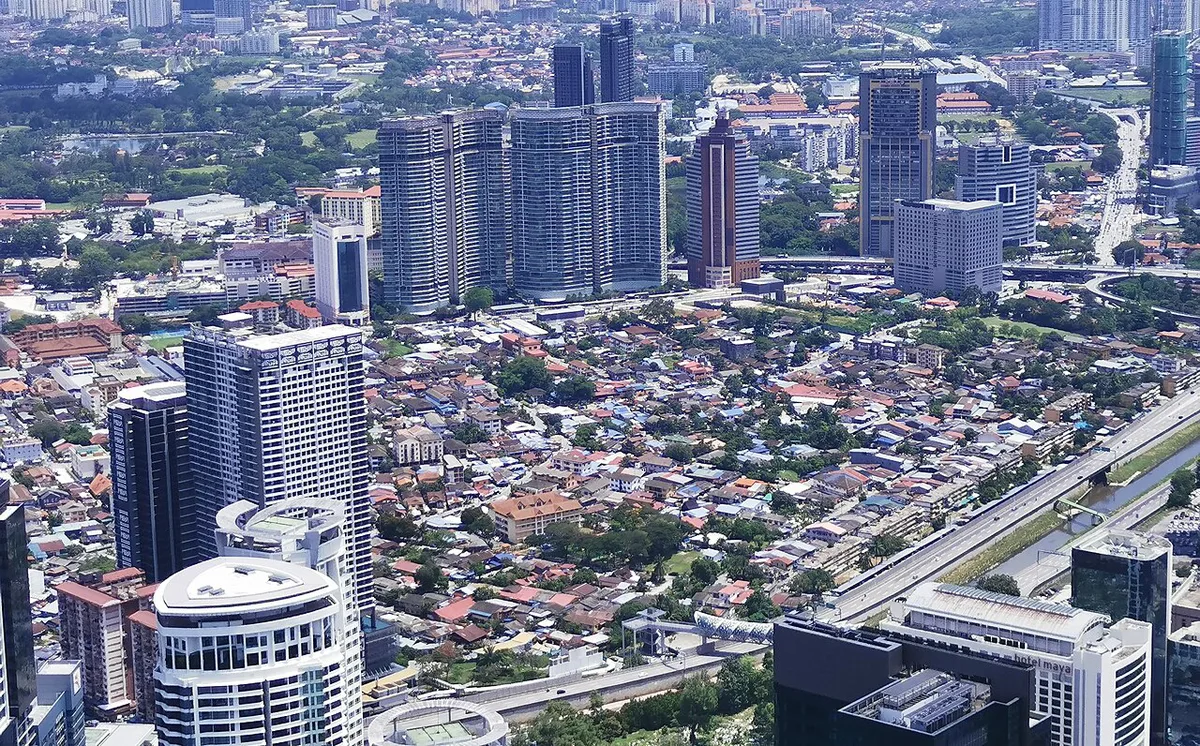
Yes, if you want a residential Malay neighborhood rather than a ticketed attraction. Nothing here has an entry gate or a fixed opening time. You walk through lanes, eat at family-run stalls and see the skyline from street level. Allow 1.5 to 2 hours for a loop with one meal. Add a guided walk or a nearby market and it becomes a half day.
- Best for: first-timers with a short KL stay, food-focused travelers, and architecture and heritage fans.
- Time needed: 1.5 to 2 hours for a quick loop, up to half a day with a guide.
- Cost to enter: free. You pay only for food, drinks and any guided walk.
What Kampung Baru is and why it matters
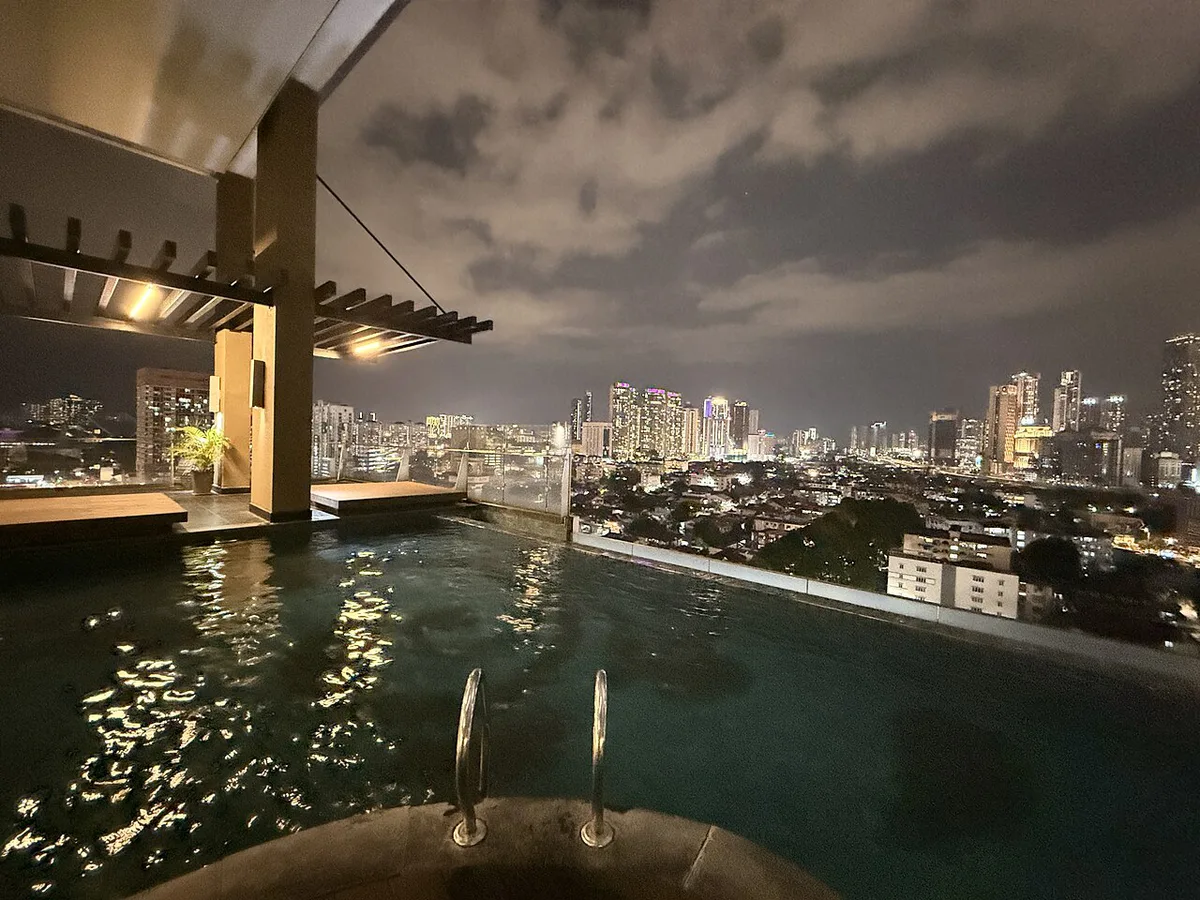
Kampung Baru began as a Malay agricultural settlement, and its small clusters of homes were merged around 1900. Land here carries Malay Agricultural Settlement (MAS) status, which is why the area kept its village layout while skyscrapers rose around it. The enclave covers roughly 225 acres of MAS land. It passes 300 acres once the later non-MAS areas are counted. According to the Kampong Bharu Development Corp (PKB), it is bounded by Jalan Raja Muda Abdul Aziz to the north and Jalan Tun Razak to the east. Jalan Tuanku Abdul Rahman forms the western edge, and Jalan Sultan Ismail runs along the south. Local guides describe seven constituent villages, including Kampung Periok, Kampung Masjid, Kampung Paya and Kampung Pindah. Each has a slightly different family background. The settlement pattern also explains why Kuala Lumpur's other historic quarters feel different. For contrast, compare it with KL's Chinatown and with Brickfields and Little India.
Things to do in Kampung Baru
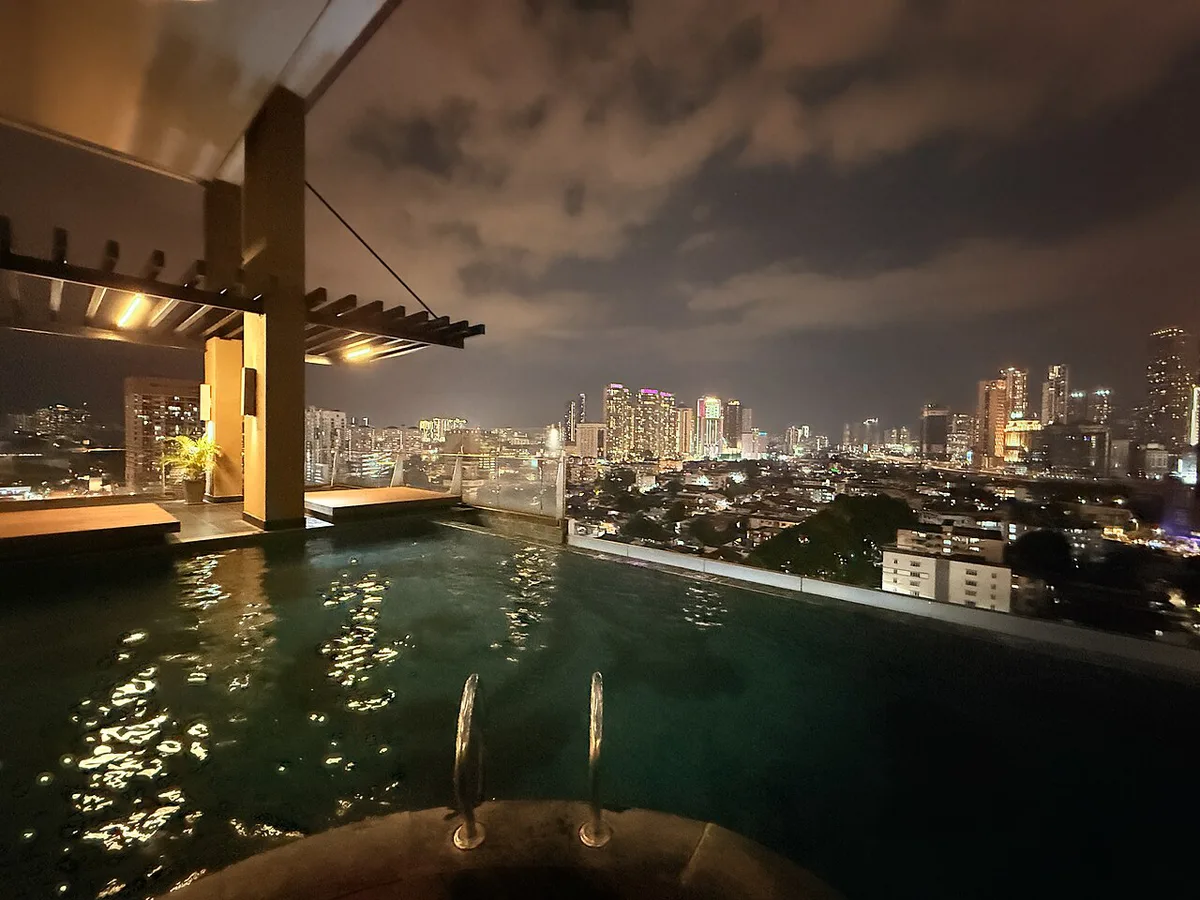
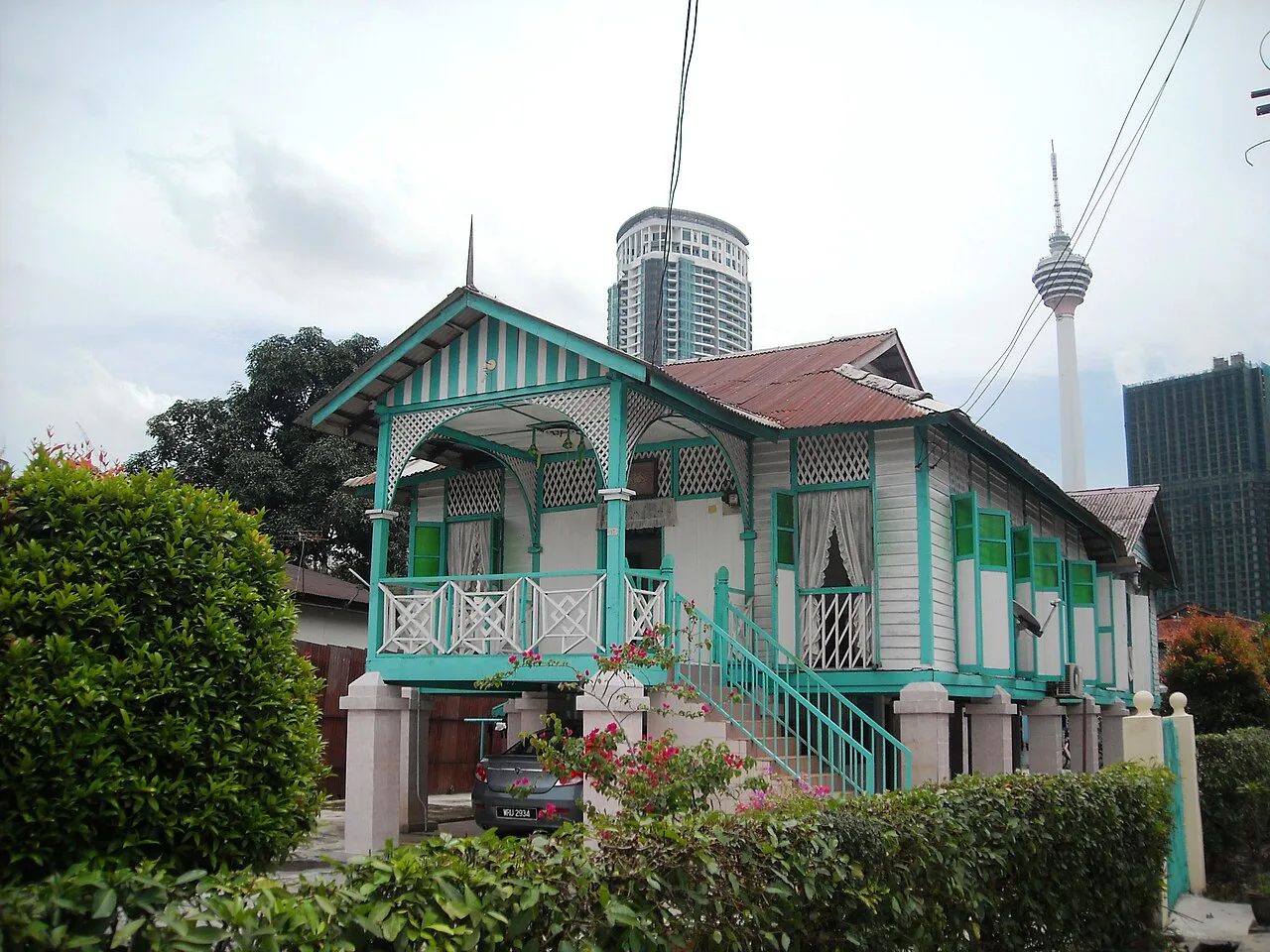
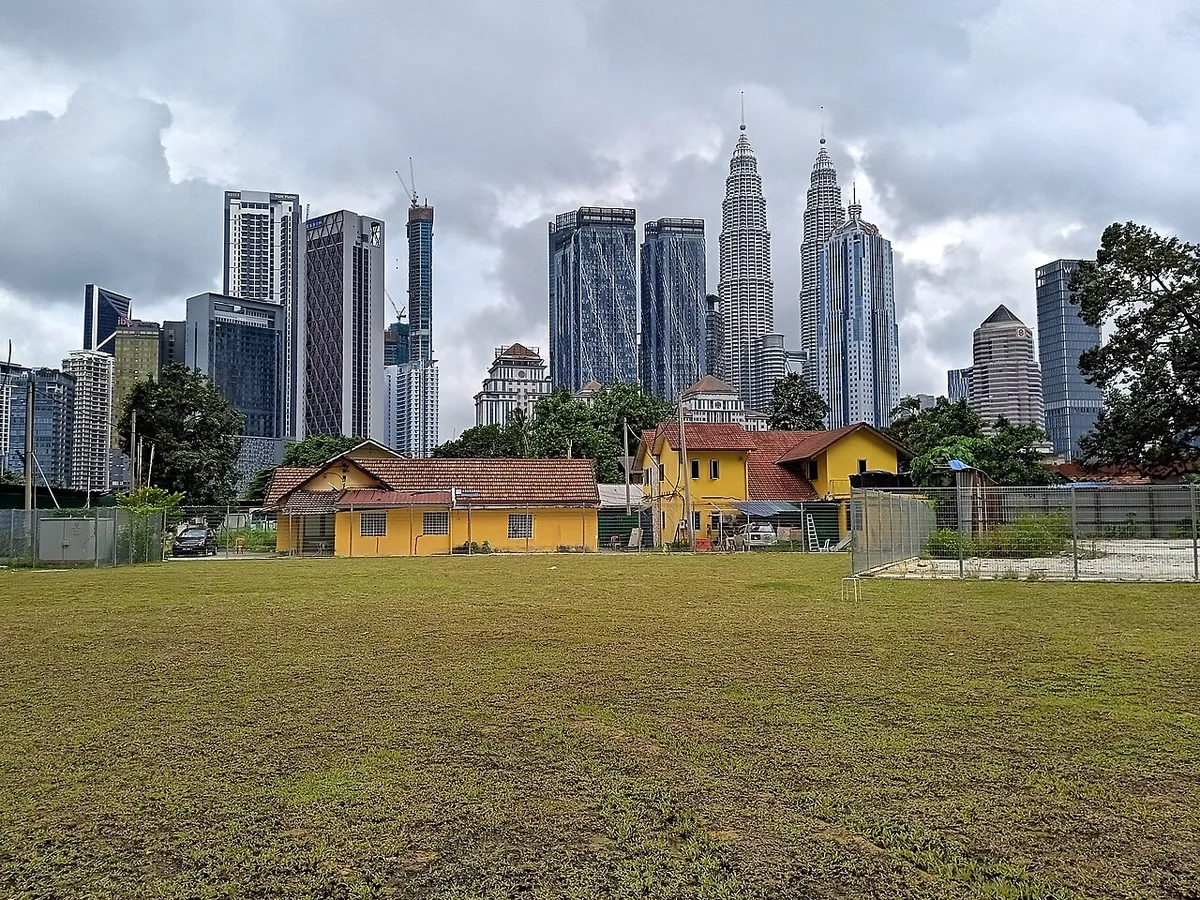
Start with the houses. Traditional Malay homes here stand on stilts and are built using peg-and-mortise joinery, known locally as pasak dan tanggam. Look for high windows, carved kerawang panels that cut glare, and floor gaps that cool the interior. Further uphill, some streets switch to half-concrete, half-timber houses from the 1960s. Then visit Masjid Jamek Kampung Baru, the community mosque at the center of the settlement. Walk around it respectfully and enter only when visitors are welcome. Next, stop at one of the small kuih shops for local snacks instead of souvenirs. On Saturday evenings, the Pasar Minggu night market runs along its street in the area. Go hungry. Finally, stand on any raised corner and look south-east. The Petronas Twin Towers fill the horizon, and the contrast with the wooden roofs is the main photographic payoff.
- Look: stilted timber houses, carved ventilation panels, 1960s hybrid townhouses.
- Visit: Masjid Jamek Kampung Baru, from outside unless invited in.
- Eat: kuih at house-front stalls, satay in the evening.
- Optional: a local-led walking tour covering Kampung Baru and nearby Chow Kit.
Sample routes and how to plan your time
Pick a route by how much time you have. A 2-hour loop works well in late afternoon, when the heat eases and stalls start opening. Begin at the mosque, walk the lanes with stilted houses, and finish with dinner. A half-day plan adds a guided walk and a second stop. Rain arrives fast in Kuala Lumpur, and traditional house porches make decent shelter. Carry small notes for stalls.
Plan the afternoon loop to finish before the towers' cutoff, since Skybridge last admission at 9:30pm applies Tuesday to Sunday.
| Time available | Plan | What to cut if short |
|---|---|---|
| 1.5 to 2 hours | Mosque area, stilted houses, one meal | Side lanes and second snack stop |
| Half day | Guided walk, lunch, Chow Kit or a KLCC view afterwards | Chow Kit leg |
| Saturday evening | Pasar Minggu night market and dinner | Daytime house tour |
What to eat
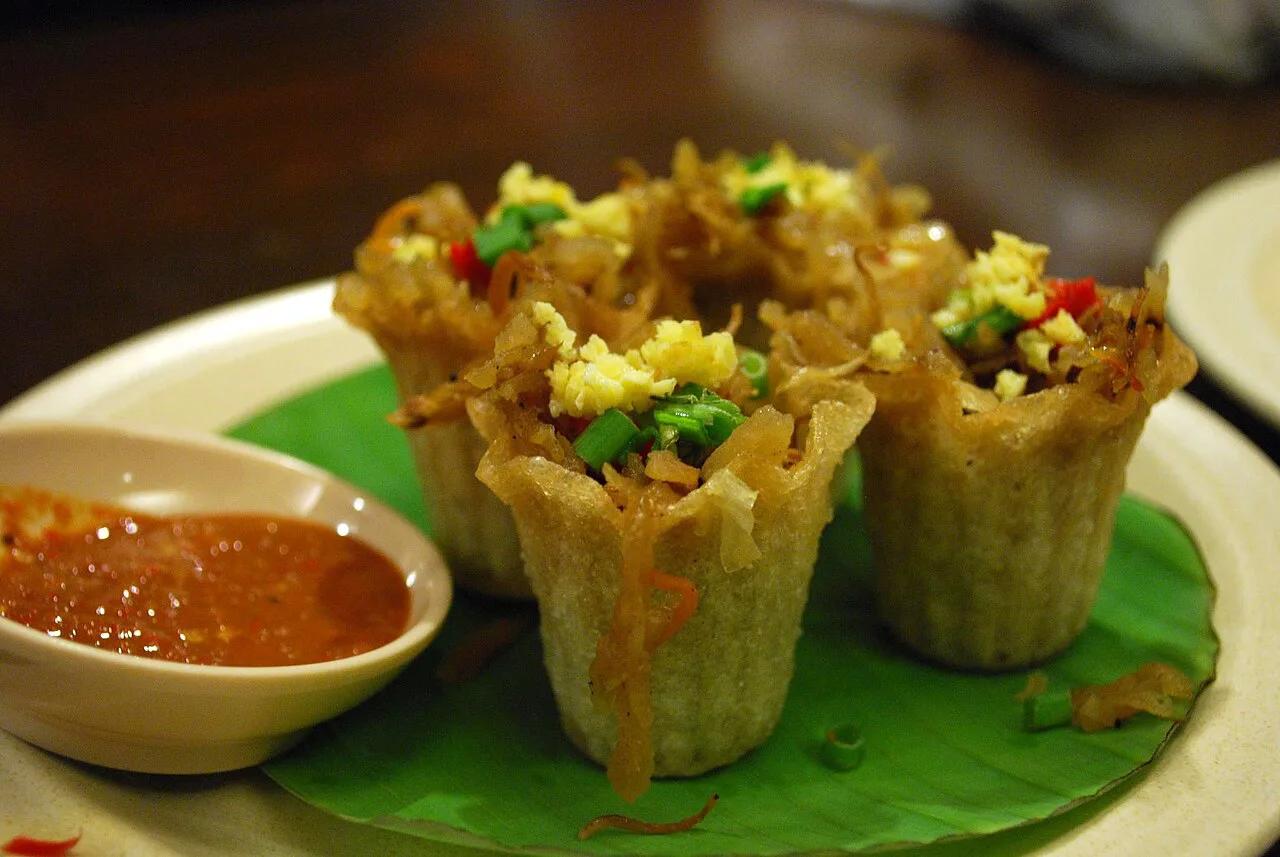
Food is the easiest reason to come. Look for kuih, the bite-sized Malay snacks sold from house fronts and small shops. Traditional kuih bahulu and kuih loyang are among the types sold. Satay is the classic evening meal, usually served with sweet black tea such as Teh O Panas. Choose busy stalls, since turnover is the best quality signal. Opening times vary by stall, so use the Saturday evening market as your fixed anchor. Pay in cash where you can. Small family stalls may not take cards.
Costs and booking
Walking the lanes costs nothing. Budget for food, drinks and transport. Guided walk prices change by operator, so compare current listings on the booking platforms before choosing. Book ahead for a weekend slot. For scale, the Petronas Skybridge costs RM127 for non-MyKAD adults on weekdays and RM137 on weekends, as listed by Tourism Malaysia in April 2026. That makes a neighborhood walk plus meal a low-cost alternative to the towers. MyKAD holders pay RM42 on weekdays and RM45 on weekends. The Skybridge and observation deck run 9am to 10:30pm Tuesday to Sunday, with last admission at 9:30pm. Combine the two in one day by visiting the village in the afternoon and the towers after dark.
Getting there and getting around
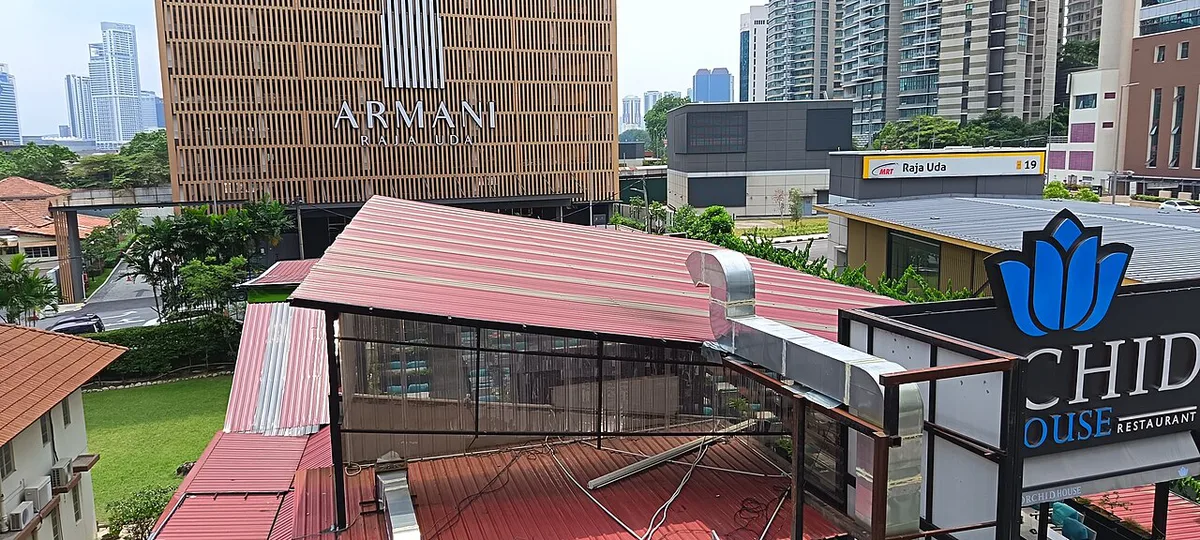
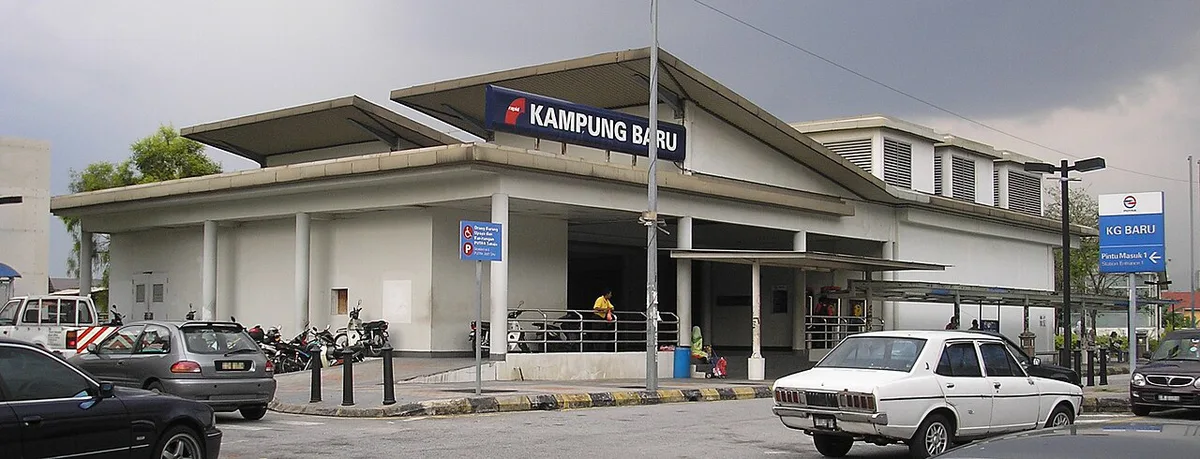
Kampung Baru sits next to the KLCC area, so the simplest route is on foot from the towers' side or by short e-hailing ride. KLCC station on the LRT Kelana Jaya line connects to Suria KLCC at the foot of the towers. GOKL City Bus Green Line also stops at KLCC. From Bukit Bintang, Kuala Lumpur: Eat, Stay and Go (Local Guide), an air-conditioned pedestrian walkway links Pavilion Kuala Lumpur to KLCC. From there, continue to the enclave by taxi or a short ride-hail. Check Rapid KL for the nearest station on the day you travel. Once inside, everything is walkable, but pavements are narrow and traffic is heavy on the boundary roads.
Walking in from KLCC means entering a neighborhood where about 17,000 people live, so the lanes you cross are someone's street.
Etiquette and responsible visiting
This is a residential area where about 17,000 people live, according to one local guide's estimate. Treat it like someone's neighborhood. Dress modestly, with covered shoulders and knees. Do not photograph inside gates or of people without asking. Keep voices low near the mosque, and avoid walking through it during prayer times. Friday midday is the busiest prayer period. Do not expect fridge magnets or a souvenir strip. Support residents by buying food and snacks instead.
Redevelopment and what may change
Redevelopment is the open question here. Plans for the enclave have been discussed for years, and PKB and Kuala Lumpur City Hall (DBKL) are the two authorities involved. Many original families have moved out as space ran short, and a local guide estimates that only about 40% remain. Timber houses may not be there in future years, so visit sooner rather than later. Official notices from PKB and DBKL are the places to check for current plans.
Who should skip Kampung Baru
Skip it if you want polished attractions, air-conditioned malls or souvenir shopping. Choose Bangsar for cafes and modern dining. Stay in Bukit Bintang, Kuala Lumpur: Eat, Stay and Go (Local Guide) for hotels and nightlife. For a heritage district with shops and temples, try Central Market on Jalan Hang Kasturi, open daily 10am to 10pm. More options are in the full list of KL neighborhoods.
Frequently Asked Questions
What is Kampung Baru famous for?
Kampung Baru is known as a Malay enclave beside KLCC. It has traditional timber houses, kuih shops and evening satay stalls. It is also known for its Saturday evening night market.
What does the word "Kampung" mean?
Kampung is the Malay word for village. Baru means new. Kampung Baru therefore translates as New Village.
Where is Kampung Baru located?
Kampung Baru lies in central Kuala Lumpur, next to the KLCC area. PKB lists Jalan Raja Muda Abdul Aziz as its northern edge and Jalan Tun Razak as its eastern edge. Jalan Tuanku Abdul Rahman marks the west, and Jalan Sultan Ismail the south.
Useful notes for your Southeast Asia trip
Optional updates to our guides.
You might also like
Continue reading
More guides you'll find useful