Or Lam: Luang Prabang's Lao Stew and How to Order It
Or lam is a thick, herbal Lao stew from Luang Prabang. Learn what's in it, how versions differ, what to ask for, and where to try it.
On this page
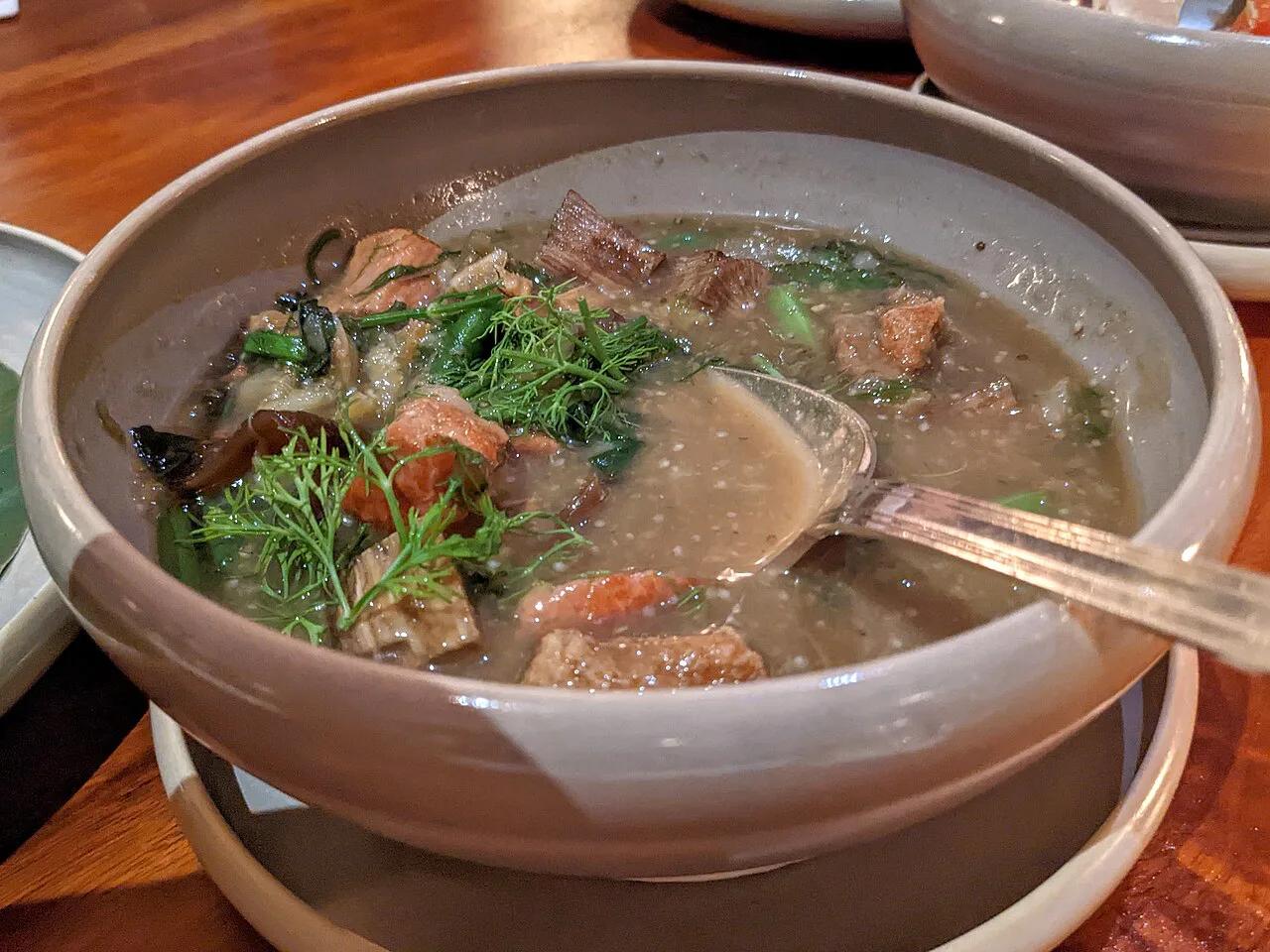
Last updated November 2026: or lam (also written o lam, ô-lam or orlam) is a slow-simmered Lao stew from Luang Prabang, scented with sakhan, a woody pepper vine stem. Expect a savory, herbal, gently numbing bowl, not chili heat. Order it if you like thick stews eaten with sticky rice, and skip it if you avoid fish products. For the wider menu, start with our Luang Prabang food guide.
Featured image: Jpatokal, CC BY-SA 4.0, via Wikimedia Commons.
What Or Lam Is (and Why Luang Prabang Claims It)
Or lam is a stew of meat, vegetables and herbs cooked slowly until the broth turns thick. Its signature is sakhan, a native wood-pepper vine whose stem gives a warm, peppery, slightly numbing edge. Common companions are eggplant, wood ear mushrooms, lemongrass and dill. Some cooks add long beans. Many Lao cooks thicken the pot with mashed sticky rice. Meat is usually dried or fresh buffalo, beef or pork, and chicken appears too. Households and kitchens differ, so treat any ingredient list as typical rather than fixed. Menus may spell the name o lam, ô-lam or orlam, and all of them point to the same dish.
What It Tastes Like and How It's Served
Picture a thick, dark, savory stew rather than a clear soup. Lemongrass and dill lift it, and sakhan leaves a tingling warmth on the lips. That warmth is not chili heat. Curries lean on coconut milk or chili paste, while or lam leans on herbs and pepper vine. It arrives hot as a main dish, usually with a basket of sticky rice for scooping. Fish sauce or padaek (fermented fish paste) often supplies the salty depth.

- Flavor: savory, herbal, peppery, mildly numbing
- Texture: thick and spoonable, not brothy
- Base: usually fish sauce or padaek
- Best with: sticky rice, a fresh vegetable plate, a chili dip on the side
Versions Compared: Beef, Buffalo, Chicken and More
No two kitchens cook or lam alike, so use this table as a map of common variations. Buffalo is the choice to ask about if you want the most traditional-leaning bowl. Chicken suits a first try because it cooks tender and tastes milder. Choose a thicker stew over a thin one, since a watery bowl loses the dish's character.

| Version | How it differs | Best for | What to ask |
|---|---|---|---|
| Buffalo | Chewier, deeper flavor, often dried or smoked | Travelers wanting the classic character | Is the meat dried or fresh? |
| Beef | Softer, familiar taste | First-timers | How long is it simmered? |
| Pork | Richer, sometimes with crackling | Fans of fatty, savory dishes | Is crackling included? |
| Chicken | Lighter, quicker-cooking | Mild palates | Is the broth still thick? |
| Thick with mashed sticky rice | Stew-like, clings to rice | Most visitors | Is rice used to thicken? |
| Thinner broth | Closer to a soup | Pairing with extra rice | Can it be made thicker? |
Allergens and Dietary Notes

Fish products are typical in or lam, usually padaek or fish sauce. Kitchens vary, so a recipe description is no guarantee. Ask the restaurant directly what goes into the pot. Vegetarian and halal needs are hard to meet reliably, because the base and the meat both matter. If you avoid fish, say so clearly and ask whether the stew is made with fish sauce or padaek before you order.
- Which meat is in it today?
- Is it made with padaek or fish sauce?
- How thick is the stew?
- How spicy is it, and is the chili served separately?
- Does it come with sticky rice?
Where and How to Try It in Luang Prabang

You have three routes: a sit-down restaurant, a cooking class, or a market visit to understand the ingredients. Our restaurant picks in Luang Prabang are the easiest starting point. Prices and hours checked November 2026. Manda de Laos, at Unit 1 Ban That Luang on Norrassan Road near the Night Market, is open daily for lunch (12:00-17:00) and dinner (17:00-22:30). Reservations are a must there. Its Luang Prabang Tasting Menu for lunch costs $36 per person online, so ask when booking whether or lam features. For ingredients, Morning Market opens at 6:00, just after Sai Bat, and closes by 10:30. It sits in a small lane behind the tourism office, on the Mekong River side.
Morning Market closes by 10:30, while the Tamarind daytime class already includes a market tour and runs from 9.30am.
Time, Cost and Access Trade-Offs
A restaurant bowl is the quickest and cheapest way in, but slow-cooked stews may need ordering ahead, and availability varies by restaurant. A class costs more and takes half a day, yet it shows how the dish is built. Tamarind Restaurant and Cooking School, on the Nam Khan River in Ban Wat Sene, lists its class prices in US dollars. The daytime class is $40 per person with a market tour and five dishes plus sticky rice, running 9.30am-2.30pm for the exclusive format. The evening class is $34 per person for four dishes, 4-8.30pm Monday-Saturday. All classes include transport from the restaurant in town. Ask whether the class menu includes or lam, since menus differ. Our cooking class comparison covers other schools.
| Option | Time | Cost | Access |
|---|---|---|---|
| Restaurant bowl | Under 1 hour | Lowest | Walk in, or order ahead |
| Tasting menu (Manda de Laos) | 1-2 hours | From $36 per person | Reserve in advance |
| Evening class (Tamarind) | 4-8.30pm | $34 per person | Transport included |
| Daytime class (Tamarind) | Up to 9.30am-2.30pm | $40 per person | Transport included |
Or Lam Alongside Other Luang Prabang Dishes
Or lam works best as one dish among several. Pair it with sticky rice and something fresh or sharp for contrast. Tchéo bong is a chili paste often eaten alongside Lao meals. Lao sausage adds a grilled, smoky note. Green papaya salad brings sour, chili-hot crunch against the stew's depth. Mok pa for is a local specialty that suits travelers who prefer mild flavors. For a lighter bowl of noodles on another day, try the khao soi in Luang Prabang. A small group order lets you taste three or four of these together.
Mistakes to Avoid
Do not expect chili heat, because the warmth comes from sakhan. Do not order without asking about padaek or fish sauce. Do not judge the dish by a thin version, since a watery bowl misses the point. Finally, keep your expectations flexible, because every kitchen cooks it differently. Plan for a relaxed meal with sticky rice, and plan the rest of your food days with the Tourism Laos site.
Frequently Asked Questions
What is lam in food?
Lam in this context refers to or lam, a thick Luang Prabang stew made with meat, vegetables, herbs and sakhan. It is usually eaten hot with sticky rice.
How to make Lao stew?
Home versions simmer meat with eggplant, mushrooms, lemongrass, dill and sakhan, then thicken it with mashed sticky rice. Recipes vary by household. A class is an easy way to learn it.
Useful notes for your Southeast Asia trip
Optional updates to our guides.
You might also like


Continue reading
More guides you'll find useful