That Luang Festival Guide: Dates, Schedule & Tips
What happens at Vientiane's That Luang Festival, how the dates are set, and how to plan around crowds, lodging and etiquette.
On this page
Last updated November 2026: the That Luang Festival, or Boun That Luang, is Vientiane's biggest Theravada Buddhist festival. It centers on Pha That Luang, Laos's national symbol, and falls around the full moon of the 12th lunar month in most accounts. Exact dates move every year, so this guide covers how to confirm them and which parts deserve your time.
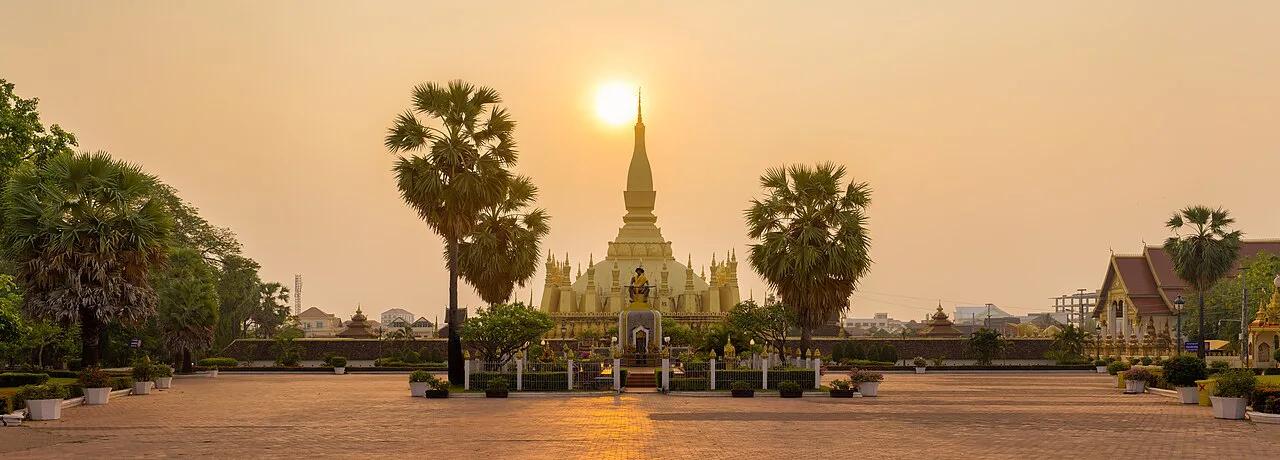
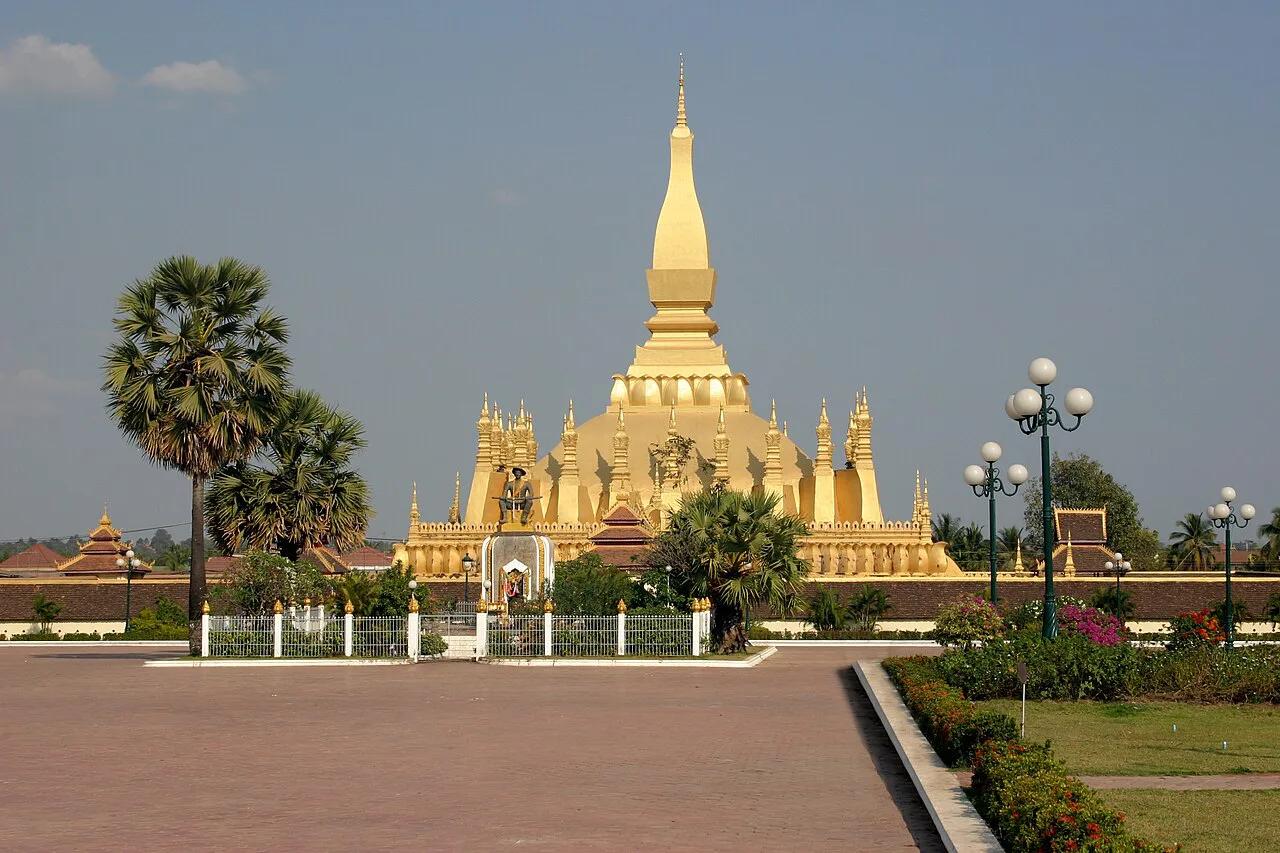
Featured image: Jialiang Gao (peace-on-earth.org), CC BY-SA 3.0, via Wikimedia Commons.
What the That Luang Festival is
Pha That Luang is a stupa that Lao Buddhists believe enshrines a relic of the Buddha. Historical accounts date the monument to 1566, and it has been ransacked and renovated several times. Boun That Luang is the annual celebration held there. Monks and laypeople arrive from across Laos for about three days of ceremony. Fairs, concerts and entertainment run on around it for days. Laos treats the stupa as its national symbol and most important religious monument.
When is the That Luang Festival?
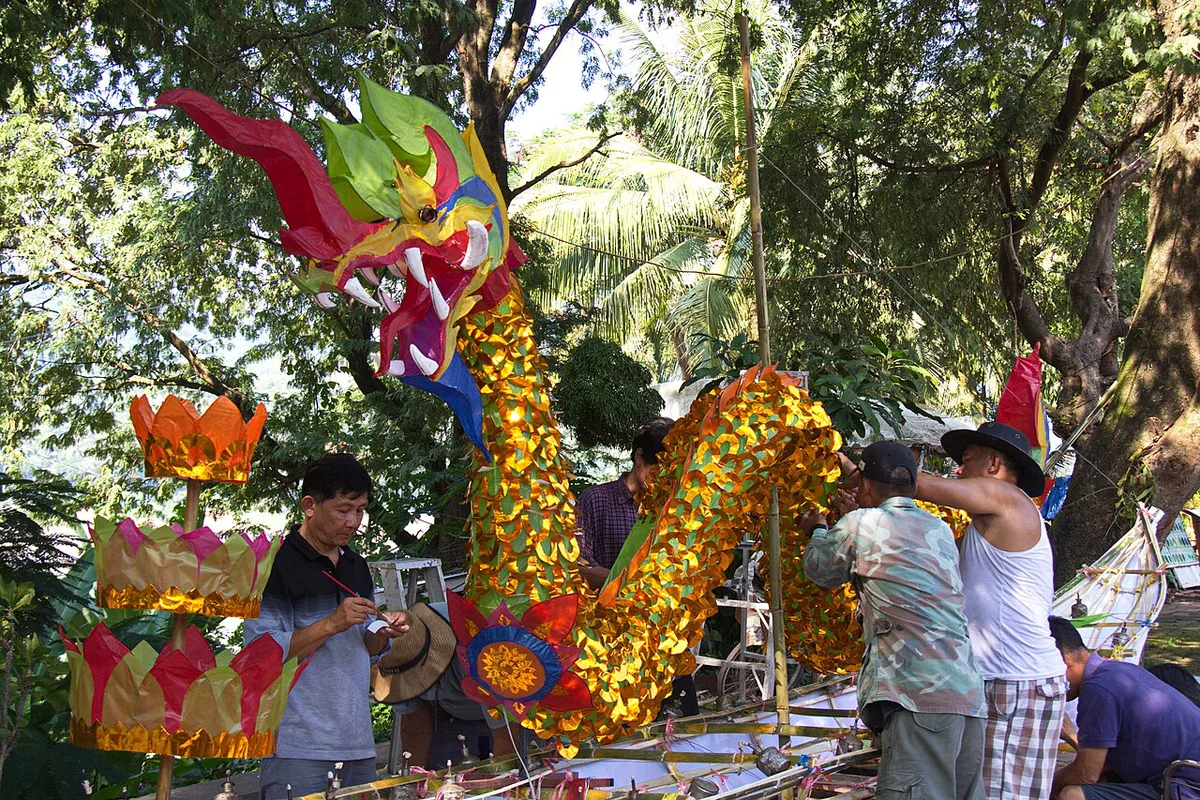
Boun That Luang falls around the full moon of the 12th lunar month in most accounts. That usually means late October to mid-November. Local announcements set the exact dates and the national holiday each year, so published calendars drift. Mekong Tourism listed the 2024 festival for November 11 to 15, a wider range than the three core ceremony days. Treat any 2026 date on a blog as unconfirmed until it appears in official Lao tourism notices. Your hotel front desk or a Lao contact can say which night the wax-castle procession falls. Arrive one to two days before the full moon and keep your schedule flexible. Season context sits in our season-by-season planning guide. Cool, dry weather is typical at festival time, after the rains described in how the wet months behave. Miss the dates and you can still read what December is like in Vientiane, though the festival itself falls earlier.
Where the festival happens
Two sites host the festival. Wat Si Muang, home of Vientiane's city pillar, opens the festivities with the first evening procession. According to legend, a woman named Nang Si died when the pillar was set, and she is honored as the city's guardian. Pha That Luang hosts the following days and the full-moon finale. One local guide puts it about 4 km from the city center, so budget transfer time between the two. Almsgiving, tikhy and the trade fair all cluster on its esplanade.
Pha That Luang sits about 4 km from the city center, and crowds arrive before 5am, so the transfer matters most at dawn.
Festival schedule: what happens each day
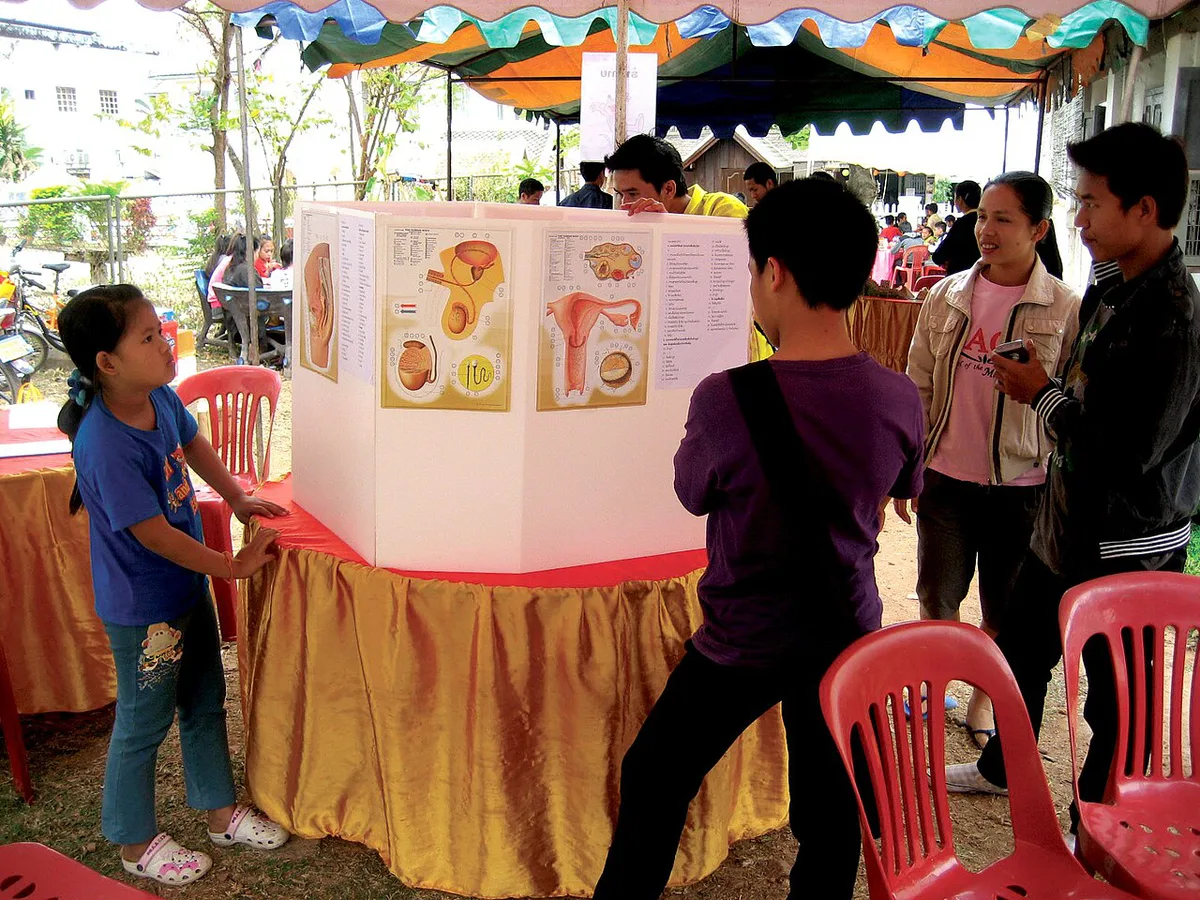
Locals disagree on which night each ritual falls, so treat this as a sequence rather than a calendar. Wax castles are tall yellow wax trees with petals, gold paper and kip notes attached. Marchers carry them with candles, incense and flowers, drumming and singing as they circle Wat Si Muang's main hall three times. Next afternoon, thousands bring them to Pha That Luang. Groups in ethnic costume dance and play traditional music on the approach.
- Evening: candlelight wax castle (phasat pheung) procession at Wat Si Muang.
- Next afternoon: procession from Wat Si Muang to Pha That Luang, with a costume parade.
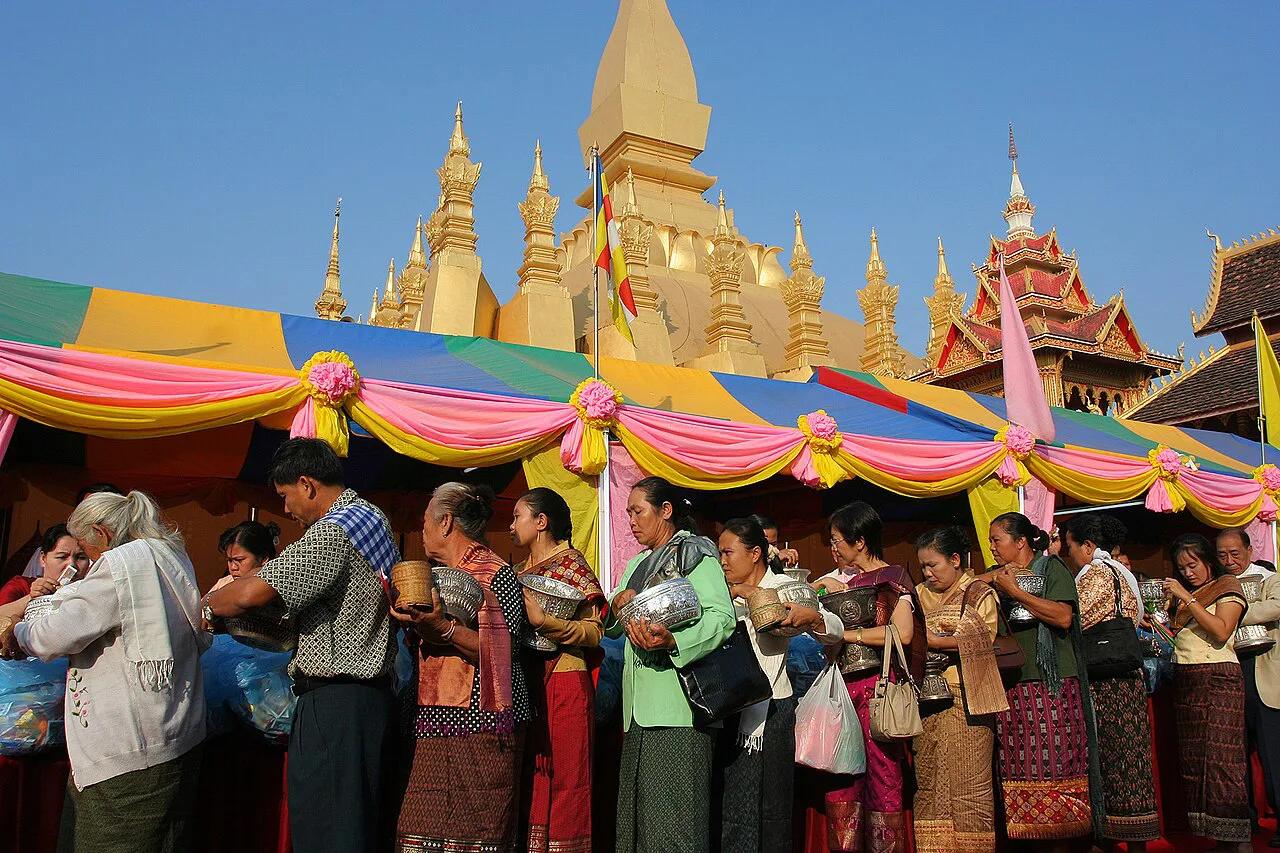
- Dawn: tak bat almsgiving to hundreds of monks, with crowds arriving before 5am.
- Afternoon: tikhy, a hockey-like game with a ball and curved sticks, on the esplanade.
- Full-moon night: final candlelight walk, three clockwise circuits of the stupa, and normally fireworks.
Which parts of the That Luang Festival are worth your time
Pick by priority. Almsgiving and the candlelight walk form the religious core. Trade fair, funfair and concerts form the carnival side. You can attempt dawn almsgiving and the full-moon walk in a single day, but expect a long gap and a midday rest. Fireworks normally mark the close, though they are not guaranteed.
| Part | What it is | Best for | Timing | Crowd level | Main trade-off |
|---|---|---|---|---|---|
| Wax castle procession | Candlelight procession with decorated wax castles | Culture seekers and photographers | Evening at Wat Si Muang; afternoon at Pha That Luang | Busy | Day mapping varies by year |
| Dawn almsgiving | Tak bat for hundreds of monks | The spiritual core | Crowds arrive before 5am; ceremony from 7am | Very busy | Early start and hard transport |
| Afternoon tikhy and picnic | Lao hockey-style game and family picnics | Casual observers | Afternoon on the esplanade | Moderate | Midday heat and little explanation |
| Full-moon candlelight walk | Three clockwise circuits of the stupa | Atmosphere and ritual | Full-moon night | Heavy | Sinh required for women |
| Trade fair and funfair | Stalls, concerts and rides | Families and food | Starts days before the ceremonies | Variable | Noise and less religious feel |
Etiquette and what to wear
Women are required to wear a sinh, the traditional Lao wrap skirt, inside the stupa walls. Rental is reported just outside the gate, though stock at peak hours is not guaranteed. Dress modestly, with covered shoulders and knees, for every ceremony. Sit quietly during the almsgiving and listen to the prayers. Walk clockwise around the stupa, as devotees do three times. Treat monks and offerings as part of a ceremony, not photo props.
- Mistake to avoid: reaching the gate in shorts or without a sinh and finding out at the entrance.
- Mistake to avoid: crowding the monks' line to photograph offerings at close range.
- Mistake to avoid: walking counterclockwise in the circuit.
Getting there, where to stay and crowd tips
Hotels are often booked up at peak time, so reserve early. Staying within walking distance of Pha That Luang, about 4 km from central Vientiane, solves the dawn problem. Central Vientiane gives more dining and transport options but adds a ride. Crowds begin arriving before 5am for taak baat at 7am. Tuk-tuk supply at that hour is not documented. Arrange a pickup with your hotel the night before. Typical dawn temperatures and dry-season conditions are in our Vientiane weather breakdown. Midday sun on the open esplanade is tiring, so carry water and look for shade.
What to eat and the festival atmosphere
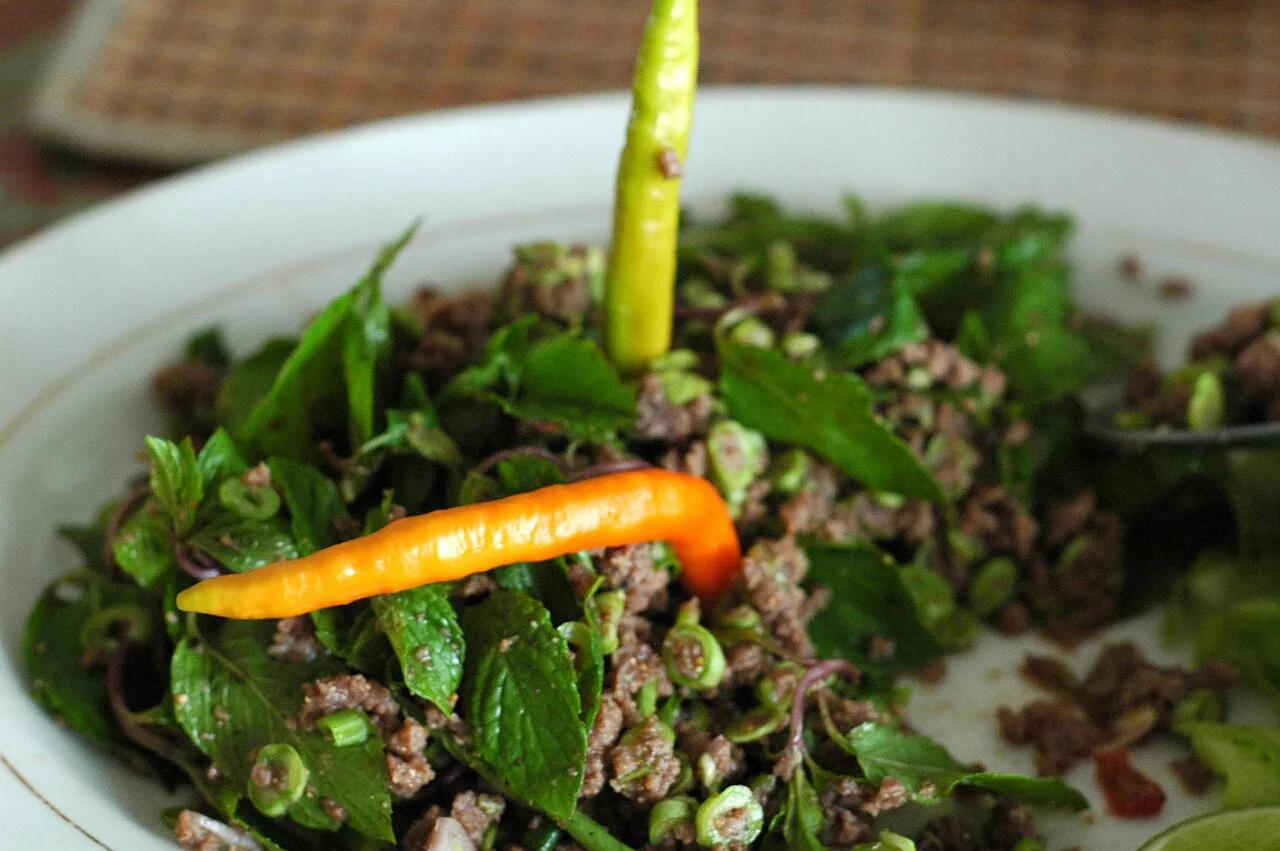
Families gather at food stalls for Khao Poun, a rice noodle soup. Picnics on the grounds feature boiled chicken, rice and noodles. A folk heritage exhibit recreates a traditional village, with live traditional music in some years. Concerts and carnival rides fill the esplanade after dark.
Costs: what to budget for
No ticket price for the grounds has been published that we could find, so ask Vientiane Capital tourism before you go. Budget by category rather than by a fixed figure.
- Offerings for almsgiving
- Sinh rental for women
- Food-stall meals
- Funfair rides
- Lodging premium at peak time
Frequently Asked Questions
Why is Pha That Luang important?
It is the national symbol and most important religious monument of Laos. Lao Buddhists believe the stupa enshrines a relic of the Buddha. Boun That Luang, the festival held there, is Vientiane's most important Theravada Buddhist festival.
What is the famous festival in Laos?
Boun That Luang is the one most often described as Vientiane's most important. It draws monks and laypeople from across Laos to Pha That Luang. Other Lao festivals follow their own calendars.
Useful notes for your Southeast Asia trip
Optional updates to our guides.
You might also like
Continue reading
More guides you'll find useful