
Mount Phousi (Phou Si Hill) and That Chomsi Stupa: Visitor Guide

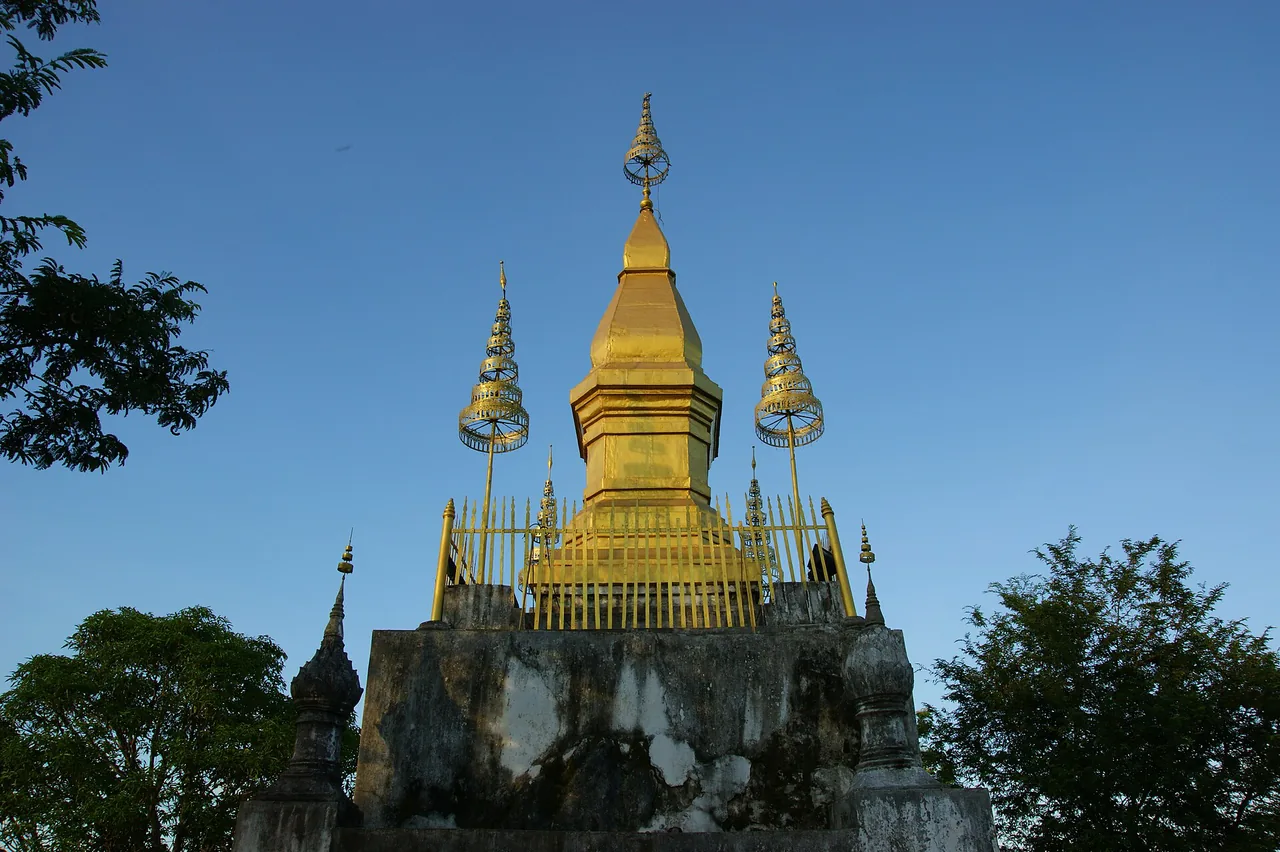
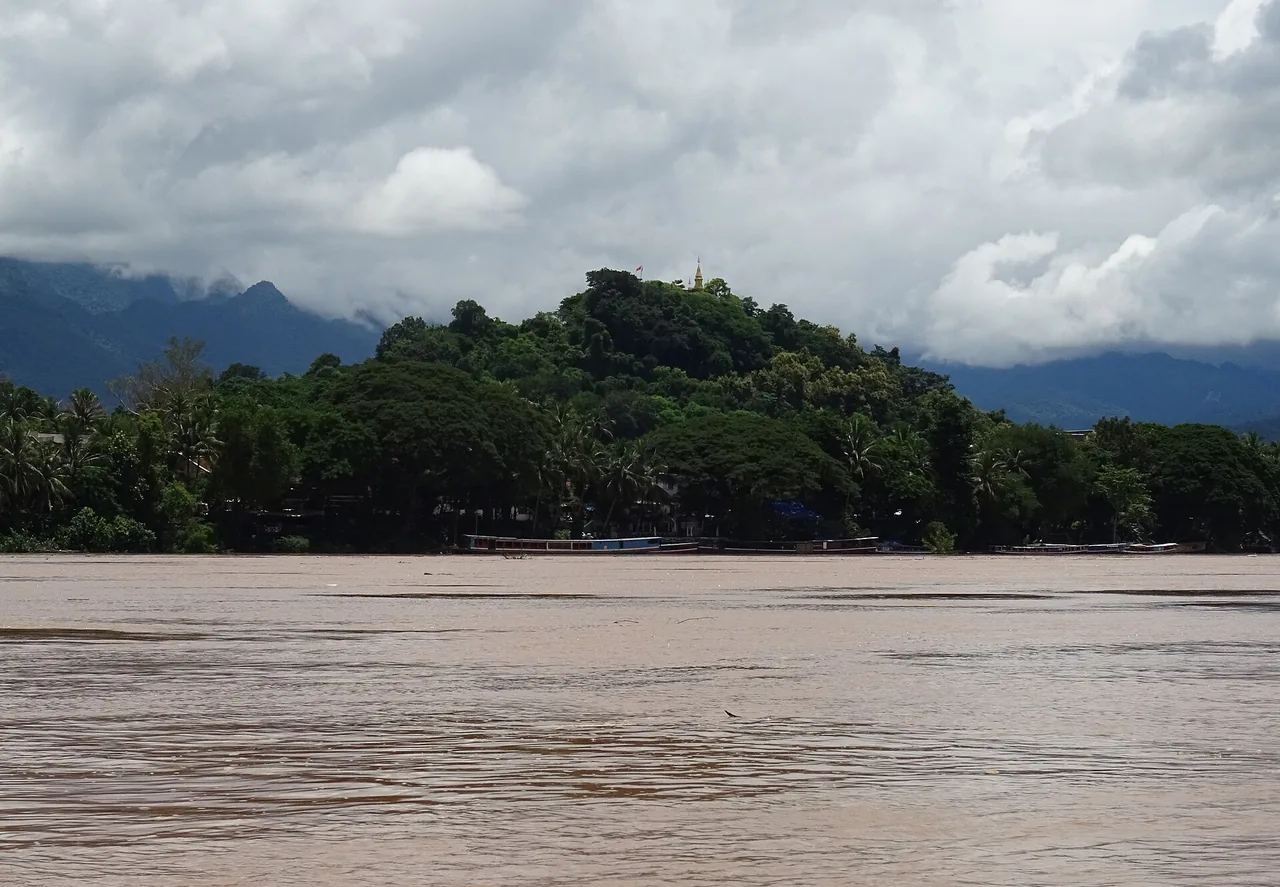
Mount Phousi, also spelled Phou Si, is the small sacred hill rising in the middle of Luang Prabang. A gilded stupa called That Chomsi crowns it, and the main stairway begins right on Sisavangvong Road. This Mount Phousi visitor guide covers hours, tickets, entrances, the temples around the hill and the sunset view.
Last updated November 2026. Ticket prices change on November 15, 2026, so the fee section below shows both the old and new rates. The hill also fits neatly into a wider plan of things to see in Luang Prabang.
What Mount Phousi and That Chomsi Are
According to Tourism Luang Prabang, Phou Si was once called Phou Suang and was a sacred forest. Local legend says the name comes from a Buddhist hermit named Leu Si, who came to live on the mountain.
The stupa on top, Pha That Chom Si, was established in 1804, in the eighth year of King Anourouth's reign over Lane Xang. That same king built the first basic stairway up from Wat Pa Houak. Later, during the reign of Sisavang Vong, the stairways were rebuilt in brick and lime mortar.
Restorations followed in 1914 and again in 1962, when both the stupa and the stairways were restored. Today the stupa stands on three square bases, with small lotus-shaped stupas at the corners. Tourism Luang Prabang gives its size as 10.5 meters wide and about 21 meters high, which is why the gold spire is easy to spot from town.
Think of Phousi as a hilltop temple and viewpoint in the middle of town, not a hike. The visit is built around the stairway, the stupa and the view over the town and the Mekong.
Mount Phousi Tickets and Opening Hours
Tourism Luang Prabang lists Mount Phousi as open daily from 6:00 AM to 6:00 PM. The listing adds that hours depend on the season, so confirm the closing time if you plan a late-afternoon visit.
Until November 14, 2026, the fee is 30,000 kip per foreign visitor and 10,000 kip per Laotian. From November 15, 2026, Tourism Luang Prabang lists 60,000 kip for foreigners and 15,000 kip for Laotians.
The old price list notes free entrance for children under 7 in its Laotian line. It does not say whether that applies to foreign children or whether it continues under the new prices, so ask at the ticket point if you are travelling with young children.
Because the foreigner fee doubles on November 15, 2026, older blog posts that quote 20,000 or 30,000 kip are out of date. Treat the Tourism Luang Prabang figures as the current ones and carry enough kip for the ticket.
- Foreign Visitors
- The fee is 30,000 kip per person until November 14, 2026.
- From November 15, 2026, the fee rises to 60,000 kip per person.
- Laotian Visitors
- The fee is 10,000 kip per person until November 14, 2026.
- From November 15, 2026, the fee becomes 15,000 kip per person.
- Children Under 7
- The old list gives free entrance for children under 7 in its Laotian line; it does not say whether this covers foreign children or the new prices.

Getting There: Entrances and the 328-Step Stairway
The main entrance sits on Sisavangvong Road, in front of the Luang Prabang National Museum. It is about 5 minutes' walk from the Tourist Information Center. Our Royal Palace Museum guide covers the museum beside this entrance.
The front route is the most popular way up. It has 328 steps to the top, and frangipani trees line the stairway. Since this is a temple stairway rather than a trail, the climb is simply steps with the stupa waiting at the end.
Three other entry points exist for anyone who wants to approach from a different side. The right choice depends mostly on where you are staying and where you want to finish.
- Main Entrance on Sisavangvong Road
- This front route is in front of the National Museum and has 328 steps to the top.
- Back Entrance Beside the Nam Khan
- An entry point at the back of the hill sits next to the Nam Khan, also called the Khan River.
- Joumkhong Village Entrance
- Visitors can also enter from Joumkhong Village on the north side of the hill.
- Jingland Hotel Entrance
- Another way in runs through Jingland Hotel on the west side of the hill.
Sunset, Temples and the Drum Tower
Tourism Luang Prabang calls the summit a popular evening spot for watching the sunset, with views over the town and the Mekong River. The hill closes at 6:00 PM according to its listing, so check that sunset falls inside the posted hours for the season.
The listed opening time is 6:00 AM, but Tourism Luang Prabang does not mention sunrise visits, so confirm locally before you plan around a sunrise view.
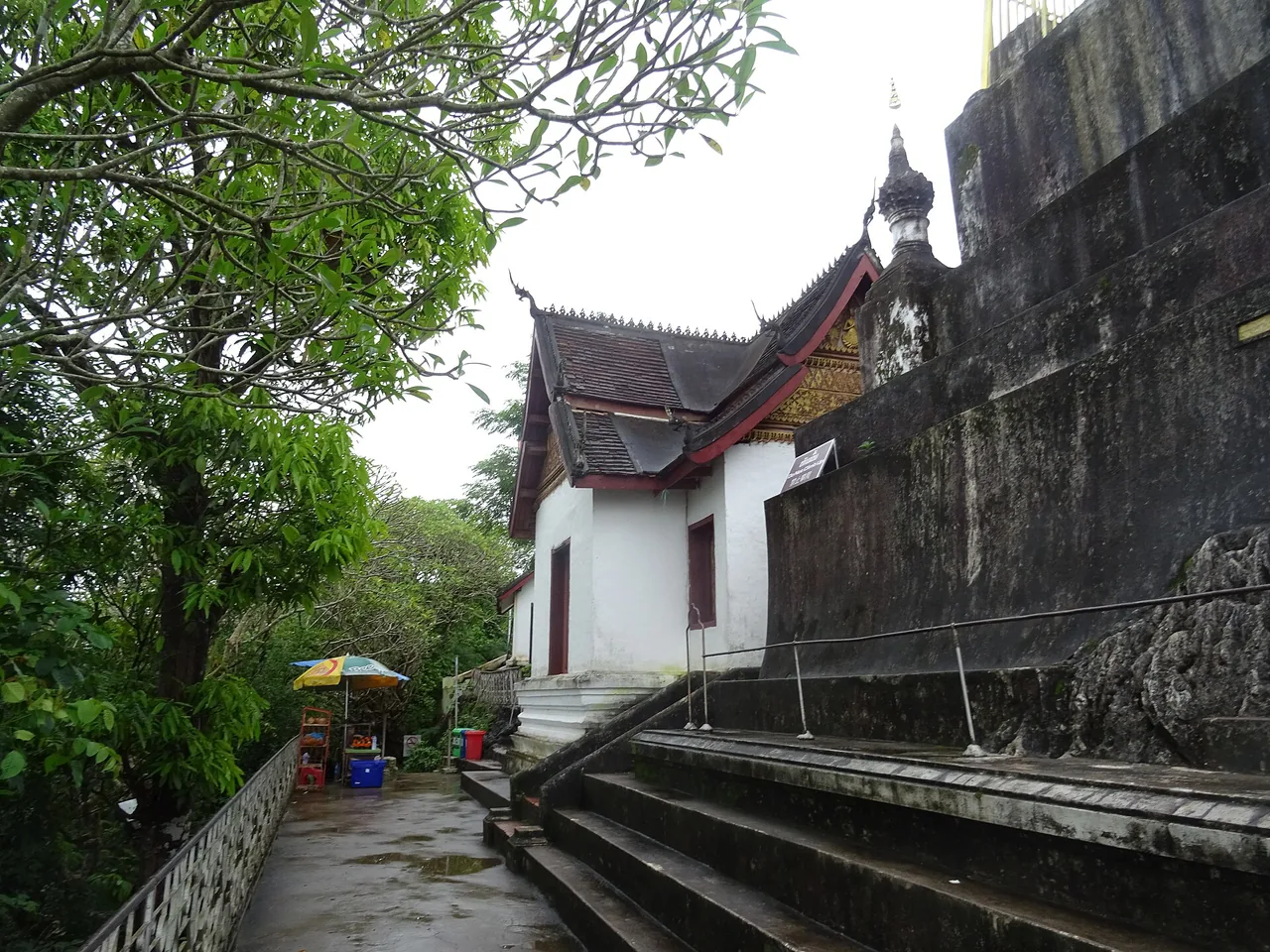
On the north side of the stupa stands a small temple with shrines and a drum tower. A large cowhide drum is struck at set times, especially at noon, on Buddhist holy days and in emergencies.
Thirteen temples once stood around the hill, and five remain today. Temple lovers can pair the climb with Wat Xieng Thong and then Wat Mai afterward.
- Wat Pa Houak
- King Anourouth built the first basic stairway up the hill from this temple.
- Wat Pa Fang
- This is one of the five temples that still stand around the hill today.
- Wat Pa Khe
- Wat Pa Khe is another of the five surviving temples listed by Tourism Luang Prabang.
- Wat Si Phoutthabath
- This temple is also among the five that remain around the hill.
- Wat Tham Phou Si
- This temple sits halfway up the hill and overlooks the Nam Khan.

Lao New Year and Etiquette on the Hill
During Lao New Year, a Naga procession and lantern dances honor the Naga believed to protect the mountain. On the last day of the festival, people place sticky rice cakes and sweets along the stairways as offerings.
The hilltop is a sacred religious site, so Tourism Luang Prabang asks visitors to dress accordingly. That means no shirtless walking, no bikini tops or revealing swimwear, and no public displays of affection. Drinking alcohol on the hill is strictly prohibited, even for a sunset toast.
Frequently Asked Questions
How much does it cost to climb Mount Phousi?
Tourism Luang Prabang lists new prices effective November 15, 2026: 60,000 kip per person for foreigners and 15,000 kip for Laotians. Before that date the fees were 30,000 kip for foreigners and 10,000 kip for Laotians. The old price list gives free entry to children under 7 only in its Laotian line, so families should ask at the ticket point.
What are Mount Phousi's opening hours?
Tourism Luang Prabang lists the hill as open daily from 6:00 AM to 6:00 PM, noting that hours depend on the season.
How many steps are there to the top of Mount Phousi?
The front route from Sisavangvong Road, in front of the National Museum, has 328 steps to the top, according to Tourism Luang Prabang. It is the most popular way up and is lined with frangipani trees.
Where is the entrance to Mount Phousi?
The main entrance is on Sisavangvong Road in front of the Luang Prabang National Museum, about 5 minutes' walk from the Tourist Information Center. There are also entry points next to the Nam Khan at the back of the hill, from Joumkhong Village on the north side, and through Jingland Hotel on the west side.
Is Mount Phousi good for sunset?
Yes. Tourism Luang Prabang says the summit is a popular evening spot for watching the sunset, with views over the town and the Mekong River.
What is the golden stupa on top of Phousi?
It is Pha That Chom Si (That Chomsi), established in 1804 under King Anourouth of Lane Xang and restored in 1914 and 1962. Tourism Luang Prabang gives its size as 10.5 meters wide and about 21 meters high.
What should I wear to Mount Phousi?
The hilltop is a sacred religious site, so Tourism Luang Prabang asks visitors to dress accordingly: no shirtless walking, bikini tops or revealing swimwear, and no public displays of affection. Drinking alcohol on the hill is strictly prohibited.
What temples are on Mount Phousi?
Besides the summit stupa and its small temple and drum tower, five temples remain around the hill: Wat Pa Houak, Wat Pa Fang, Wat Pa Khe, Wat Si Phoutthabath and Wat Tham Phou Si, which sits halfway up overlooking the Nam Khan.
Mount Phousi rewards visitors with a gilded stupa, a 328-step stairway and a wide view of Luang Prabang and the Mekong. Check the ticket date, the seasonal closing time and the dress rules, and the visit goes smoothly. For a cultural follow-up, the Traditional Arts and Ethnology Centre is a natural next stop.
Planning more of Luang Prabang? See our guides to things to do in Luang Prabang, the best time to visit Luang Prabang and free things to do in Luang Prabang.