
Wat Xieng Thong: Hours, Fees and Highlights

Wat Xieng Thong sits at the tip of the Luang Prabang peninsula, on an embankment above the Mekong near where the Nam Khan joins it. This Wat Xieng Thong visitor guide covers opening hours, the entrance fee, how to get there, the temple's history, its main buildings and the rules for visitors. Last updated November 2026.
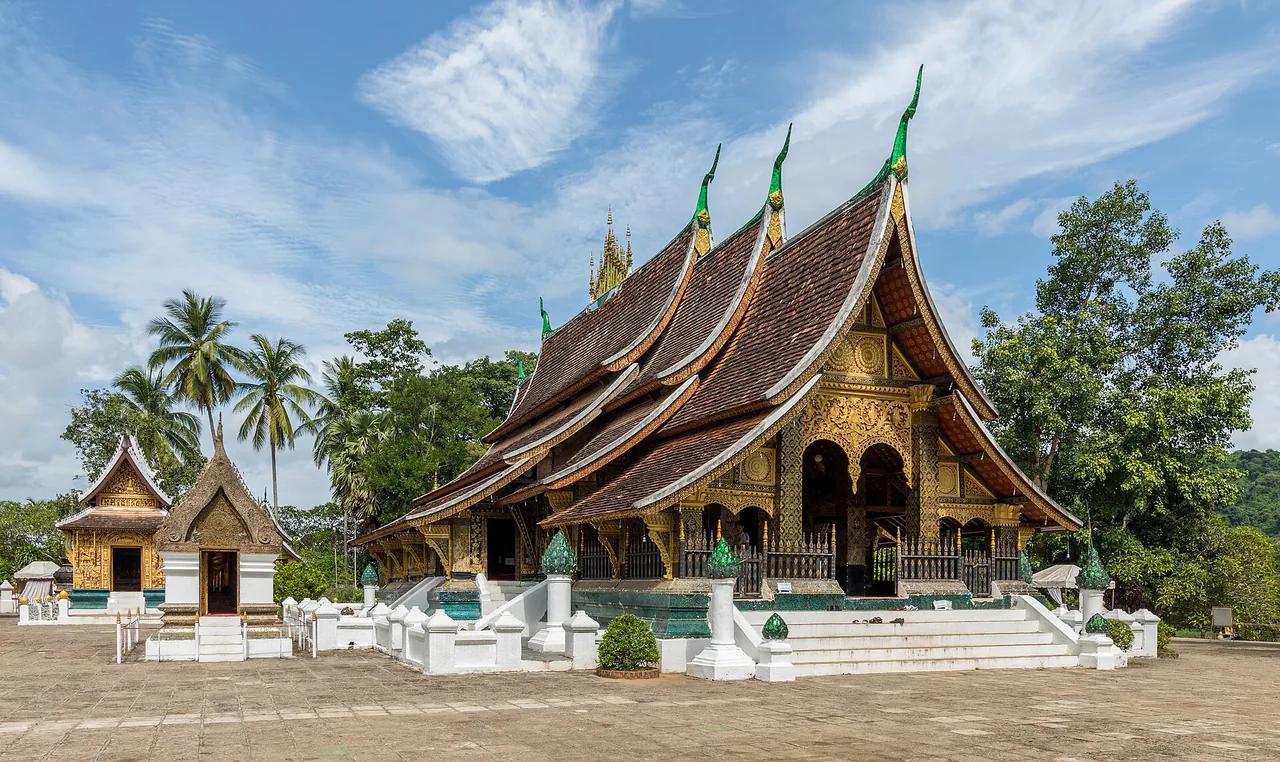
The temple is a working Buddhist monastery, so monks and novices still live and pray here. Built by King Setthathirath around 1560, it was a royal temple where Lao kings were crowned, and the official Luang Prabang tourism site calls it a classic example of the Luang Prabang style, with a low, sweeping roof and glass mosaics.
Wat Xieng Thong Tickets and Opening Hours
According to Tourism Luang Prabang, the temple is open daily from 6:00 am to 6:00 pm. No closing day is listed.
Foreign visitors pay 60,000 kip per person from November 15, 2026. Before that date the foreigner fee was 30,000 kip, so older guides that quote 30,000 kip or less are out of date. Lao visitors enter free.
- Opening hours
- Open every day, 6:00 am to 6:00 pm, as published on the official Tourism Luang Prabang page for the temple.
- Foreigner entrance fee
- 60,000 kip per person from November 15, 2026 (30,000 kip before that date).
- Lao visitors
- Free, both before and after the November 15, 2026 change.
For other temples and museums in the old town, see our guide to Luang Prabang attractions.
Getting There
Wat Xieng Thong stands on the main street at the end of the peninsula. Walking from the Luang Prabang Tourism Information Center takes about 10 minutes, and the temple is on the left-hand side.
The grounds are entered from the main street, Thanon Phothisarath. As you enter from Thanon Phothisarath, the Royal Funerary Chariot Hall stands on your right, which makes it a useful landmark for getting your bearings in the compound.
History of the Temple of the Golden City
King Setthathirath of Lan Xang built Wat Xieng Thong between 1559 and 1560. Its name is often translated as the Temple of the Golden City, because Xieng Thong was the old name of Luang Prabang. The king later moved the capital to Vientiane.
The temple stayed under royal patronage until the Lao People's Democratic Republic was founded in 1975. Over the centuries it served as a coronation site for Lao kings, a relic shrine, a festival space and a library for old scripts.
Tourism Luang Prabang says it was the only temple to survive the burning of the city in the war of 1887. Restoration followed in 1928, between 1952 and 1960, in 1984 and in 2013.
The temple lies inside the Town of Luang Prabang, which UNESCO designated a World Heritage Site in 1995.

What to See Inside Wat Xieng Thong
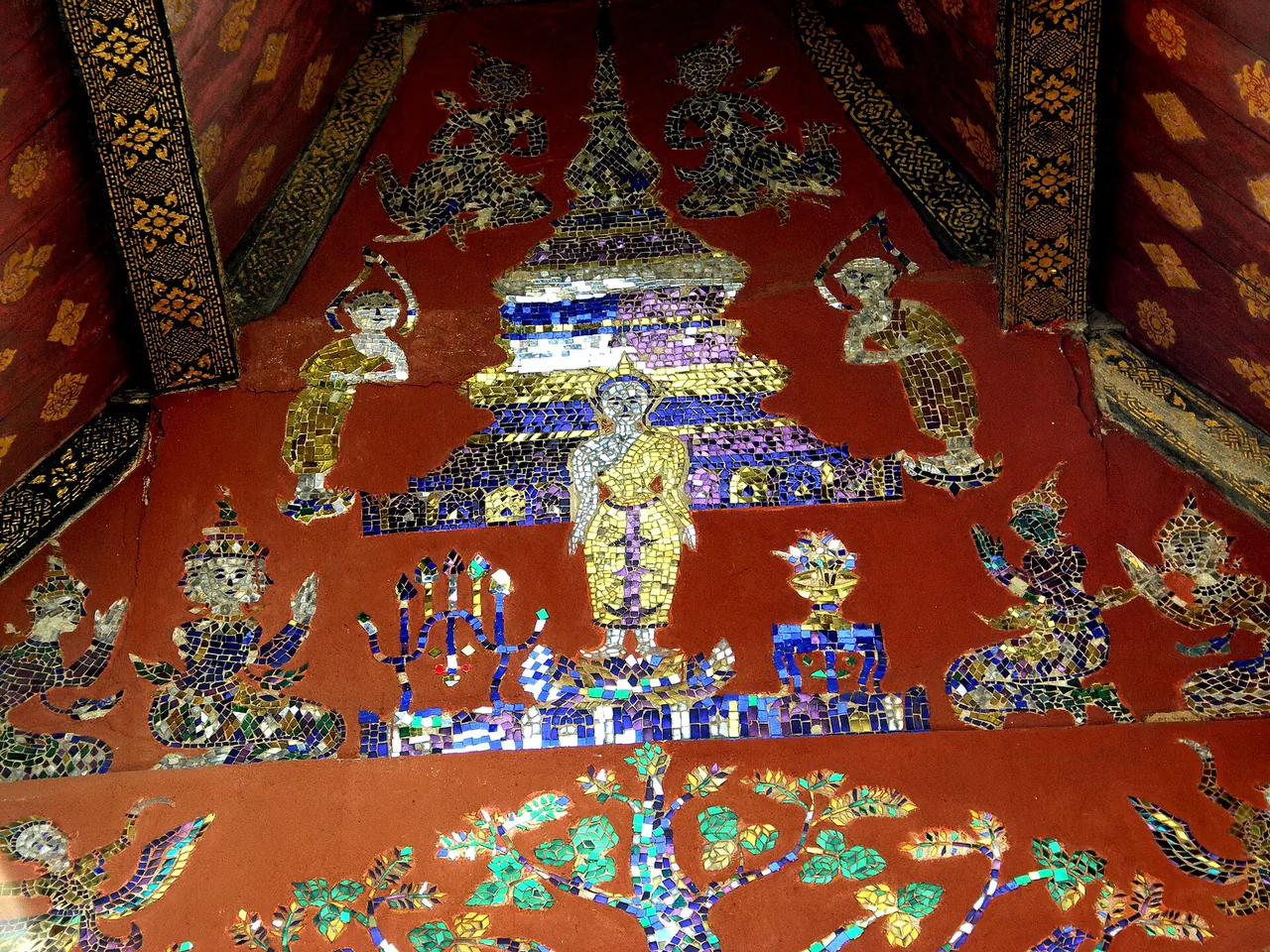
The official tourism site calls the temple a classic example of the Luang Prabang style, with a low, sweeping roof and glass mosaics. Around the main hall stand several smaller buildings.
Start with the sim, the ordination hall at the centre of the compound. It is 6.80 m wide, 22.40 m long and 15.30 m high. Inside, gold-on-lacquer stenciling decorates the walls, and a glass mosaic of a large Bodhi tree covers the rear wall.
The Royal Funerary Chariot Hall stands on the right as you enter from Thanon Phothisarath. The list below shows what to look for in each building.
- The Sim (Ordination Hall)
- A seventeen-segment gilded Dok So Fa on the ridge marks the temple's royal patronage.
- Gold-on-lacquer stenciling decorates the interior walls of the main hall.
- The rear wall carries a glass mosaic of a large Bodhi tree.
- The Red Chapel
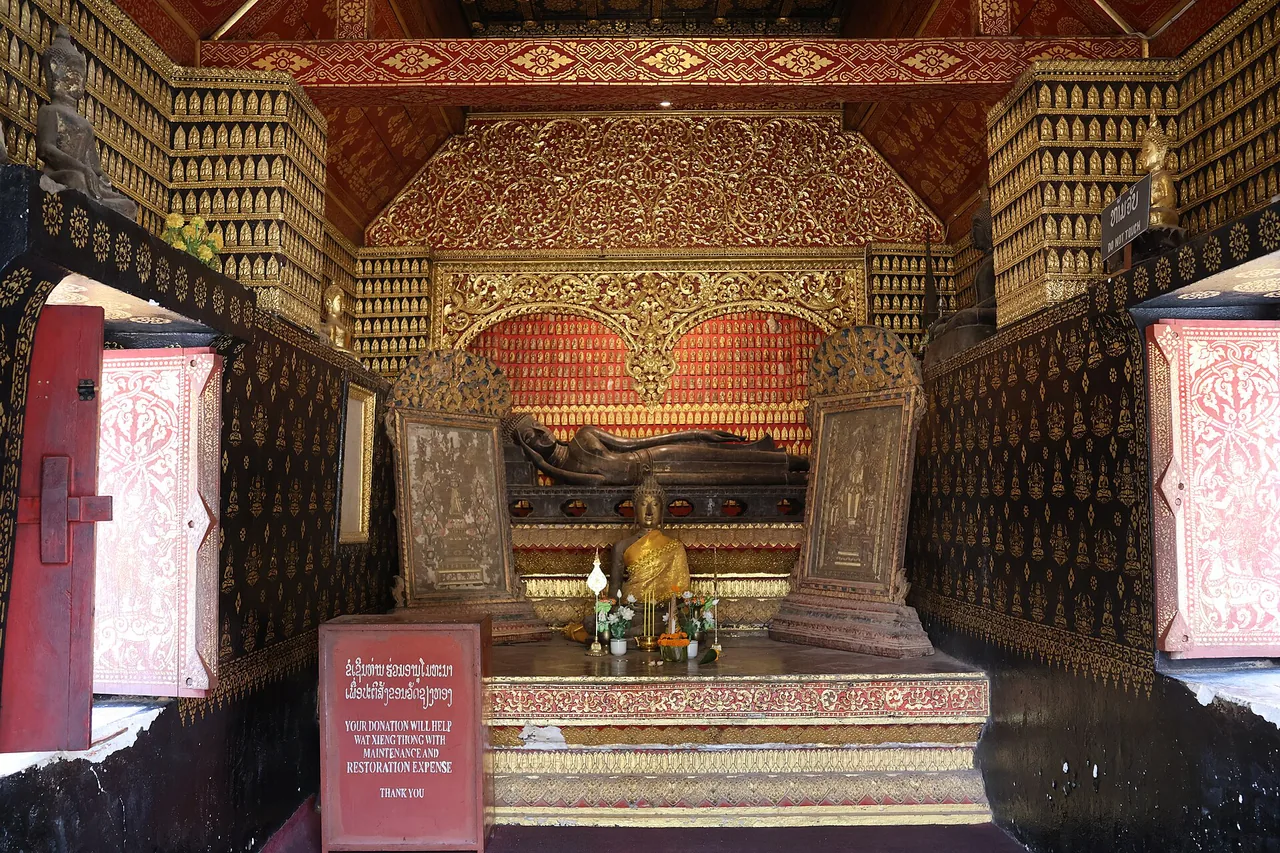
- This small chapel beside the sim holds a reclining Buddha image.
- The image was taken to Paris for the 1931 exposition, kept in Vientiane for decades, and returned to Luang Prabang in 1964.
- Ho Pha Marn Chapel
- Ho Pha Marn is the chapel of the standing Buddha, one of the smaller buildings around the sim.
- Royal Funerary Chariot Hall
- Work on the hall began in 1962, and it houses a gilded wooden royal funeral carriage about 12 m high.
- The carriage carries three ornate funerary urns of the royal family.
- Carved and gilded scenes from Phralak Phralam, the Lao Ramayana, decorate the outer walls.
- Drum Tower and Tripitaka Library
- A drum tower and a Tripitaka library also stand within the grounds, a reminder of the temple's past role as a library for old scripts.
Temple Rules and Etiquette to Follow
Because the temple is an active monastery, Tourism Luang Prabang asks visitors to follow a few clear rules. Cover yourself from shoulders to knees, and take off hats and shoes before entering the halls.
Respect the monks and novices who live here. Women are not allowed to touch them, so keep a polite distance when passing.
Do not show affection in public. Refuse any antiques offered to you, or you will be fined.
Beyond the official rules, the usual courtesy for any working monastery applies: keep your voice low and give way to monks on the paths.

Best Time to Go and Nearby Sights
Tourism Luang Prabang says the best time to visit, especially for photography, is in the morning. The temple opens at 6:00 am, so an early start fits the official advice.
Wat Xieng Thong pairs well with other central sights. The Royal Palace Museum offers a look at royal history, and Wat Mai is another temple worth adding.
For views, climb Mount Phousi in town. The Traditional Arts and Ethnology Centre adds context on the culture behind the crafts you see.
Frequently Asked Questions
What are Wat Xieng Thong's opening hours?
The official Tourism Luang Prabang page lists it as open daily from 6:00 am to 6:00 pm.
How much is the Wat Xieng Thong entrance fee?
From November 15, 2026, foreign visitors pay 60,000 kip per person; before that date the fee was 30,000 kip. Lao visitors enter free.
What should I wear to visit Wat Xieng Thong?
Cover yourself from shoulders to knees and take off hats and shoes before entering the halls, as the official tourism site advises. It is an active monastery, so respect the monks and novices; women should not touch them.
When is the best time to visit Wat Xieng Thong?
The official tourism site recommends the morning, especially for photography.
How do I get to Wat Xieng Thong?
It sits on the main street at the end of the Luang Prabang peninsula, about a 10-minute walk from the Luang Prabang Tourism Information Center, on the left-hand side.
Who built Wat Xieng Thong?
King Setthathirath built it between 1559 and 1560. It remained a royal temple, where Lao kings were crowned, until 1975.
What is inside the Royal Funerary Chariot Hall?
The hall, begun in 1962, houses a gilded wooden royal funeral carriage about 12 m high with three ornate funerary urns of the royal family, and its outer walls carry carved and gilded scenes from Phralak Phralam, the Lao Ramayana.
What is the Red Chapel at Wat Xieng Thong?
It is the small chapel beside the sim that holds a reclining Buddha. The image was taken to Paris for the 1931 exposition, kept in Vientiane for decades, and returned to Luang Prabang in 1964.
Wat Xieng Thong combines royal history, gilded halls and glass mosaics in one working monastery. Go in the morning, cover shoulders and knees, and budget for the 60,000 kip foreigner fee that applies from November 15, 2026.
After your visit, keep exploring the old town on foot. Every stop adds another layer to the story of Luang Prabang.
Planning more of Luang Prabang? See our guides to things to do in Luang Prabang, the best time to visit Luang Prabang and temple etiquette.