
Wat Mai in Luang Prabang: History, Hours and Entry Fee

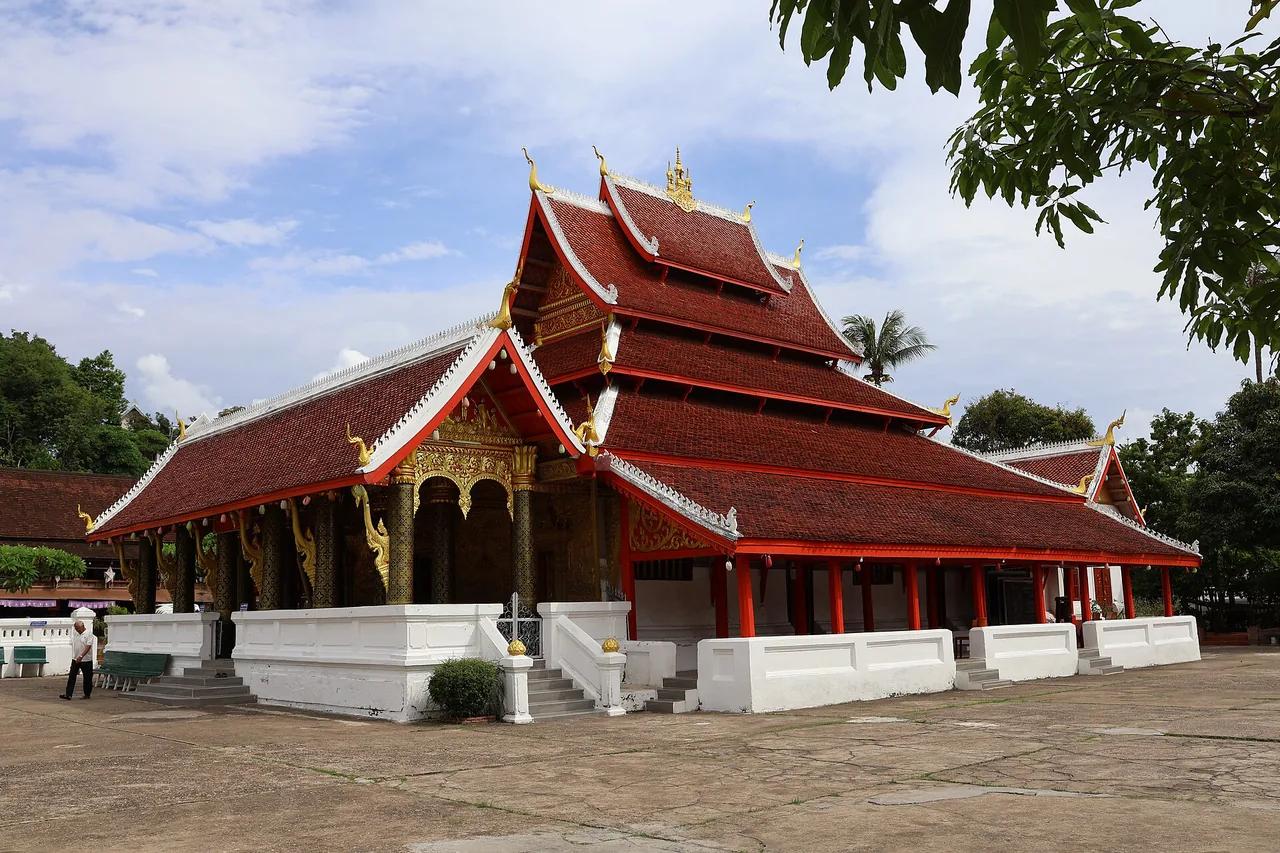
Wat Mai Suwannaphumaham sits on Sisavangvong Road in central Luang Prabang, directly beside the Royal Palace Museum. Locals call it Wat Mai, meaning 'New Monastery', and it remains a working Buddhist temple. Wikipedia describes it as the largest temple in Luang Prabang.
This guide covers the temple's history and its link to the Pha Bang Buddha, the gilded veranda relief, the opening hours and entrance fee, how to find it, and the dress and conduct rules. Last updated November 2026.
Wat Mai History and the Pha Bang Buddha
Most accounts place Wat Mai's construction at the end of the 18th century under King Anourout, but sources do not agree on a founding year: 1780 and 1796–97 are both given. The temple was later restored and enlarged under King Manthatourat, who reigned from 1817 to 1836, and it took the name 'New Monastery' then. The 1821–22 date that some sources quote marks the start of that restoration, not the founding.
Work on the sim, the library and other buildings continued into the 1890s. Major restorations followed in 1943 and 1962. Wat Mai served as a temple of the Lao royal family. It was also the residence of the Pra Sangkharat, the highest dignitary of Lao Buddhism.
After Haw raiders sacked the city in 1887, Wat Mai became the home of the Pha Bang, the city's sacred gold Buddha image. The image stayed here until 1947, when it moved to the royal palace.
During Pi Mai, the Lao New Year in mid-April, the Pha Bang is displayed at Wat Mai. The image stays out for three days of ceremonial washing. Anyone planning an April trip may want to build the temple visit around those days.
What to See at Wat Mai Suwannaphumaham
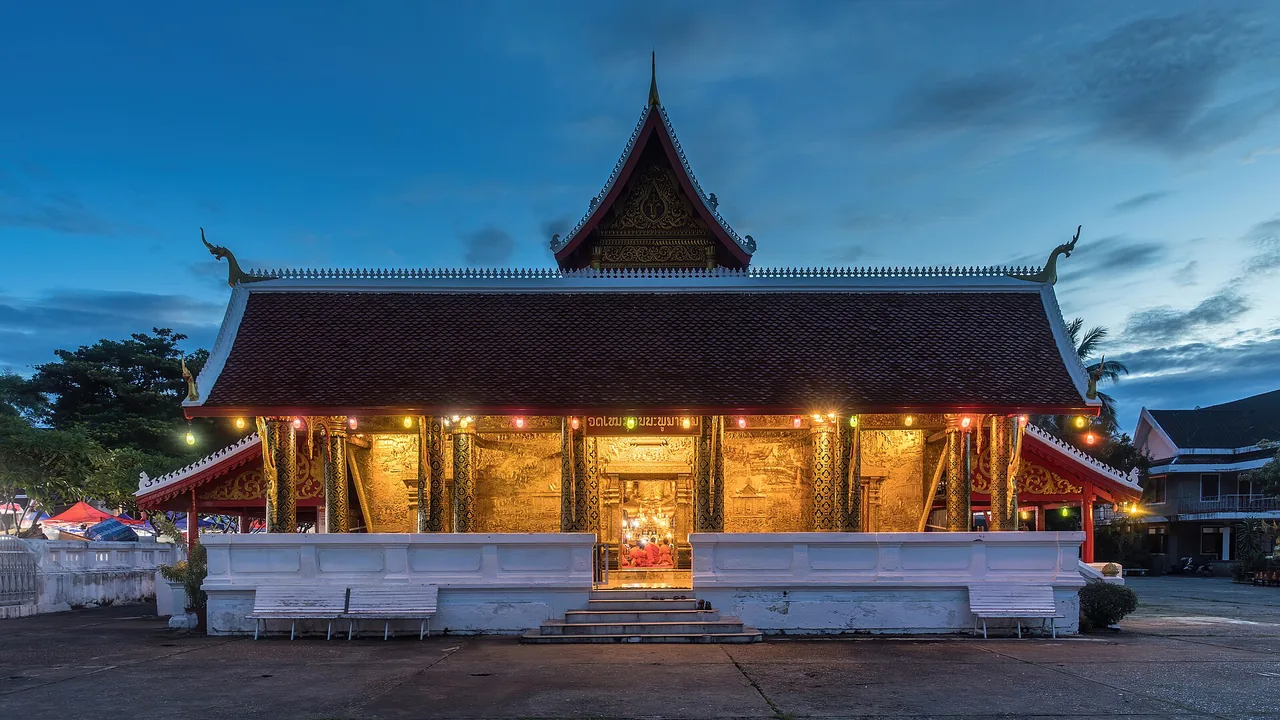
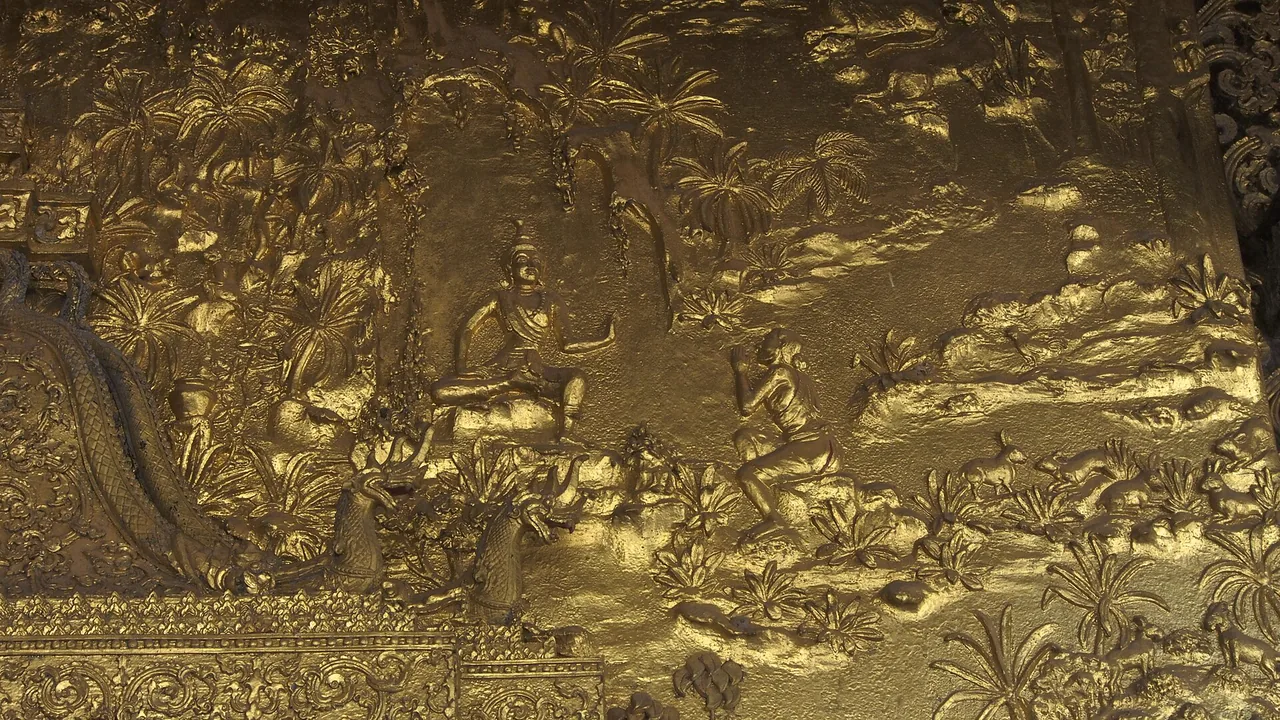
Begin at the front veranda of the sim, the ordination hall. A gilded stucco relief there dates from the late 1960s, and one source gives the year as 1968. It shows scenes from the Vessantara Jataka and the Ramayana set in a local landscape.
The sim follows the traditional Luang Prabang style, with side porches and a five-tiered roof. Pause outside to take in the roofline before stepping through the doors.
Inside, the red nave is decorated with gold stencilling on the columns, beams and walls, and gilded Buddha statues stand within the hall. Remember to take off your shoes and hat before you step inside.
Give the veranda relief time and read it as a set of story panels: one wall brings together scenes from the Vessantara Jataka and the Ramayana, placed in a local landscape rather than a foreign one.

Wat Mai Tickets and Opening Hours
According to the Luang Prabang tourism website, Wat Mai is open daily from 08:00 to 17:00, and entry costs 10,000 kip (LAK) per person.
Some listings report a higher fee. Carry small kip notes and confirm the price when you arrive.
- Opening hours
- Open daily, 08:00 to 17:00.
- Entrance fee
- 10,000 kip per person; some listings report a higher fee.
- Dress code
- Shoulders to knees covered; hats and shoes off.
Getting There
Wat Mai stands in Ban Pakham on Sisavangvong Road, the main street through Luang Prabang's old town. The tourism website puts it about 5 minutes' walk from the city center, just before the National Museum. The Royal Palace Museum compound is directly beside the temple, and the front of Wat Mai faces the night market area.
Because the temple and the palace share the same stretch of road, the simplest plan is to visit them one after the other on foot.
- Address
- Ban Pakham, Sisavangvong Road, Luang Prabang district and province, Laos.
- Next door
- The Royal Palace Museum, on the same road.
Temple Etiquette at Wat Mai
Wat Mai is an active place of worship, so the tourism listing sets clear rules for visitors. Cover yourself from shoulders to knees, and take off hats and shoes before entering.
Treat monks and novices with respect, and note that women are not allowed to touch them. Public displays of affection are not permitted on the grounds.
The listing also tells visitors to refuse any antiques, or they will be fined. If a vendor or anyone else offers an old object, the simplest answer is a polite no.

Pairing Wat Mai With Other Luang Prabang Sights
Because Wat Mai sits on the main street, it fits easily into a wider temple route. For a second temple, try Wat Xieng Thong, another major temple in the old town.
For a change of pace, the climb up Mount Phousi is a classic Luang Prabang viewpoint. The Traditional Arts and Ethnology Centre adds context on Lao arts and ethnic cultures.
Each stop has its own hours and fees, so plan around those rather than assuming they match Wat Mai. The Royal Palace Museum is the natural companion, since the Pha Bang image moved from Wat Mai to the royal palace in 1947.
Frequently Asked Questions
How much is the entrance fee for Wat Mai in Luang Prabang?
The Luang Prabang tourism website lists the entrance fee as 10,000 kip (LAK) per person. Some listings report a higher fee, so bring small kip notes and confirm the price on arrival.
What are Wat Mai's opening hours?
Wat Mai is open daily from 8:00 a.m. to 5:00 p.m.
Where is Wat Mai?
Wat Mai stands in Ban Pakham on Sisavangvong Road in the middle of Luang Prabang's old town, directly beside the Royal Palace Museum and facing the night market area.
What is Wat Mai famous for?
It is known for the gilded stucco relief on the front veranda of its sim, which shows scenes from the Vessantara Jataka and the Ramayana, and for its five-tiered roof. Wikipedia describes it as the largest temple in Luang Prabang.
How old is Wat Mai?
Most accounts place its construction at the end of the 18th century under King Anourout, though sources give founding years ranging from 1780 to 1796–97. It was restored and enlarged under King Manthatourat (r. 1817–1836), work that began in 1821–22. The gilded facade relief dates from the late 1960s.
What is the connection between Wat Mai and the Pha Bang Buddha?
After Haw raiders sacked Luang Prabang in 1887, Wat Mai became the home of the Pha Bang, the city's sacred gold Buddha image, until it moved to the royal palace in 1947. Each Lao New Year (Pi Mai, mid-April), the Pha Bang is displayed at Wat Mai for three days of ceremonial washing.
What does Wat Mai's name mean?
Wat Mai means 'New Monastery'. The temple took that name when it was restored under King Manthatourat in the early 19th century. Its full name is Wat Mai Suwannaphumaham.
Wat Mai rewards visitors who look beyond the doorway and read its veranda relief, five-tiered roof and gold-stencilled nave. Its past as home of the Pha Bang and residence of the Pra Sangkharat gives the building real depth.
Check the fee on arrival, follow the dress and conduct rules, and pair the stop with the nearby sights above. For more ideas, browse our full guide to attractions in Luang Prabang.
Planning more of Luang Prabang? See our guides to things to do in Luang Prabang, the best time to visit Luang Prabang and where to stay in Luang Prabang.