Sarawak Laksa: What It Is and Where to Eat It in Kuching
Sarawak laksa is a spice-paste and shrimp broth with no curry. Learn how it differs from other laksas and how to order a bowl in Kuching.
On this page
Last updated November 2026. Sarawak laksa is a noodle soup from Kuching, built on a spice-paste broth with shrimp, served over rice vermicelli with omelette strips, chicken and prawns. It contains no curry, which separates it from the curry laksa you may know from elsewhere in Malaysia. This guide covers what is in the bowl, how to order it and how to fit it into a Kuching food day alongside the wider Kuching food guide.

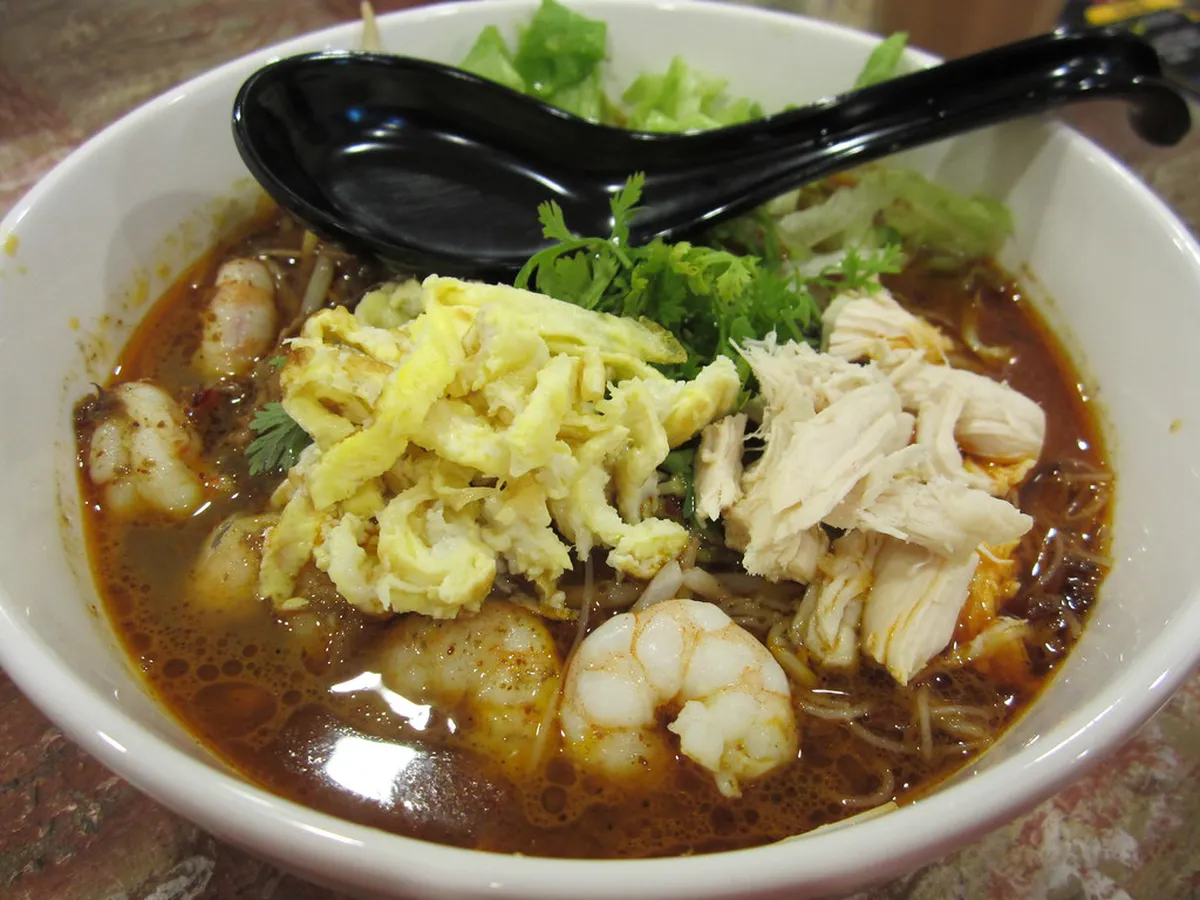
Featured image: Marufish, CC BY-SA 2.0, via Flickr.
What Sarawak laksa is
Sarawak laksa comes from Kuching, on the island of Borneo. Its broth starts with a paste of sambal belacan, tamarind, garlic, galangal and lemongrass, softened with coconut milk. Rice vermicelli sits underneath, and toppings go on top. Locals treat it mainly as a breakfast dish. If you only try one bowl in Kuching, this is a strong candidate. Recipe seekers will find plenty of home versions online, so this page stays focused on eating it in Kuching.


- Broth base: sambal belacan paste, tamarind, lemongrass, galangal and coconut milk
- Noodle: thin rice vermicelli
- Standard toppings: omelette strips, shredded chicken, prawns and fresh coriander
- Sides: extra sambal belacan and a halved kalamansi lime
- Spice level: adjustable, because you stir in the sambal yourself
- Typical meal time: breakfast
How Sarawak laksa differs from curry laksa and kolo mee

Many visitors assume every laksa is a coconut curry. Sarawak laksa breaks that rule, because its soup has no curry in it. Curry laksa leans creamy, while asam laksa leans sour from tamarind. Kuching's other famous noodle is kolo mee, which is a separate dish with its own guide. Use the table to pick the bowl that suits your morning.
| Dish | Broth base | Noodle | Toppings | Best for |
|---|---|---|---|---|
| Sarawak laksa | Sambal belacan, tamarind, lemongrass, galangal, coconut milk | Rice vermicelli | Omelette strips, chicken, prawns, coriander | A first Kuching breakfast |
| Curry laksa | Coconut curry broth | Rice vermicelli is common | Varies by cook, often prawns or chicken | Readers who want a creamy bowl |
| Asam laksa | Tangy tamarind soup | Varies by region | Varies by cook | Readers who prefer sour over creamy |
| Kolo mee | Different dish, not a laksa broth | Sarawak noodles | See our kolo mee guide | A second Kuching noodle stop |
What is in the bowl
Start with the broth. It is shrimp-based and fragrant, with tamarind sourness balanced by coconut milk. Rice vermicelli carries it. Toppings are omelette strips, shredded chicken and prawns, finished with fresh coriander. Bean sprouts, fried tofu or other seafood are not traditional, though some stalls add them. A small dish of sambal belacan arrives on the side. Stir in a little at a time to raise the heat. Squeeze the kalamansi lime over the top for a sharper edge. Taste first, then adjust, because the paste is already seasoned.
Where and when to eat Sarawak laksa in Kuching
Treat Sarawak laksa as a morning meal. Plan to arrive early, since popular stalls can run low on broth later in the day. Opening times differ by venue, so check the stall or café before you commit. Stalls and coffee shops offer a quick, casual bowl. A sit-down restaurant costs more time but gives you a menu and a seat. Start with our Kuching restaurant picks for venues. Browse the Kuching food hub for more dishes nearby. If your plans centre on one area, a top Kuching stop may sit close to breakfast. Plan on a taxi or ride-hail for farther stalls, and walk in the old town. For current events and local food listings, see the Visit Kuching site.
How to order and eat Sarawak laksa
Ask for a regular bowl first. Add sambal belacan in small spoonfuls, and squeeze the lime just before eating. Pair it with a hot or iced drink from the same stall. Shrimp is central to the broth and the sambal. If you avoid shellfish, ask before you order, because the broth is shrimp-based. For halal or pork questions, ask the stall directly, since practices differ by venue. Pick the bowl that fits you:
- Low spice tolerance: add the sambal belacan last, and only a little
- Shellfish allergy: skip it, or ask the cook before you order
- First visit: order the standard bowl with all the usual toppings
- Repeat visit: try a different stall and compare the broth
- Mistake to avoid: arriving late and finding the pot empty
- Mistake to avoid: skipping the sambal and lime
- Mistake to avoid: expecting a curry laksa
Origin of Sarawak laksa and the paste
Sarawak laksa is often credited to Goh Lik Teck, a Cantonese migrant who sold spicy noodles on Carpenter Street in Kuching in 1945. That story circulates widely, but treat it as local lore. Later cooks developed their own pastes, and the paste still defines each stall's broth. You may see packaged laksa paste sold as a souvenir. Food rules for baggage and customs vary, so read official Malaysian customs and airline guidance before packing any. For wider Sarawak travel planning, the Sarawak Tourism Board is a good starting point.
How to fit Sarawak laksa into a Kuching food day
Put laksa first, while stalls have a full pot. Follow it later with kolo mee, as covered in our kolo mee guide, so the two noodle dishes stay distinct. End the day with a sweet souvenir. Our Sarawak layer cake guide explains what to buy. On a short stay, this order lets you taste a savoury breakfast, a second noodle and a dessert without rushing. With only one morning, choose laksa and keep the rest flexible.
Frequently Asked Questions
What are some popular dishes in Sarawak?
Sarawak laksa and kolo mee are the two noodle dishes most visitors seek out in Kuching. Kek lapis, the layer cake, is the usual sweet souvenir.
Why is it called laksa?
The origin of the name is unclear. Theories exist, but none is settled, so treat any single explanation with caution.
Useful notes for your Southeast Asia trip
Optional updates to our guides.
You might also like



Continue reading
More guides you'll find useful