Angkor Wat Sunrise: Tickets, Timing & Best Spots
Plan your Angkor Wat sunrise: when to leave Siem Reap, how to handle the pass, where to stand at the pools, quieter spots and what to do next.
On this page
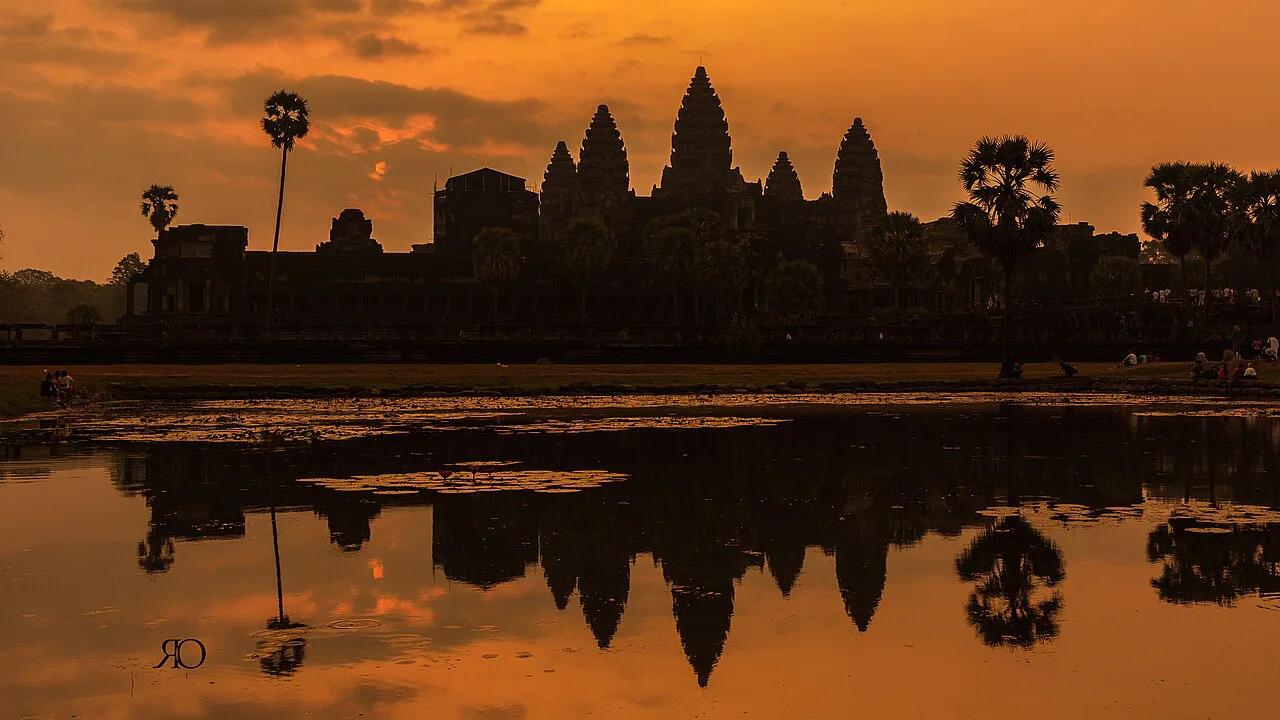
Last updated November 2026: an Angkor Wat sunrise is worth doing once, and it rewards planning more than stamina. We'd buy the pass the afternoon before, leave Siem Reap around 4:30 am, and claim a spot at the western reflection pools before the crowd settles. Below is how we'd set it up, with quieter backups and a route for the rest of the morning.
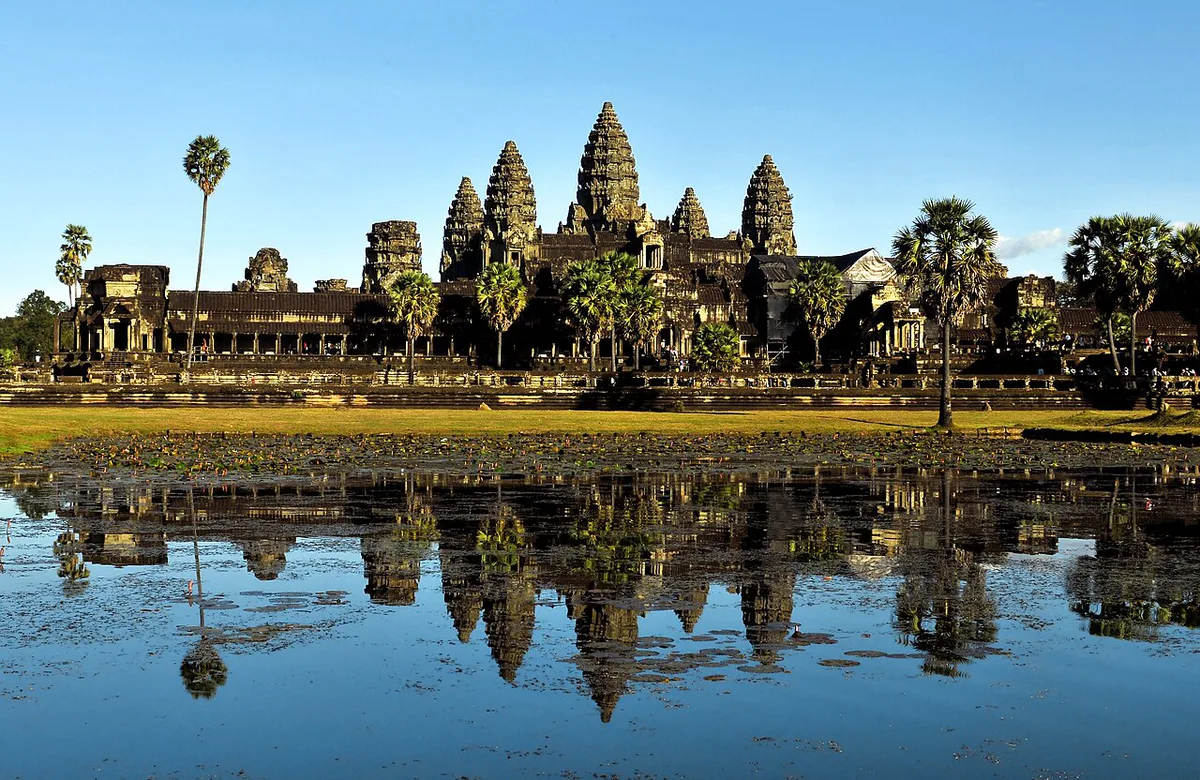
Featured image: Reinhard Onasch, CC BY-SA 3.0, via Wikimedia Commons.
Is the Angkor Wat sunrise worth it?
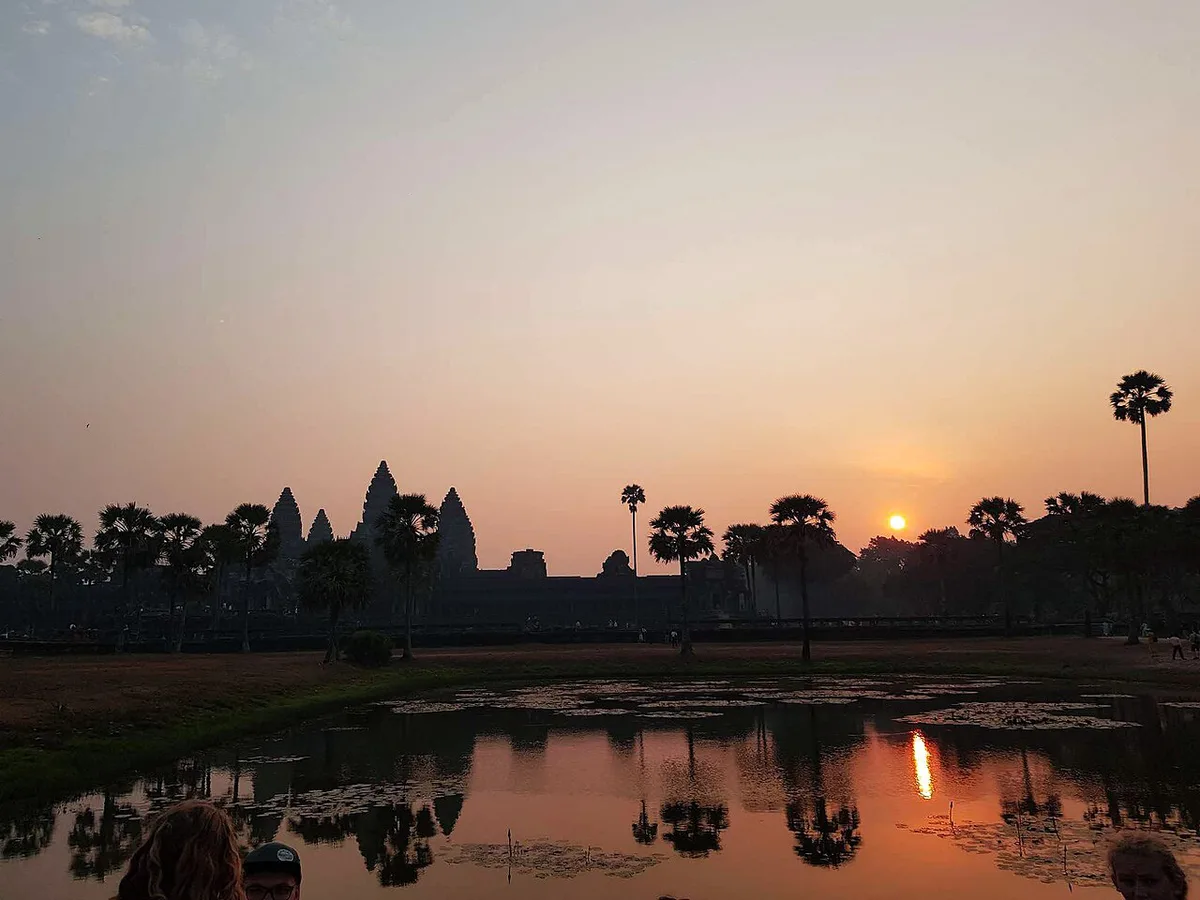
Our verdict: do it once, and plan it. Dawn at the western causeway gives you Angkor Wat's towers over the pools, with the sky changing colour every few minutes. Expect darkness, a crowd and no promise of a clear sky. We rate it best for first-timers with two or more days in Siem Reap. Travelers with only one day who want the interior should skip the 3-4 am start. So should anyone who struggles with very early mornings, and families with young children or older relatives walking in the dark. A mid-morning visit suits them better. For the wider park, see our full temple overview.
Quick plan: the sunrise timeline and when to leave Siem Reap
Work backwards from local sunrise, which shifts through the year. Look up the time for your date on a sunrise-time site. Plan to reach the causeway roughly 45 to 75 minutes before the sun clears the horizon. Subtract your transfer time to get the hotel departure. On many mornings that lands near 4:30 am, which fits park gates that open at 5:00 am. Treat every time below as approximate.
| Step | Approximate timing | What to do |
|---|---|---|
| Night before | Before 5:00 pm if possible | Buy the pass, charge phone and camera, pack the bag |
| Wake-up | Around 4:00 am | Dress in covered layers, grab the torch and pass |
| Hotel departure | Around 4:30 am | Meet your driver at the agreed pickup point |
| Arrival | 45-75 minutes before sunrise | Walk the causeway and claim a pond-edge spot |
| Sunrise | Local time for your date | Stay put; colours keep changing after the sun clears |
| After | Once crowds thin | Climb the central sanctuary, then breakfast |
Angkor Pass and tickets for sunrise
Buy your pass before the morning you go. Guards check it at the entrance in the dark, and ticket-centre queues build fast at dawn. Hours are 5:00 am to 5:30 pm. A pass bought after 5:00 pm is valid from the next day, which suits a dawn start. We'd buy it the afternoon before and confirm that rule at the counter. Fares have changed over the years, so read current prices on the official ticket site. That site also sells passes online, so check how the pass is delivered before relying on your phone. Our pass options and ticket rules page compares the one-day and multi-day choices. If you arrive without a pass, stay on the near side of the bridge over the large pools in front of the complex. Watching from there is quieter, and you can buy a pass that day for a later morning. A multi-day pass also gives you a second try if cloud or haze spoils the first.
Getting there in the dark
Pick the ride by comfort, dust tolerance and how much you want to manage yourself. Tuk-tuks run slower than cars, so add time to any map estimate. Private cars keep out haze and chill. Bicycles suit fit riders who are happy on unlit roads. Guided sunrise tours remove the logistics but fix your schedule. Our guide to hiring a tuk-tuk driver covers the booking details. Whatever you choose, agree the pickup point and time before you leave the hotel. Your driver drops you in the dark, and after sunrise everything looks different. Cell service at the temple is limited, so fix the meeting spot in advance.
Slow tuk-tuks eat into the 45 to 75 minutes before sunrise, so plan the ride as part of that window.
| Option | Good for | Trade-off | Skip if |
|---|---|---|---|
| Tuk-tuk | Open-air feel, driver waits for you | Dust, cool air, slower than a car | You dislike dust or chill |
| Private car | Comfort and a warm seat | Less atmosphere, parking and pickup to agree | You want the local ride |
| Bicycle | Fit riders, full independence | Dark roads, tiring before dawn | You are not confident riding at night |
| Guided sunrise tour | No planning on the day | Fixed schedule, group pace | You want to stay for the late light |
Where to watch: the pools and the crowd
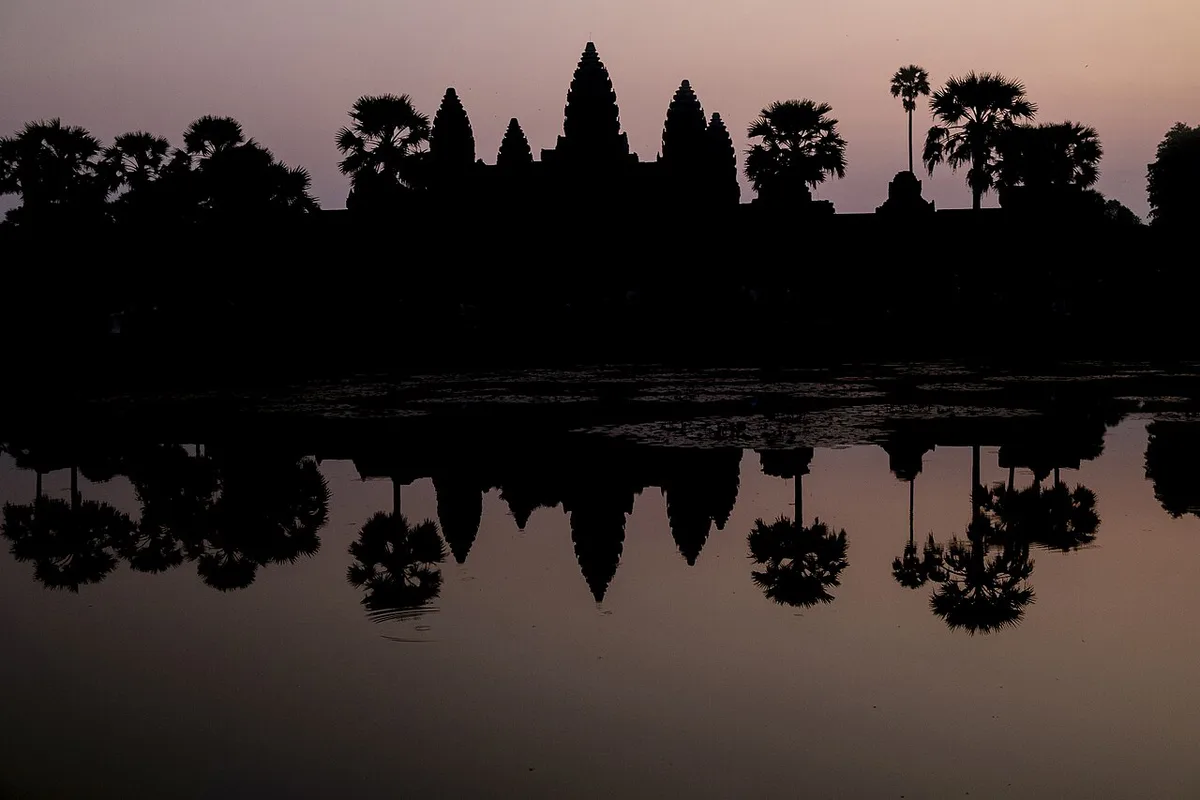
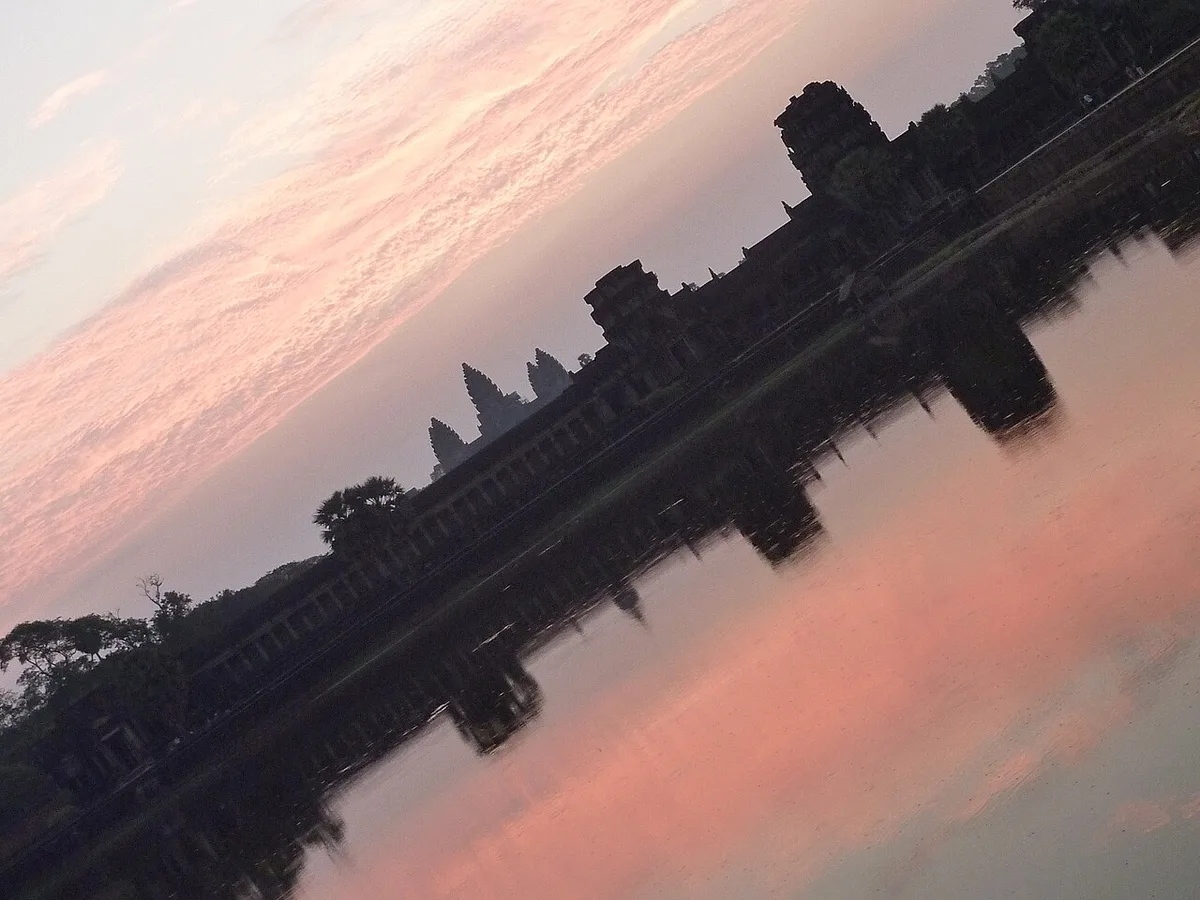
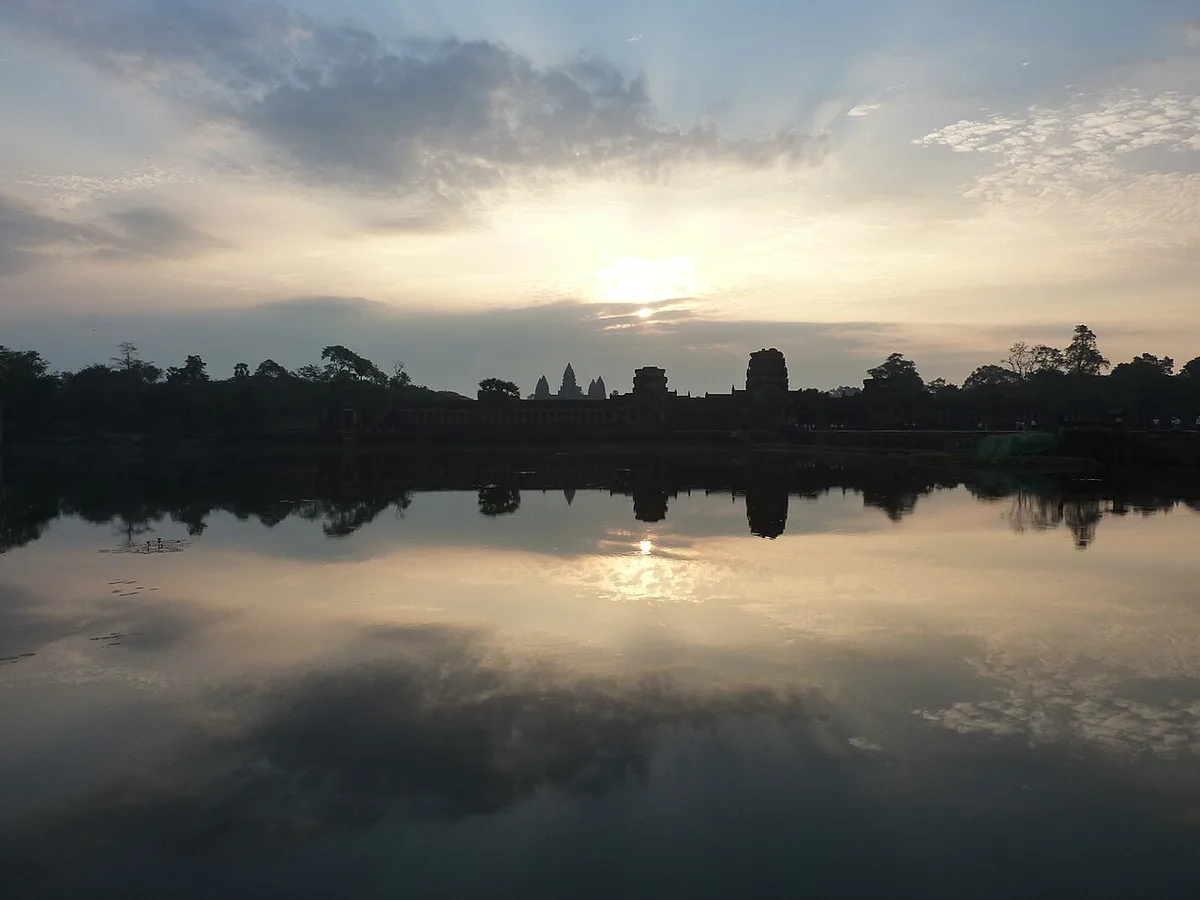
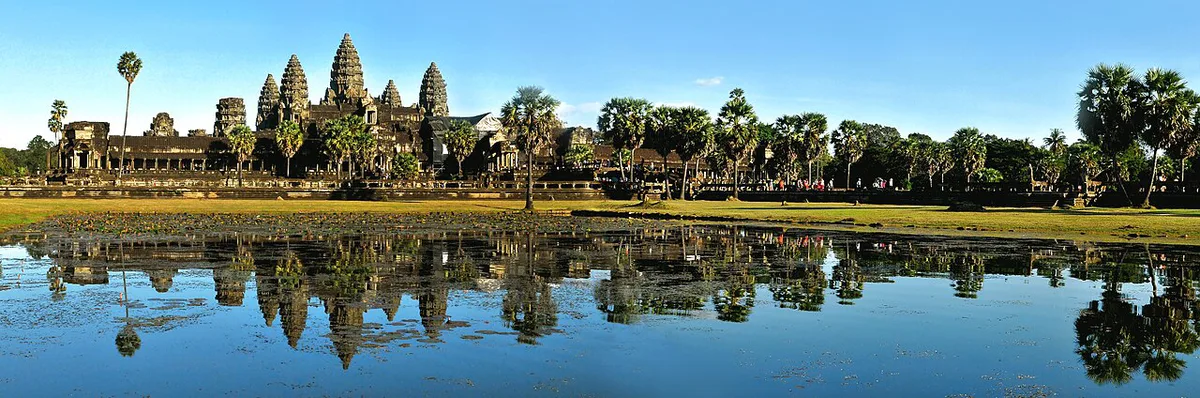
Two reflection pools sit on either side of the western causeway. Reports disagree on which is better. Many guides favour the left pond for an unobstructed view without trees. One photographer preferred the right pond, which held more water in February. We'd treat it as a trade-off, not a rule. Look at both on arrival, then commit. In the dry season the ponds can be nearly empty, so reflections are weak. In the wet season they fill and mirror the towers. Seats at the pond edge go to whoever arrives first. Latecomers stand behind hundreds of people. Leave your spot and someone takes it. Bring a torch, because the temple is unlit before dawn. Colours keep shifting for several minutes after the sun clears the towers, so stay put.
What to wear and bring
Shoulders and knees need covering at Angkor Wat, and staff can turn people away from areas if you are not dressed properly. Mornings are chilly, so a light sweater or sarong helps during the wait. Our guide on what to wear inside the temple has the details. Pack the night before.
- Angkor Pass, kept somewhere easy to reach
- Torch or headlamp to save your phone battery
- Light layer for the pre-dawn wait
- Water and insect repellent
- A packed breakfast or snack for the hour of waiting
- Power bank for the map and camera
Best time of year for the Angkor Wat sunrise
Dry season runs December to March, with clearer skies and the biggest crowds. April-May and October-November are shoulder months with fewer people and a higher chance of rain. Haze can flatten colours even in good weather, and one photographer reported constant haze in February. Cloud can hide the sun at any time of year. Look at the forecast the evening before. Use a sunrise-time site for exact times, and see Cambodia's tourism ministry for current visitor information. Park rules come from the APSARA National Authority. Plan two sunrise mornings if your pass allows it.
Alternatives to the main pools
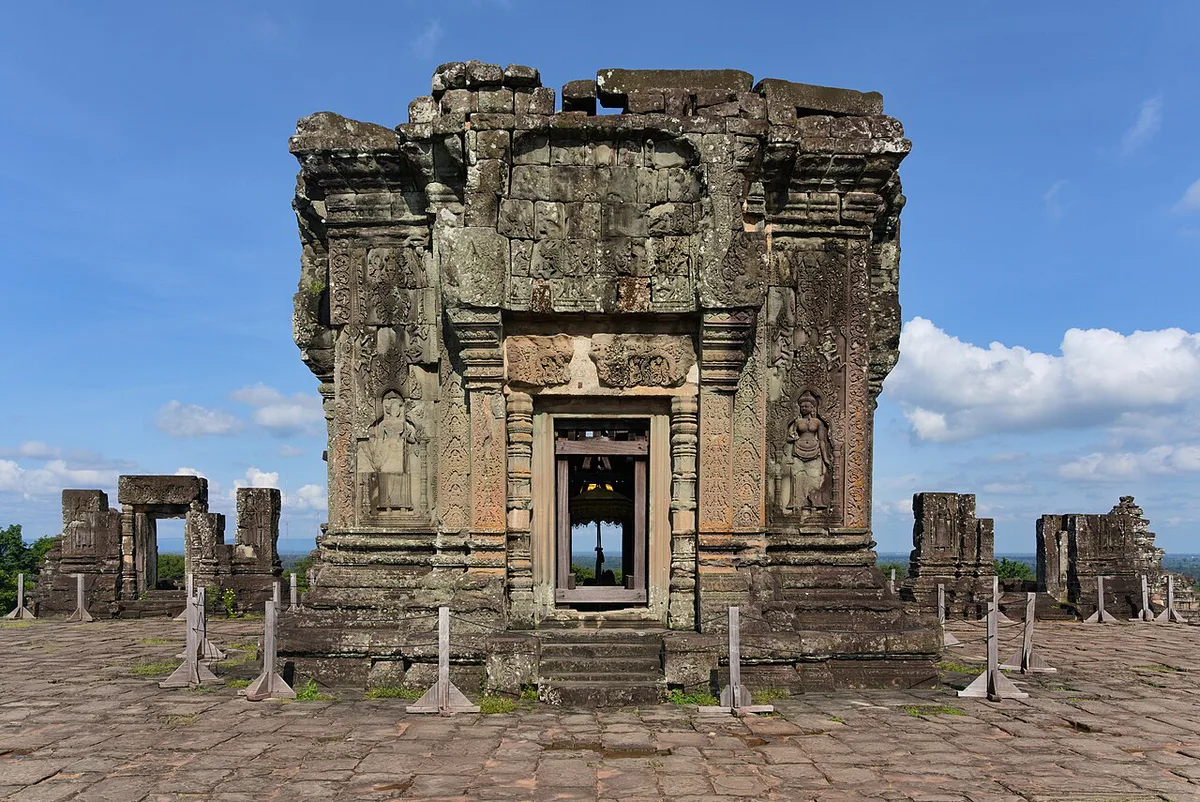
Angkor Wat's silhouette is the whole point of the main pools. Backups trade that view for space and soft light. Reports come from single visits, so read the table as qualitative. Srah Srang offers a long pond edge and stone steps. Pre Rup gives a jungle view with fewer people. Phnom Bakheng involves roughly a 30-minute walk up, and visitor numbers there are capped, so look up the current rules before you rely on it.
| Spot | Angkor Wat silhouette | Crowd level | Effort | Best for |
|---|---|---|---|---|
| Srah Srang | No | Lower, with room to spread out | Easy | Quiet pond sunrise |
| Pre Rup | No | Quiet | Moderate | Jungle views |
| Phnom Bakheng | Distant view of the temple | High, especially at sunset | About 30 minutes uphill | Sunset, or sunrise if you accept haze |
| Ta Prohm and Banteay Kdei | No | Busier later in the morning | Easy | Soft morning light, not a sunrise |
Sunrise or sunset?
Choose by what you want from the day. With a multi-day pass, do both.
Phnom Bakheng means a 30-minute walk up, so it suits a sunset plan better than an early alarm.
- Sunrise if you want the temple silhouette over the pools and cooler air.
- Sunset if you dislike 4:00 am alarms, or want Phnom Bakheng's wide view.
- Both if you hold a multi-day pass and can nap between.
After the sunrise: breakfast and your next temples
Crowds thin once the sun is up, and temperatures stay cool for a while. Climb the central sanctuary first, because its line can wrap around the temple later. Look up current access and dress rules for the upper level before you go. For breakfast, ask your Siem Reap hotel for a takeaway box or eat at stalls outside the complex, which open early. Then choose a route. Take the shorter temple loop if you have one or two days and want the headline sites. Take the longer outer loop if you hold a multi-day pass and want quieter ground.
Mistakes to avoid
Most sunrise disappointments trace back to a handful of avoidable slips.
- Arriving without a pass and queuing at the ticket centre while the sun rises.
- Leaving your pond-edge seat for a photo or a snack.
- Skipping the torch and groping along the causeway.
- Forgetting a layer for the chilly wait.
- Expecting a mirror reflection in the dry season.
- Betting everything on one morning.
Useful notes for your Southeast Asia trip
Optional updates to our guides.
You might also like
Continue reading
More guides you'll find useful