
Angkor Wat Visitor Guide: Pass Prices, Hours and Planning

Angkor Wat sits inside the Angkor Archaeological Park outside Siem Reap, built by King Suryavarman II in the early 12th century. It began as a Hindu temple to Vishnu and later became a Buddhist site that still hosts worship. This guide covers the Angkor Pass, opening hours, the upper-level rules, the dress code and getting there, plus links to more of our Siem Reap attractions.
Last updated November 2026. Prices and hours below come from Angkor Enterprise, the operator that sells every Angkor pass. Rules and closures can change, so confirm them with Angkor Enterprise shortly before you travel.
Angkor Wat Basics Before You Visit
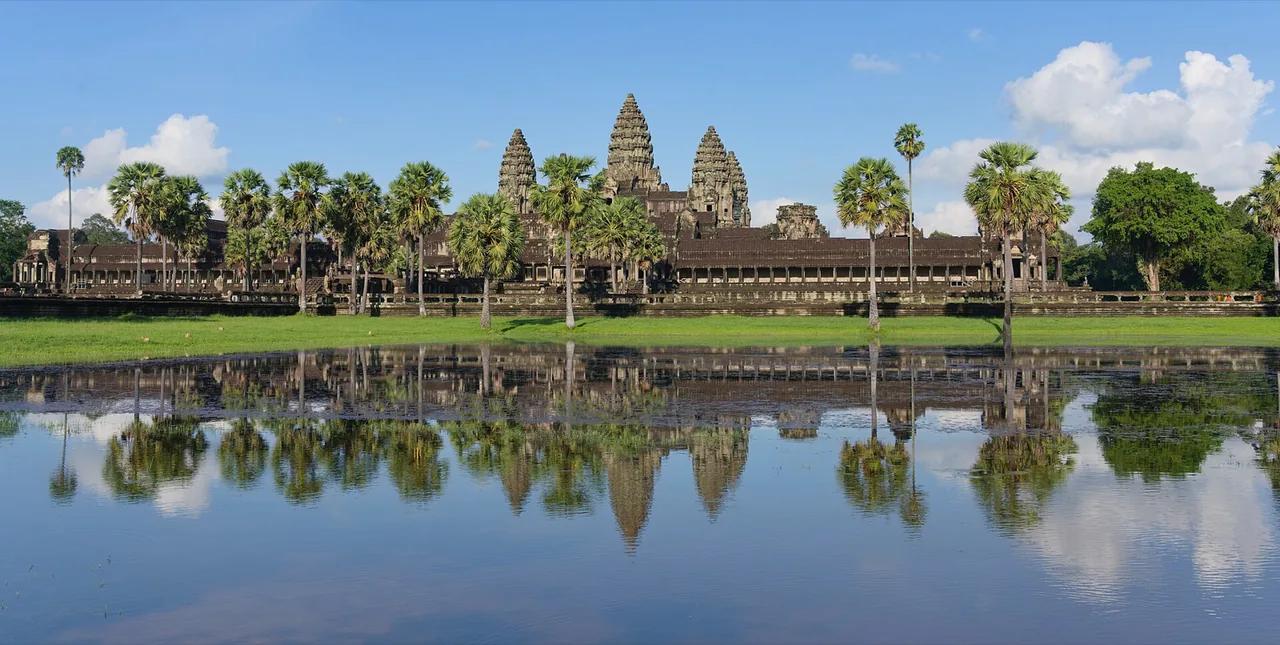
Angkor Wat is the largest religious monument in the world, on a site of 162.6 hectares. A moat 190 meters wide and an outer wall measuring 1,024 by 802 meters, about 3.6 km around, surround the temple. Unlike most Angkor temples, it faces west, so visitors cross a 350-meter sandstone causeway lined with naga balustrades.
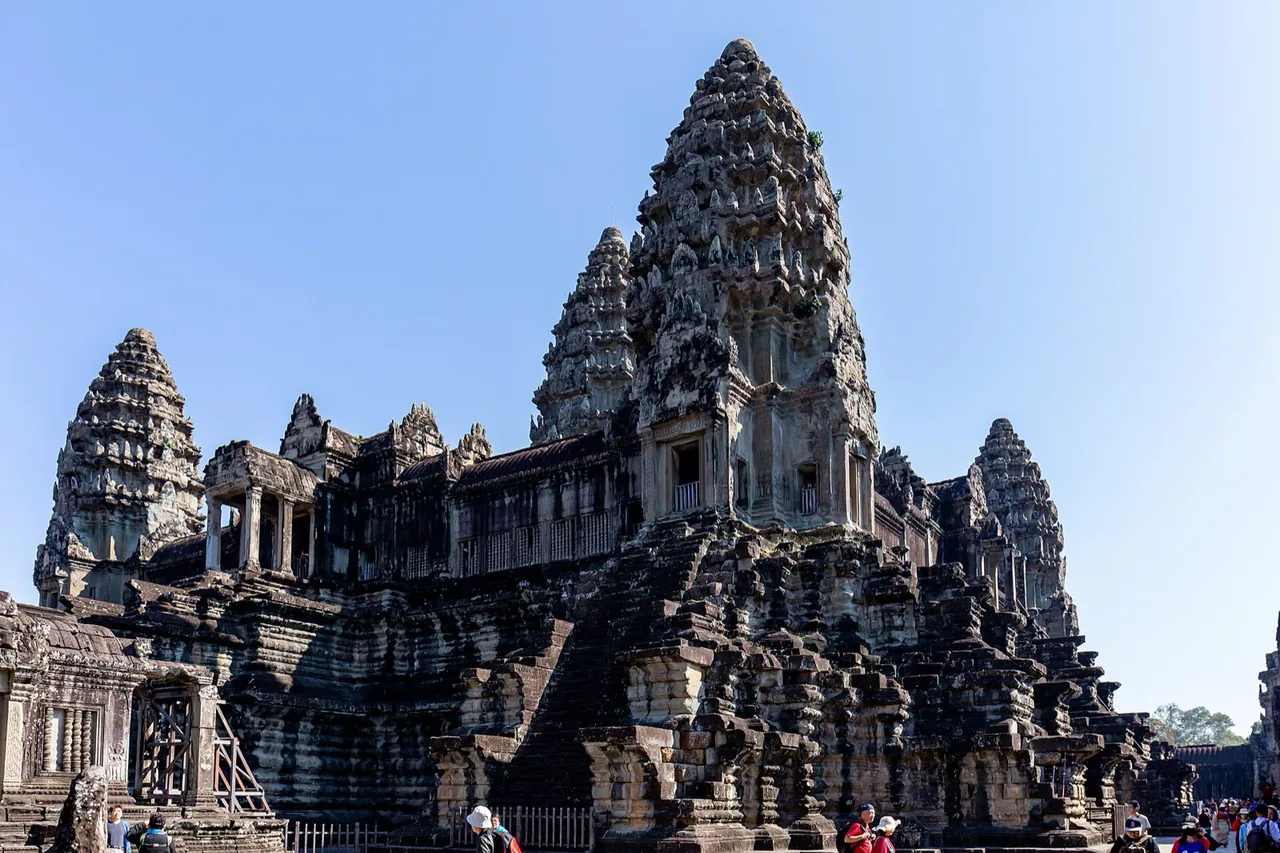
The temple combines two Khmer plans, the temple-mountain and the galleried temple. Three rectangular galleries rise one above the next, with a quincunx of five towers at the center. The central tower stands 65 meters above the ground. The whole layout represents Mount Meru.
King Suryavarman II built Angkor Wat between about 1113 and 1150 CE as his state temple and eventual mausoleum, dedicated to Vishnu. Its original name was probably Vrah Viṣṇuloka, "the sacred dwelling of Vishnu", while the name Angkor Wat means "Temple City" in Khmer. It gradually became a Theravada Buddhist temple, and it is the only Angkor temple to have remained a significant religious centre since its foundation, so expect to see people worshipping there as well as sightseeing.
Angkor Wat appears on Cambodia's national flag and belongs to the Angkor UNESCO World Heritage Site, inscribed in 1992.
Angkor Pass Prices and Where to Buy
Angkor Wat has no separate ticket, so every visitor aged 12 or over needs an Angkor Pass, which covers the whole park. Angkor Enterprise sells three versions, priced in US dollars as shown below. The 3-day and 7-day passes need a photo of the holder.
Children under 12 enter free and need no ticket, though staff may ask for a passport as proof of age. Buy only from Angkor Enterprise, whose Angkor Ticket Office is on Road 60, about 4 km from central Siem Reap. The official website, the Angkor Pass app, official kiosks, and your tour guide also sell valid tickets, while any other seller does not.
The multi-day passes do not need consecutive days. The 3-day pass gives three entry days used within 7 days, and the 7-day pass gives seven entry days used within 30 days, which lets you rest between temple days.
A 1-day pass covers Angkor Wat and the rest of the Small Circuit, but temples on the Grand Circuit need a longer pass. Preah Khan is one example, and it requires a 3-day or 7-day pass according to Angkor Enterprise.
- Angkor Pass 1-day for $37
- The ticket is valid for one day and covers Angkor Wat plus the Small Circuit temples.
- It suits travelers who only want the headline sights in a single long day.
- Angkor Pass 3-day for $62
- The ticket allows three entry days, all of which must be used within 7 days.
- It gives room for Grand Circuit temples and slower mornings between visits.
- Angkor Pass 7-day for $72
- The ticket allows seven entry days, all of which must be used within 30 days.
- It fits travelers staying longer who want to spread temples across a whole month.
- Children under 12 enter free
- Younger children need no ticket, but staff may ask for a passport as proof of age.
- Carry the child's passport on temple days.

Opening Hours and the Sunset Ticket Rule
Angkor Enterprise lists Angkor Wat itself as open daily from 5:00 AM to 5:30 PM. The Angkor Pass shows a separate, park-wide window: entry from 5:00 AM and closing at 6:30 PM. The later time applies to the park as a whole, not to Angkor Wat, so plan to leave the temple by 5:30 PM and check the official site before a late visit.
One rule from Angkor Enterprise helps with evening plans. If you buy a 1-day ticket for the next day after 4:45 PM, you can enter the park that evening for sunset. The same ticket then stays valid for the whole of the following day, so the sunset visit costs nothing extra.
That rule makes a simple two-step plan for a 1-day pass holder. Buy the ticket after 4:45 PM, catch the evening light in the park, and return at the 5:00 AM opening for the main visit. The upper level has its own restrictions on two afternoons a month, covered below.
Getting to Angkor Wat From Siem Reap
Angkor Wat lies in the Angkor Archaeological Park outside Siem Reap, and visitors reach it from town by tuk-tuk, car or rented scooter. Angkor Enterprise confirms that scooters are allowed inside the park. Agree the fare with your driver before you set off.
Sort out your pass before heading to the temple. The Angkor Ticket Office on Road 60 is 4 km from central Siem Reap; buying on the official website or the Angkor Pass app, at an official kiosk or through your tour guide lets you skip that stop. Angkor Wat sits on the Small Circuit, the route covered by the 1-day pass.
The temple faces west, so you arrive at the west entrance and walk in along the 350-meter sandstone causeway.

Climbing, Galleries and Dress Rules
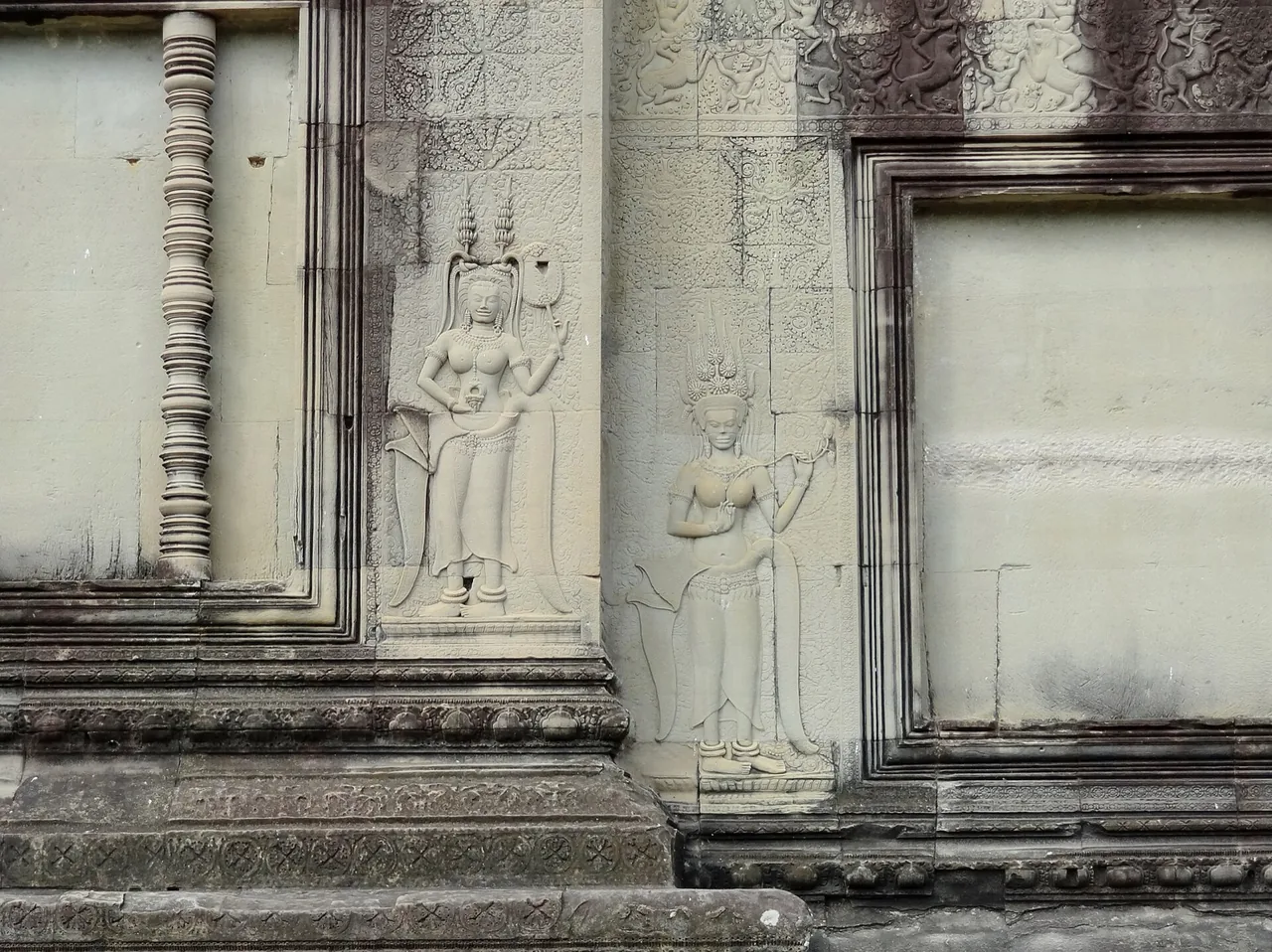
The galleries carry almost 1,000 square meters of bas-reliefs. The east gallery shows the Churning of the Ocean of Milk, with 92 asuras and 88 devas pulling the serpent Vasuki. More than 1,796 documented devata carvings also decorate the temple.
The upper level, called Bakan, surrounds the central tower and is open daily, except that it closes from 1:00 PM on the 14th and 28th of each month, according to an APSARA announcement reported by AKP in June 2026. No official daily opening times for Bakan have been published, so if the top level matters to you, go earlier in the day and avoid the afternoons of the 14th and 28th. Children under 12 may not climb it, because the steps are so steep.
Temple entry follows the official Angkor Visitor Code of Conduct. Shorts, skirts above the knee and bare shoulders are not allowed in sacred places, so wear trousers or a skirt below the knee and a top that covers your shoulders. The code also asks visitors not to touch the carvings, and the park has been smoke-free since 2012. Backpacks, tripods and high heels are discouraged.
Pairing Angkor Wat With Nearby Temples
A single pass day works best when Angkor Wat shares it with other Small Circuit stops. Bayon is a natural second stop on the same 1-day pass.
Many travelers also add Ta Prohm, another Small Circuit temple covered by the 1-day pass. Visiting the biggest temple at opening and the others later spreads the day more evenly.
Banteay Srei is another temple on the Angkor Pass. Check the Angkor Enterprise site for which pass covers each temple before you commit to a route.
Frequently Asked Questions
How much does it cost to visit Angkor Wat?
Angkor Wat has no separate ticket; you need an Angkor Pass. Angkor Enterprise sells a 1-day pass for $37, a 3-day pass for $62 (used within 7 days) and a 7-day pass for $72 (used within 30 days). Children under 12 enter free.
What are Angkor Wat's opening hours?
Angkor Enterprise lists Angkor Wat as open from 5:00 AM to 5:30 PM every day. The Angkor Pass itself shows park entry from 5:00 AM and closing at 6:30 PM, so check the times on the official site before a late visit.
Where do I buy Angkor Wat tickets?
Only from Angkor Enterprise: the Angkor Ticket Office on Road 60, 4 km from central Siem Reap, the official website, the Angkor Pass app, an official kiosk or through your tour guide. Angkor Enterprise says tickets bought anywhere else are not valid.
Can you climb to the top of Angkor Wat?
Yes, the upper level (Bakan) around the central tower is open every day, except that it closes from 1:00 PM on the 14th and 28th of each month, according to an APSARA announcement reported in June 2026. Children under 12 are not allowed to climb it because the steps are so steep.
What is the dress code at Angkor Wat?
The official Angkor Visitor Code of Conduct says shorts and skirts above the knee and bare shoulders are not allowed in sacred places. Wear trousers or a skirt below the knee and a top that covers your shoulders.
Is a 1-day pass enough to see Angkor Wat?
A 1-day pass covers Angkor Wat and the rest of the Small Circuit, including Bayon and Ta Prohm. Temples on the Grand Circuit, such as Preah Khan, need a 3-day or 7-day pass, according to Angkor Enterprise.
Can I use tomorrow's ticket for sunset today?
Yes. Angkor Enterprise says that if you buy a 1-day ticket for the next day after 4:45 PM, you can enter the park that evening for sunset and still use the ticket for the whole of the next day.
Who built Angkor Wat and when?
King Suryavarman II of the Khmer Empire built it in the early 12th century, between about 1113 and 1150 CE, as a Hindu temple to Vishnu. It later became a Buddhist temple and is still used for worship.
Angkor Wat rewards a little planning, and the pass choice drives most of it. Pick the 1-day pass for the Small Circuit, or a 3-day or 7-day pass if Grand Circuit temples are on your list. Buy only from Angkor Enterprise, plan around the 5:00 AM opening, and use the after-4:45 PM sunset rule if you want extra time.
Planning more of Siem Reap? See our guides to things to do in Siem Reap, the main Angkor temples and the Small Circuit.